Picture a damp evening in Snowdonia: pasta sauce clinging to a nesting pot, tea tannin in enamel mugs, and a queue forming near the campsite tap while the midges gather. If you need to clean camping cookware outdoors without leaving greasy grass, cloudy stream water or a pan that smells of last night’s curry, the trick is to treat washing up as part of campcraft rather than an afterthought.
In This Article
- Why Field Cleaning Matters on UK Campsites and Wild Pitches
- What to Pack for Washing Up Outdoors
- The Low-Impact Cleaning Routine
- Cleaning Different Camping Cookware Materials
- Dealing with Grease, Burnt Food and Sticky Drinks
- Washing Up When Water Is Limited
- Food Safety, Wildlife and Pitch Etiquette
- Drying, Packing and Looking After Your Kit
- Mistakes That Damage Cookware or the Outdoors
- Frequently Asked Questions
Why Field Cleaning Matters on UK Campsites and Wild Pitches
Dirty cookware is more than a minor nuisance. Grease attracts animals, food scraps sour quickly in warm weather, and cloudy wash water can harm small watercourses. On a busy UK campsite, poor washing-up also causes friction: leftover rice in the sink, blocked drains, and pans abandoned under shared taps are all common reasons for terse notices on the facilities block door.
On a wilder pitch, the margin for error is smaller. There may be no sink, no drain and no bin. A spoonful of oily noodles tipped near a stream can spread far more than people expect, while crumbs scattered around a tent may encourage birds, rodents or livestock to investigate.
The useful test is this: after you leave, could someone sit, pitch or draw water nearby without knowing you cooked there? If the answer is yes, your washing-up routine is probably sound.
The aim is not spotless showroom cookware
In practice, field cleaning means removing food residue, grease and smells well enough for hygiene and packing. A titanium pot with a faint discolouration mark is fine. A mug with milk residue, a pan with sticky sauce around the rim, or a spork tucked away with peanut butter in the tines is not.
For a wider kit list, see our guide to camping cooking gear for beginners, but keep this job focused: the best washing-up kit is small, cheap, easy to dry and unlikely to leak in your rucksack.
What to Pack for Washing Up Outdoors
You do not need a heavy kitchen crate unless you are car camping for a week. Most walkers, bikepackers and small tent campers can build a reliable washing-up kit for under £20 from a supermarket, outdoor shop or discount retailer.
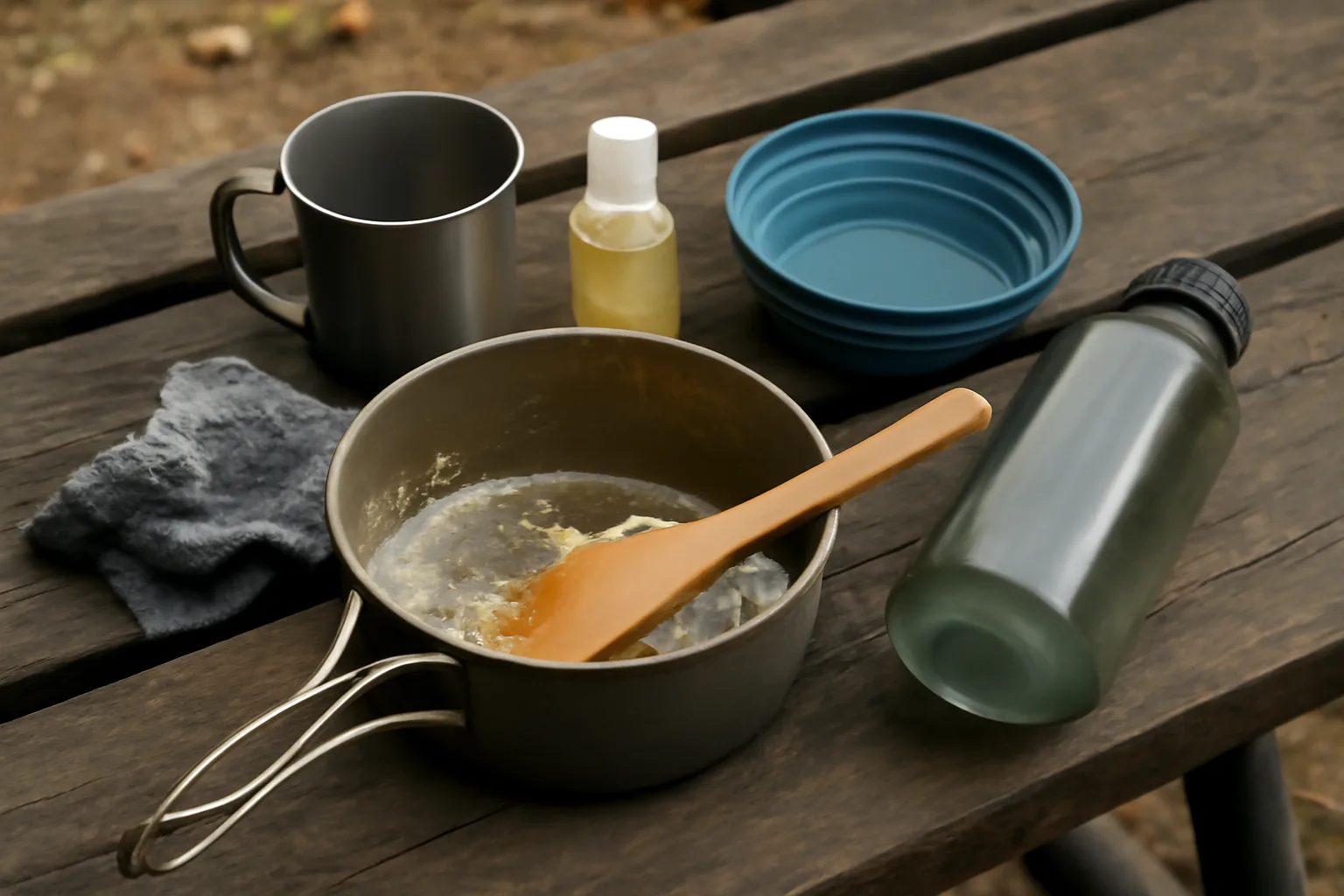
A useful field cleaning kit includes:
- A small scraper, old bank card offcut or flexible pan spatula.
- A half sponge, cut-down scourer or soft brush.
- A pea-sized amount of biodegradable washing-up liquid in a leakproof mini bottle.
- A lightweight cloth or small microfibre towel.
- A collapsible bowl, dry bag or dedicated wash pouch.
- A small rubbish bag for food scraps and used wipes.
- A mesh strainer or scrap bag if you are cooking for a group.
- Hand sanitiser or soap for your hands before and after washing up.
Collapsible bowls often cost around £5-£12 in UK outdoor retailers. For backpacking, a freezer bag or lightweight dry bag can work as a wash basin, provided you do not use it later for clean drinking water. Keep fuel, soap and food separate in your pack; leaked washing-up liquid through tea bags is a miserable discovery on day two.
Soap: less is usually better
Biodegradable soap is not harmless just because the label sounds gentle. It still should not go into streams, lakes or lochs. Use the smallest amount that shifts grease, and wash well away from open water. Often, hot water and a scraper do most of the work before soap is needed.
A tiny bottle with a narrow nozzle helps stop over-pouring. Owners tend to notice that a normal washing-up-liquid bottle encourages far too much soap, especially in the cold when hands are clumsy.
The pan scraper earns its place
A scraper saves water, sponge life and patience. It also avoids attacking non-stick pans with grit. An old loyalty card cut in half is enough for many pots. For frying pans, a soft silicone spatula used during cooking can double as the first cleaning tool before the meal dries on.
The Low-Impact Cleaning Routine
Good cleaning starts before the food goes cold and tacky. If you have finished cooking but are not ready to wash up, add a splash of water to the pan and let it sit with the lid on. Residue softens while you eat, and the pot loses less heat.
Use this routine as your default:
- Eat or save every edible scrap before washing starts.
- Scrape food residue into a rubbish bag, not onto the ground.
- Add a small amount of warm water to the cookware.
- Loosen stuck bits with a scraper, spatula or soft sponge.
- Use a tiny drop of soap only if grease remains.
- Rinse with clean water, keeping the amount modest.
- Strain dirty water if food particles remain.
- Scatter greywater widely on durable ground at least 60 metres from streams, lakes and springs, or use the campsite’s greywater point.
- Dry cookware before packing, or keep damp items separate until they can air properly.
On campsites, follow the site’s system. Many UK sites provide washing-up sinks, greywater drains or chemical disposal areas with clear labels. Do not assume a drain near a tap is meant for food waste. If in doubt, ask.
Use warm water, not boiling water, for most jobs
Hot water lifts grease, but boiling water is rarely needed for washing up and can damage some coatings or deform lightweight plastics. If you have just used your stove, warm a little extra water while the burner is still out, then turn it off before cleaning. For stove choice and fuel behaviour in poor weather, our guide to the best camping stoves covers the practical trade-offs.
Keep washing water away from natural water
Never wash pans directly in a stream, tarn, river or loch. Even if there is no visible soap, grease and food residue can enter the water. Carry water away, wash on durable ground, and dispose of greywater away from the source. If you are treating drinking water on the same trip, keep the clean-water system separate; see our guide to filtering water while hiking for sensible UK options.
Cleaning Different Camping Cookware Materials
Not all camping cookware likes the same treatment. The wrong scourer can ruin a coating, while the wrong storage habit can make a wooden spoon smell for weeks.
Aluminium pots
Plain aluminium is common, light and affordable. It conducts heat well but marks easily. Avoid harsh scraping with stones or gritty sand, which can gouge the surface. A plastic scraper, warm water and a soft sponge are usually enough.
Anodised aluminium is tougher, but still does not enjoy metal utensils being dragged around the base. If food catches, soak first. Owners tend to notice that patient soaking does more good than aggressive scrubbing.
Stainless steel pans
Stainless steel tolerates rougher use and is popular for family camping sets. It can take a nylon scourer and a firmer scrub, though steel wool is still overkill for most field jobs and sheds tiny fragments. For burnt-on rice or porridge, simmer a little water in the pan for a minute, then scrape once cooled enough to handle.
Stainless pans are heavier, but they suit campfires and robust group use better than delicate non-stick. If you regularly cook over flame, expect soot on the outside. Keep that soot away from tent fabric and sleeping bags.
Non-stick frying pans
Non-stick coatings need gentle cleaning. Do not use metal scourers, knives or gravel. Wipe excess oil with a scrap of bread, tortilla or kitchen roll, then wash with warm water and a soft sponge. If food has stuck, soaking is safer than force.
A dedicated pan sleeve or cloth between nested pans helps stop scratches in transit. The same cloth can be your drying cloth, as long as it is kept clean.
Titanium mugs and pots
Titanium is light and strong but can develop hot spots, which means food catches quickly over small backpacking stoves. Soak early and avoid grinding burnt food with grit. Discolouration from heat is normal and not a hygiene problem.
Titanium mugs used for tea, coffee or instant soup often hold smells around rolled rims. Pay attention to the lip, handle joints and folding-handle brackets, where residue hides.
Wood, bamboo and silicone utensils
Wooden spoons and bamboo spatulas should not be left soaking for ages. Wipe them, wash quickly, rinse, and dry in moving air. Silicone utensils cope well with normal washing, but oily sauces can cling to them, especially around flexible edges.
Utensils are easy to neglect because they look clean at a glance. Run a finger over fork tines, spoon bowls and folding joints. The useful test is smell: if a spork smells of tuna or curry after rinsing, it needs another pass.
Dealing with Grease, Burnt Food and Sticky Drinks
Field cleaning becomes harder when fat, sugar or starch gets involved. The answer is usually staged cleaning rather than more soap.
Greasy frying pans
Grease should not be poured onto the ground or down a random campsite drain. Let it cool slightly, then wipe it into a rubbish bag using kitchen roll, a used napkin or a piece of bread you are willing to pack out. Only then wash the pan.
For bacon fat, sausage oil or cheese-heavy meals, a small square of kitchen roll can save a surprising amount of wash water. Keep used greasy paper in a sealed bag until you reach a bin. If you are planning meals and want less washing up by design, one-pot camping meals can reduce the number of dirty items, though the pot still needs proper cleaning.
Burnt porridge, rice and pasta sauce
Burnt starch is best softened. Add water, warm the pot briefly if fuel allows, then leave it with the lid on. Scrape after soaking. Do not chip at the base with a knife, as that can scar aluminium and damage coatings.
For stubborn burnt patches on stainless steel, a pinch of bicarbonate of soda can help if you have it with your food kit, but it is not worth carrying solely for occasional use. On shorter trips, a soak-and-scrape routine is enough.
Tea, coffee and hot chocolate residue
Mugs often get a lazy rinse, then build up sour milk smells or sticky chocolate residue. Wash the rim, inside base and handle area. Folding cup lids need extra care around drinking slots. If using powdered milk or hot chocolate, rinse soon after drinking; dried dairy residue is unpleasant and poor for hygiene.
Washing Up When Water Is Limited
UK trips are not always wet in the useful sense. A dry ridge camp in the Lakes, a Dartmoor pitch away from reliable water, or a Scottish island site with a long walk to the tap can make every bottle matter. In those conditions, plan meals and cleaning together.
Choose food that leaves less residue:
- Couscous, noodles and instant mash that absorb most water.
- Tortilla wraps instead of sticky rice.
- Hard cheese rather than oily grated cheese.
- Sauces added sparingly, not poured into every corner of the pan.
- Tea or coffee made in a mug, not in the cooking pot.
The “wipe first, wash second” method saves the most water. Scrape everything edible, wipe grease into rubbish, then use a small splash of warm water to loosen the final film. A second tiny rinse is often better than one large slosh.
No-rinse wiping has limits
For a solo overnight, wiping a mug or dry-food bowl may be acceptable if there is no meat, dairy or oily residue, and if you clean it properly at the next water point. It is not a good plan for raw meat contact, baby bottles, shared group cookware or anything with milk residue.
Carry a little spare water for hygiene rather than using every drop for cooking. If you are relying on natural sources, separate water collection from washing and keep your filter, bottle caps and clean containers well away from dirty cookware.
Rain is useful, but not a sink
A rainy pitch may tempt people to leave pans out “to rinse”. Rainwater running across cookware also runs across grass, mud, soot and bird droppings. Use rain to pre-soak a pan if you like, but still wash and rinse with care.
The Met Office advice on camping in wind and rain is worth checking before exposed trips, because bad weather changes where you can safely cook, wash and dry kit.
Food Safety, Wildlife and Pitch Etiquette
Clean cookware is part of food safety, not just tidiness. Warm, damp residue is a friendly place for bacteria, and shared utensils can spread stomach bugs through a group.
The Food Standards Agency gives practical picnic food safety advice that carries over well to camping: keep hands clean, protect food from contamination, and watch chilled items in warm weather. In camp, that means washing hands before cleaning cookware as well as before cooking. Dirty hands can undo the work you have just done on the pan.
Keep food smells out of the sleeping area
Do not clean pans inside a tent porch unless weather or safety leaves no better option. Greasy water spills, crumbs and food smells near sleeping gear are hard to manage. If you must work under shelter, keep the stove off while handling wash water, ventilate well, and pack food waste immediately.
Store clean cookware dry and closed, but do not trap strong food smells inside nesting pots. A tiny sauce smear under a lid can perfume the whole set overnight.
Campsite manners
At a facilities block, scrape plates before reaching the sink. Do not leave pasta, noodles, rice or tea bags in the plughole. If people are waiting, do the soaking at your pitch in a bowl, then use the sink for the final wash.
Good campsite washing-up habits include:
- Carrying dirty pots in a tub rather than dripping sauce across the field.
- Leaving sinks free of food scraps and foam.
- Keeping children away from hot water taps unless supervised.
- Using the correct greywater point for dirty water.
- Taking your tea towel, sponge and leftovers back with you.
On farms and simple sites, remember that livestock may graze near camping areas later. Food waste left in grass is not harmless just because a field looks rough.
Drying, Packing and Looking After Your Kit
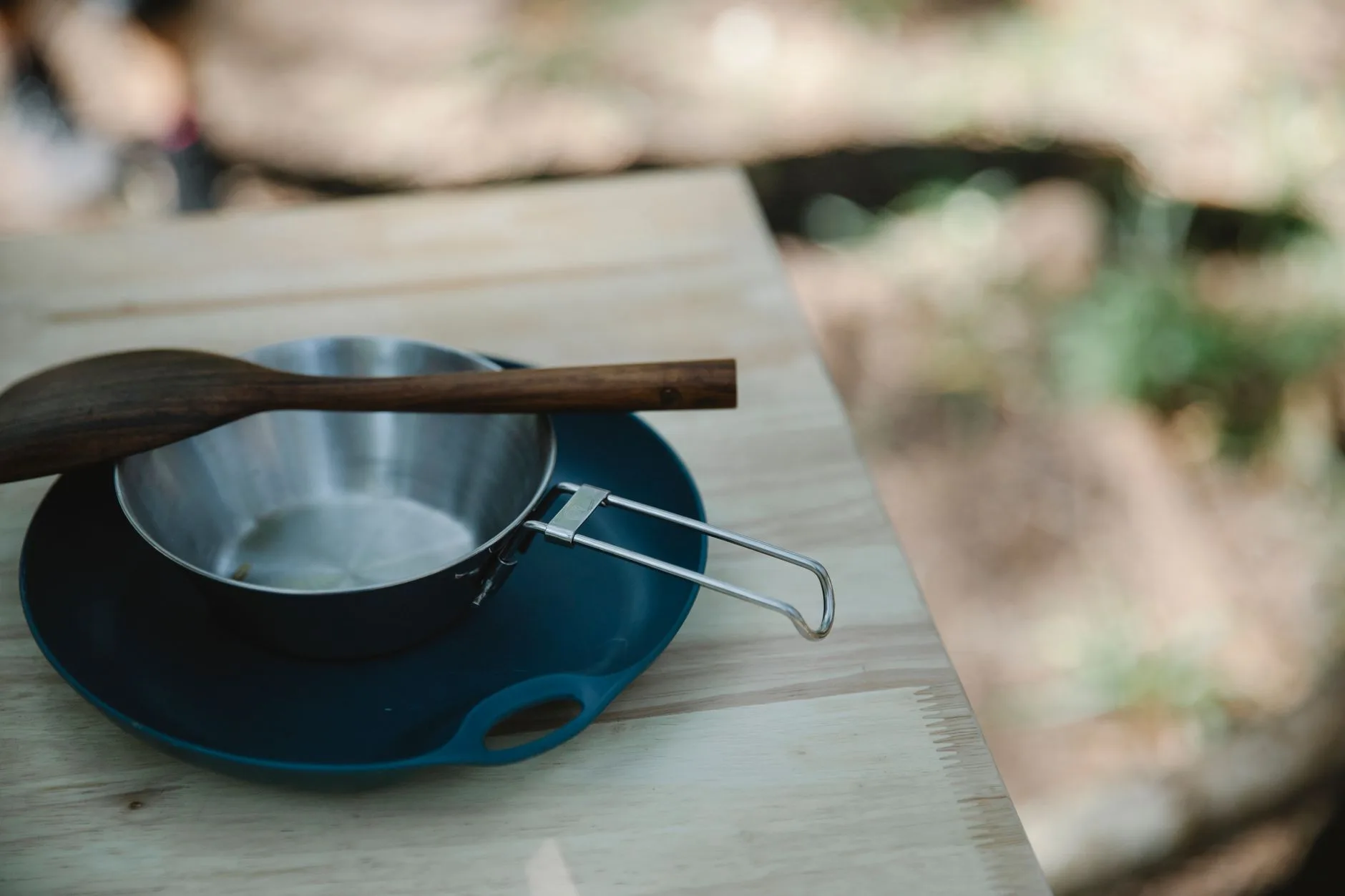
Drying matters because damp cookware breeds smells and can mark other gear. Shake off excess water, wipe with a clean cloth, then air items for a few minutes if weather allows. Pots dry faster upside down at a slight angle rather than flat on wet grass.
If the weather is foul, use a cloth and pack cookware in a dedicated bag until you can air it. Do not bury a wet sponge in the middle of your food bag. It will smell, and it may leak grey water onto packaging.
For rainy trips, the same principles used for drying wet hiking gear in camp apply: increase airflow, separate wet and dry items, and avoid trapping moisture in closed spaces.
Pack soot and damp away from fabric
Cookware used over a campfire or wood stove may have soot on the outside even after the inside is clean. Put it in a stuff sack, old carrier bag or dedicated pot bag. Soot transfers quickly to tent inners, waterproof jackets and rucksack linings.
If your rucksack has already taken a hit from leaked oil or sauce, our guide to cleaning your hiking backpack covers safe ways to deal with fabric and straps without wrecking coatings.
Give everything a proper wash at home
Field cleaning is the bridge between meals and home, not always the final deep clean. Once back, wash pots, mugs, utensils, lids, pot cosies and bags in warm soapy water. Dry them fully before storage. Check bottle threads, folding handles, nesting corners and stove windscreens for hidden residue.
Sponges and cloths deserve attention too. Rinse them well, dry them in sunlight or airflow, and replace them when they smell. A cheap sponge is not worth stretching through a season if it keeps contaminating clean mugs.
Mistakes That Damage Cookware or the Outdoors
Most problems come from rushing. The meal is done, the light is fading, and the pan gets attacked with whatever is nearby. A little patience is kinder to both cookware and the pitch.
Avoid these common mistakes:
- Washing directly in streams, rivers, lakes or lochs.
- Pouring greasy water into hedges, ditches or near tent pitches.
- Using sand, gravel or soil as a scourer on non-stick coatings.
- Leaving food scraps in shared campsite sinks.
- Packing damp cookware tight inside a sealed pot for days.
- Letting dogs lick plates as the main cleaning method.
- Using too much soap, then struggling to rinse it away.
- Forgetting mug lids, pot handles and utensil joints.
- Pouring boiling water into flimsy plastic bowls.
- Cleaning raw-meat utensils with a token splash and calling it done.
There is also a safety angle. Do not wash up while a stove is running unless the job is simply warming water in a stable pot. Slippery hands, loose cloths and crowded cooking areas cause accidents. Let the stove cool before packing it near damp cloths or food waste.
The best cleaning starts during cooking
Stir early, lower the flame, add water before sauces thicken into glue, and eat from the pot only if it helps reduce dirty items without making the pot harder to clean. A meal that burns onto the base for ten minutes creates more washing-up impact than a careful recipe ever needed.
The practical goal is a small clean-up footprint: less water, less soap, no scattered food, and cookware that is ready for breakfast without a grim surprise.
Frequently Asked Questions
Can I wash camping pans in a stream? No. Carry water away from the stream, wash your pans well back from the bank, then dispose of strained greywater widely on durable ground at least 60 metres from open water where possible.
What soap should I use to clean camping cookware outdoors? Use a tiny amount of biodegradable washing-up liquid if warm water and scraping are not enough. Biodegradable soap still should not go into streams, lakes or springs.
How do I clean a burnt camping pot in the field? Add water, warm it briefly if safe to do so, leave it to soak with the lid on, then scrape with a plastic scraper or soft utensil. Avoid knives, stones and metal scourers on lightweight pots.
Where should I throw dirty washing-up water at camp? On a campsite, use the marked greywater point or washing-up sink drain if the site allows it. Away from facilities, strain out food scraps and scatter the water well away from water sources and pitches.
How do I stop mugs and pans smelling in my rucksack? Remove grease and food residue, rinse rims and handle joints, dry items as much as possible, and keep damp cloths or sponges in a separate bag until they can air.
Is it safe to wipe cookware instead of washing it? Wiping can work for dry foods on short trips, but it is not enough for raw meat, dairy, oily meals or shared cookware. Wash properly at the next safe water point.