Opening your tent flap to cool morning air, there’s nothing quite like brewing a cup of coffee in the outdoors. But getting a tasty brew on the campsite can be tricky, especially if you’re new to camping coffee brewing methods. From simple instant coffee to the rich aroma of a freshly plunged French press, there are plenty of ways to satisfy your caffeine craving in the wild. This guide walks you through the best outdoor coffee methods, practical tips, and gear you’ll want to consider for your next UK adventure. You’ll also find advice for brewing in bad weather, comparisons of different methods, and links to related camping cooking and gear guides.
In This Article
- Why Brewing Coffee Matters on Camp
- Choosing the Right Coffee and Grind for Camping
- Essential Camping Coffee Gear
- Classic Camping Coffee Brewing Methods
- How to Brew Camp Coffee Step-by-Step
- Alternative Camping Coffee Methods
- Method Comparisons: Which Camping Coffee Brewing Method Is Best?
- Coffee and Campfire Safety
- Keeping Your Camping Coffee Kit Clean
- Tips for Better Coffee in UK Weather
- Frequently Asked Questions
Why Brewing Coffee Matters on Camp
For many, coffee is more than just a drink—it’s a ritual. On camp, that morning brew can be a source of warmth, energy, and a comforting routine. The right cup of coffee can lift spirits after a rainy night or fuel you for a long day’s walk. Even a basic mug of hot coffee can turn a chilly dawn into a memorable part of your trip.
Making coffee outdoors isn’t just about taste—it’s about making the most of your camping experience. The act of brewing encourages you to slow down, enjoy your surroundings, and connect with fellow campers. A shared pot of coffee is often the centre of early-morning chats, route planning, or simply a moment of calm before the day’s activities.
If you’re new to outdoor cooking, our guide on Camping Cooking Gear for Beginners: What You Actually Need covers the basics for setting up a functional camp kitchen, including coffee essentials.
Choosing the Right Coffee and Grind for Camping
Selecting suitable coffee and grind is crucial for flavour and convenience in the field.
Types of Coffee to Bring
- Whole Beans: Best flavour but requires a grinder. Ideal for those who prioritise freshness and have space for extra gear.
- Pre-Ground Coffee: Convenient and saves time, but can lose freshness faster. A good option for most campers.
- Coffee Bags: Like tea bags; simple, mess-free, and no extra kit needed.
- Instant Coffee: Lightweight and quick, but often less flavourful. Some modern brands have improved taste.
For short trips, pre-ground coffee in a resealable bag strikes a good balance between taste and practicality. For longer trips or if you’re particular about flavour, consider bringing a small manual grinder and whole beans.
Grind Size Matters
The grind you choose should match your brewing method:
- Coarse: For French press and percolators.
- Medium: For pour-over and AeroPress.
- Fine: For espresso makers or Moka pots.
If you’re bringing a grinder, opt for a manual one to save on weight and avoid batteries. Adjust the grind at camp to suit your chosen method.
Where to Buy Quality Coffee
Many UK roasters offer ground coffee suitable for camping. Look for local options or check outdoor retailers, such as Go Outdoors or Cotswold Outdoor, which sometimes stock camping-specific coffee products. Some supermarkets also stock coffee bags and instant varieties tailored for outdoor use.
For longer hikes or wild camping, instant coffee sachets are hard to beat for weight and simplicity. If you’re planning to cook one-pot meals alongside your morning brew, check out our One-Pot Camping Meals: Simple Recipes for the Trail guide for inspiration.
Essential Camping Coffee Gear
Your gear can make or break your camp coffee experience. Here’s what you’ll need:
- Camping Stove or Fire Pit: For boiling water. See our guide on Best Camping Stoves 2026 UK: Gas, Alcohol & Multi-Fuel for recommendations on reliable stoves for all weather.
- Kettle or Pot: Lightweight and durable, preferably with a spout for easy pouring.
- Brewing Device: French press, AeroPress, pour-over cone, percolator, or even a simple mug for cowboy coffee.
- Mugs: Insulated versions keep coffee warm longer, which is especially useful in cold or wet weather.
- Spoon or Stirrer: For mixing and measuring.
- Grinder: Manual grinders are great for fresh brews and don’t require power.
- Water Bottle: For carrying and measuring water.
- Microfibre Cloth: For drying gear, especially in damp conditions.
Keep your coffee kit together in a dry bag to avoid damp grounds and to make packing up easier. If you’re camping in unpredictable weather, a waterproof stuff sack is invaluable for keeping everything dry.
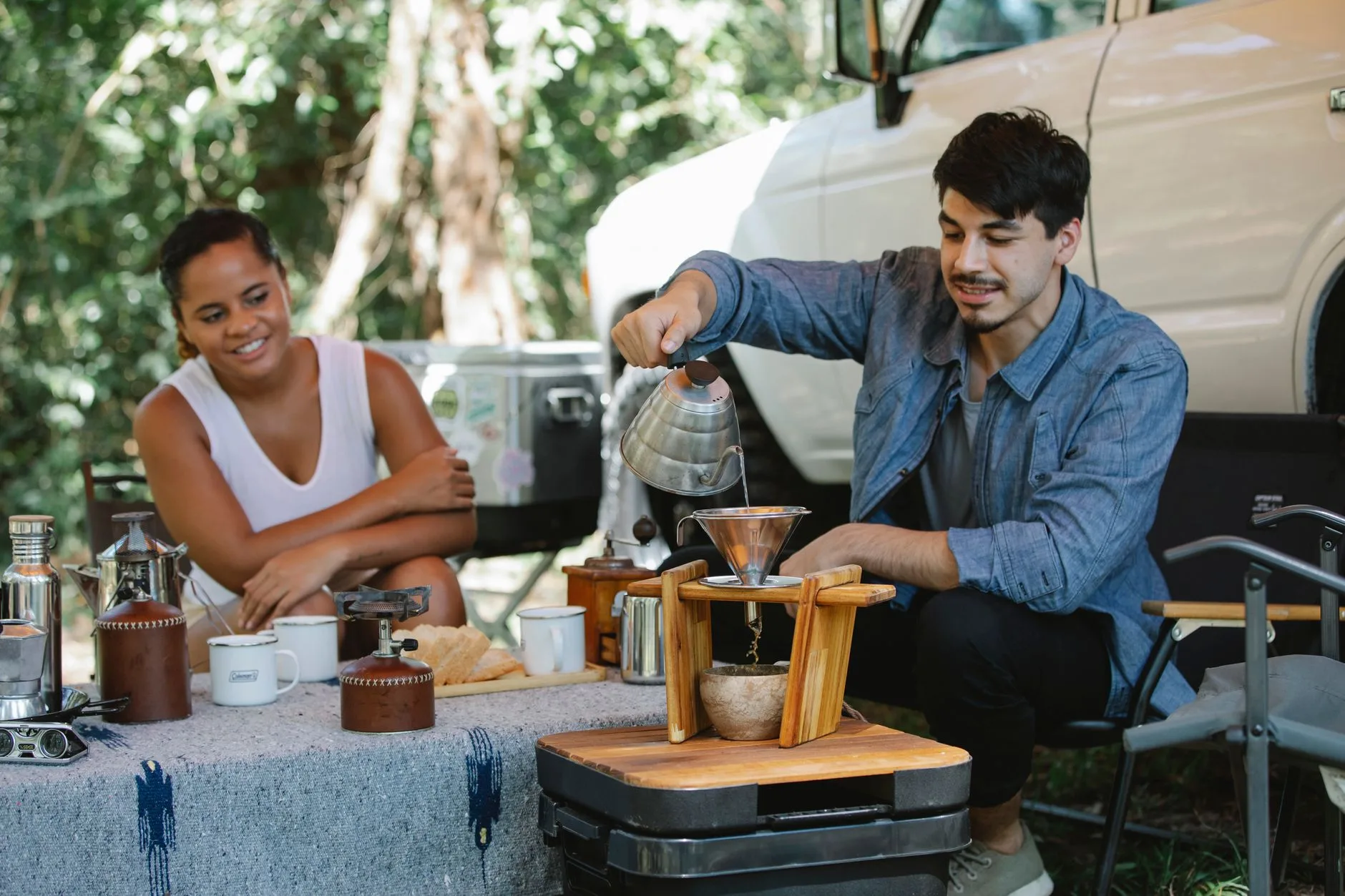
Classic Camping Coffee Brewing Methods
The heart of camping coffee lies in choosing the right brewing method for your set-up and taste preferences. Each method has pros and cons, and the best choice often depends on your group size, the weather, and your willingness to carry extra kit.
French Press (Cafetiere)
A classic option for rich, full-bodied coffee. Many outdoor brands offer shatterproof or stainless steel presses.
Pros:
- Excellent flavour and aroma.
- Makes multiple cups—ideal for sharing.
Cons:
- Bulky for solo trips or lightweight packing.
- Requires coarser grounds and careful cleaning.
Best for: Groups or those who prioritise flavour over weight.
AeroPress
Lightweight, compact, and fast. The AeroPress is popular among campers for its versatility and ease of use.
Pros:
- Quick brew time (about 2 minutes).
- Easy to clean and pack away.
- Can make espresso-style or filter-style coffee.
Cons:
- Brews one cup at a time (though you can make a “double”).
- Needs paper filters (though reusable mesh options exist).
Best for: Solo campers or coffee enthusiasts who want a quality cup without much fuss.
Pour-Over Cone
Simple and light, often made of silicone, plastic, or collapsible metal mesh.
Pros:
- Lightweight and takes up little space.
- Easy to use and clean.
Cons:
- Requires filters (paper or reusable).
- Can be tricky in strong wind or rain.
- Brew time is longer than AeroPress.
Best for: Lightweight packers, those who like a clean, bright cup.
Percolator
A traditional choice, especially for larger groups or those who like a strong, robust brew.
Pros:
- Makes several cups at once.
- Robust design, often all-metal.
Cons:
- Can over-extract coffee if left too long, resulting in bitterness.
- Bulky and heavy for backpacking.
- Needs careful monitoring over campfire or stove.
Best for: Car campers, family groups, or those who enjoy classic camp coffee.
Cowboy Coffee
No equipment needed beyond a pot and mug. Simply add coffee grounds to hot water, let them settle, and pour carefully.
Pros:
- Minimal gear.
- Authentic camp feel.
Cons:
- Grounds in your cup unless you pour very carefully.
- Inconsistent flavour and strength.
Best for: Emergencies, minimalist packers, or those after a rustic experience.
How to Brew Camp Coffee Step-by-Step
Here’s a practical guide to brewing coffee with a French press on camp, as an example. The same principles apply to other methods, just adjust for your chosen device.
What You’ll Need
- Coarse ground coffee
- French press (outdoor version)
- Camping kettle or pot
- Spoon
- Timer or watch
- Cup
Step-by-Step Instructions
- Boil water: Heat water on your camping stove or fire until just off the boil. About 90-96°C is ideal, according to SCA brewing temperature research. If you don’t have a thermometer, let boiling water cool for 30 seconds.
- Measure coffee: Add one heaped tablespoon of coffee per 200ml of water into your French press.
- Add water: Pour in hot water, saturating all the grounds. Stir gently to ensure even extraction.
- Steep: Place the plunger on top, but don’t press yet. Let it steep for 4 minutes.
- Plunge and serve: Slowly press the plunger down. Pour your coffee into your mug and enjoy.
Tips for Consistency
- Use a measuring jug or mug markings for water.
- A travel timer or watch helps avoid over-steeping.
- Pre-warm your mug with hot water so coffee stays hot longer.
Cleaning Up
Dispose of grounds away from water sources and pack out used filters. Leaving coffee grounds around can attract wildlife or create a mess. For more on drying wet kit and keeping camp gear fresh in the UK, see How to Dry Wet Hiking Gear in Camp.
Alternative Camping Coffee Methods
If you prefer something different, these methods work well in the UK outdoors.
Coffee Bags
- Use like a tea bag—just add hot water and steep for 2–4 minutes.
- Widely available in supermarkets and outdoor shops.
- No mess, no extra kit, and easy to pack out.
Instant Coffee
- Lightweight and quick to prepare.
- Some brands, like Nescafé Azera and Little’s, offer improved taste.
- Perfect for solo hikers or when you want minimal fuss.
Moka Pot (Stovetop Espresso)
- Produces strong, espresso-like coffee.
- Best used on a stable gas stove. Not ideal for open fires or uneven ground.
- Watch the heat to avoid burning the coffee.
Cold Brew
- Mix ground coffee with cold water in a bottle or flask.
- Leave overnight, then filter through a cloth or mesh.
- Refreshing on summer hikes or when fire bans are in place.
Pour-Over Without Filters
If you forget filters, try these:
- Use a clean bandana or muslin cloth as a makeshift filter.
- Let grounds settle and pour carefully to avoid grit.
Improvised methods like these can save your morning brew if you’re caught out.
Method Comparisons: Which Camping Coffee Brewing Method Is Best?
Choosing the best camping coffee brewing method depends on your priorities: taste, weight, speed, group size, and weather conditions. Here’s how the main methods stack up in real UK camping scenarios:
Flavour
- French Press: Offers the richest, fullest flavour and aroma. Great for those who savour their coffee and don’t mind carrying a bit more kit.
- AeroPress: Delivers a clean, strong cup with plenty of body. Can mimic espresso or filter coffee depending on technique.
- Pour-Over: Produces a bright, clean-tasting cup with clear flavours. Ideal for lighter roasts.
- Percolator: Strong and robust, but can become bitter if left too long.
- Cowboy/Instant/Coffee Bags: Varies widely. Instant is convenient but less flavourful; coffee bags can be surprisingly good, while cowboy coffee is rustic and unpredictable.
Ease of Use
- Coffee Bags/Instant: Easiest—just add hot water.
- AeroPress: Quick and simple, even for beginners.
- French Press/Percolator: Simple but require more cleaning and attention.
- Pour-Over: Needs a steady hand, especially in wind.
- Cowboy Coffee: Simple but can be messy.
Weight and Packability
- Instant/Coffee Bags: Lightest and most compact.
- AeroPress/Pour-Over Cone: Lightweight and packable.
- French Press/Percolator: Bulkier, suited to car camping or groups.
Group Size
- French Press/Percolator: Best for making multiple cups at once.
- AeroPress/Pour-Over: One cup at a time, but fast enough for two.
- Coffee Bags/Instant: Scales easily for any group.
Bad Weather Performance
- AeroPress/Instant/Coffee Bags: Fast, less affected by wind or rain, and easy to use under a tarp or shelter.
- French Press/Percolator: More fiddly to clean and use in the wet, but manageable with preparation.
- Pour-Over: Can be tricky in wind or heavy rain as filters blow away and water cools quickly.
- Cowboy Coffee: Works in any weather, but grit in your cup is more likely if you’re rushing.
Fuel Efficiency
- Instant/Coffee Bags: Quickest to prepare, using the least fuel.
- AeroPress: Short brew time, efficient.
- French Press/Percolator: Longer boil and steep times, so more fuel required.
For more advice on picking the right brewing method for your trip, consider the type of camping you’ll be doing, the weather forecast, and your space limitations. If you’re also choosing a sleeping bag for British conditions, see our guide on How to Choose a Sleeping Bag for UK Camping.
Coffee and Campfire Safety
Making coffee over an open fire or stove is part of the outdoor charm, but safety is crucial.
- Always set up stoves on level, stable ground.
- Avoid brewing inside tents due to fire and carbon monoxide risks.
- If using a campfire, follow local rules and leave no trace.
- Be mindful of wind: a sudden gust can knock over pots or stoves.
- Use a windscreen for your stove to improve efficiency and safety.
For more on staying safe and comfortable in unpredictable UK weather, check the Met Office camping in wind and rain advice.
Keeping Your Camping Coffee Kit Clean
A clean kit is essential for good-tasting coffee and avoiding mould or odours.
Cleaning Tips
- Rinse your press, pot, and mugs with hot water after use.
- Use a small brush or a bit of sand (if permitted) to scrub stubborn grounds.
- Dry all gear thoroughly before packing to prevent rust and smells.
- Pack out all coffee grounds and used filters, especially in wild or remote locations.
Storing Coffee Gear
- Keep coffee and equipment in a dry bag or sealed box.
- Store away from food with strong odours (like onions) to avoid tainted coffee.
- Bring a spare microfibre cloth for drying your gear—especially useful in damp British weather.
If you’re looking to streamline your packing, our Camping Cooking Gear for Beginners: What You Actually Need guide includes tips for keeping your kitchen kit tidy and efficient.
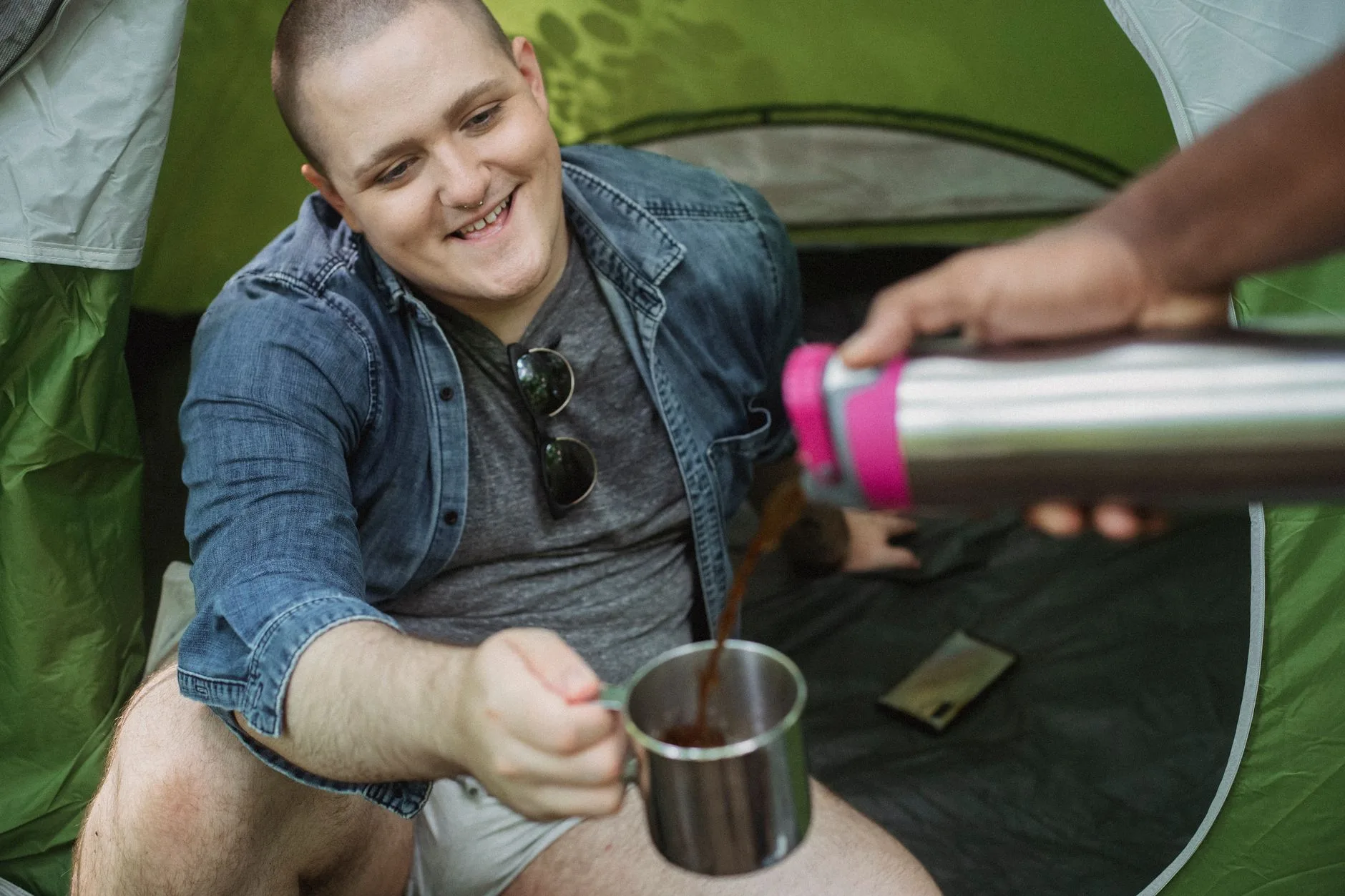
Tips for Better Coffee in UK Weather
Brewing outdoors in the UK brings extra challenges, from sudden rain to biting winds. Here’s how to get the best from your camping coffee brewing methods, whatever the weather:
- Shelter Your Stove: Use a windscreen, pitch your stove behind a boulder, or set up under a tarp to keep your flame steady and reduce heat loss.
- Boil Extra Water: Some will be lost to evaporation or cooling, especially in cold or windy conditions.
- Keep Coffee Warm: Use insulated mugs or thermal flasks. Pre-warming your mug with hot water helps.
- Choose Fast-Brewing Methods: AeroPress, instant coffee, or coffee bags are less affected by temperature drops or wind.
- Store Coffee Dry: Use resealable bags or waterproof containers to avoid condensation and damp grounds.
- Pack a Spare Lighter or Matches: Wet weather can make ignition tricky.
- Plan for Wet Gear: If your kit gets soaked, check out How to Dry Wet Hiking Gear in Camp for practical drying tips.
If you’re preparing meals in the same conditions, see One-Pot Camping Meals: Simple Recipes for the Trail for dishes that pair well with a hot morning brew.
Frequently Asked Questions
What’s the easiest camping coffee brewing method for beginners?
Coffee bags or instant coffee are the simplest. Just add hot water—no special equipment needed. If you want more flavour, a pour-over cone is still easy to use and doesn’t take up much space.
Can I use regular ground coffee for camping?
Yes, but match the grind to your brewing method. Coarse for French press, medium for pour-over, and fine for Moka pots or espresso devices. If you’re unsure, ask your local roaster to grind for your preferred method.
How do I keep coffee grounds out of my cup when camping?
Use a French press, AeroPress, or paper filters with pour-over methods. For cowboy coffee, let the grounds settle and pour slowly. If you’re improvising, a fine mesh or cloth can help filter out grit.
What’s the best way to heat water for coffee on camp?
A camping stove is the most reliable in the UK. See our Best Camping Stoves 2026 UK: Gas, Alcohol & Multi-Fuel guide for options. Campfires work where allowed, but check local rules and always prioritise safety.
Is it safe to make coffee inside my tent?
No, using stoves inside tents is dangerous due to fire and carbon monoxide risks. Always brew outside or in a well-ventilated area. For more on safe camp cooking, see Camping Cooking Gear for Beginners: What You Actually Need.
How can I reduce waste from camping coffee?
Choose reusable filters and bring a container to pack out used grounds and paper. Some presses and AeroPress kits offer reusable mesh filters. Packing out all waste helps keep wild places clean for everyone.