There’s a smell coming from the cupboard under the stairs, and you’ve traced it to your rucksack. It’s been three months since that rainy Lake District weekend, and the combination of sweat, mud, damp sandwiches, and whatever leaked from the water bladder has created something genuinely unpleasant. You could just stuff it back in the cupboard and pretend it’s fine — or you could spend thirty minutes cleaning it properly and add years to its life.
A decent hiking backpack costs anywhere from £60 to £250, and with proper care, it should last a decade or more. But most people never clean theirs beyond shaking out the crumbs, which means zips get gritty, fabrics break down from salt and sweat, and waterproof coatings degrade years before they should. Cleaning a backpack isn’t complicated, but there are a few things you need to get right — and a couple of things that’ll ruin it if you get them wrong.
Before You Start: What You’ll Need
Gather everything before you begin. You don’t need specialist products — most of this is already in your kitchen or bathroom.
- Soft brush or old toothbrush — for scrubbing zips and stubborn dirt
- Sponge or soft cloth — for wiping down fabric panels
- Mild soap or specialist gear wash — Nikwax Tech Wash (about £8 from Decathlon or Go Outdoors) is ideal, but a small amount of gentle hand soap or baby shampoo works too
- Large basin, bathtub, or clean utility sink — big enough to submerge the pack
- Lukewarm water — never hot. Hot water damages waterproof coatings and can cause fabrics to delaminate.
- Towel — for blotting excess water
- Somewhere to hang it — outdoors on a washing line or over a shower rail
What NOT to use:
- Washing machine — this is the most common mistake. The agitation damages internal frames, straps, and buckles. Zips can catch and tear fabric. Even on a gentle cycle, it’s a gamble.
- Tumble dryer — heat destroys waterproof coatings, warps plastic components, and can melt nylon at the contact points with the drum.
- Bleach or harsh detergents — these strip DWR (Durable Water Repellent) coatings and can weaken fabric fibres.
- Fabric softener — coats fabric fibres and ruins breathability and water repellency.
Step 1: Empty Everything
This sounds obvious, but I mean everything. Every pocket, every compartment, every hidden zip. Check the hydration bladder sleeve, the hip belt pockets, the lid pocket, the front mesh.
Things I’ve found in backpacks I thought were empty: a crushed cereal bar from 2023, a soggy map of Snowdon, three cable ties, a half-full lighter, and a dead AA battery. The battery had leaked and corroded the lining. Don’t let that happen to yours.
Once it’s really empty:
- Remove the hip belt if it’s detachable
- Remove the frame sheet or stays — most rucksacks have an internal aluminium or plastic frame that slides out. Check your pack’s manual if you’re not sure. Removing it means the pack dries faster and you can clean the back panel properly.
- Open all zips — this lets water and air circulate through every compartment
- Detach the rain cover if it has one — wash this separately
Step 2: Dry Brush and Shake Out
Before any water touches the pack, remove as much dry dirt as possible.
- Turn the pack upside down and shake vigorously over newspaper or in the garden
- Use the soft brush to sweep out sand, grit, and crumbs from inside compartments
- Pay attention to the seams at the bottom of pockets — debris collects here
- Brush the zip tracks — grit in zips is the number one cause of zip failure on backpacks
This step removes about 80% of the dirt without any water at all. If your pack just needs a freshen-up rather than a deep clean, brushing and airing it out might be all you need.
Step 3: Spot Clean Problem Areas
Before submerging the whole pack, tackle the worst spots first:
- Shoulder straps and hip belt — these absorb the most sweat. Apply a small amount of soap to a damp cloth and scrub gently along the straps. The foam padding inside can hold salt from sweat, which degrades fabric over time.
- Back panel — another sweat magnet, especially the mesh layer. Scrub with a soft brush and soapy water.
- Bottom of the pack — this sits on muddy ground, pub floors, and wet grass. Usually the dirtiest part.
- Stains — for stubborn marks, apply undiluted Nikwax Tech Wash directly and work it in with your fingers. Leave it for 10 minutes before rinsing.
Step 4: Full Wash
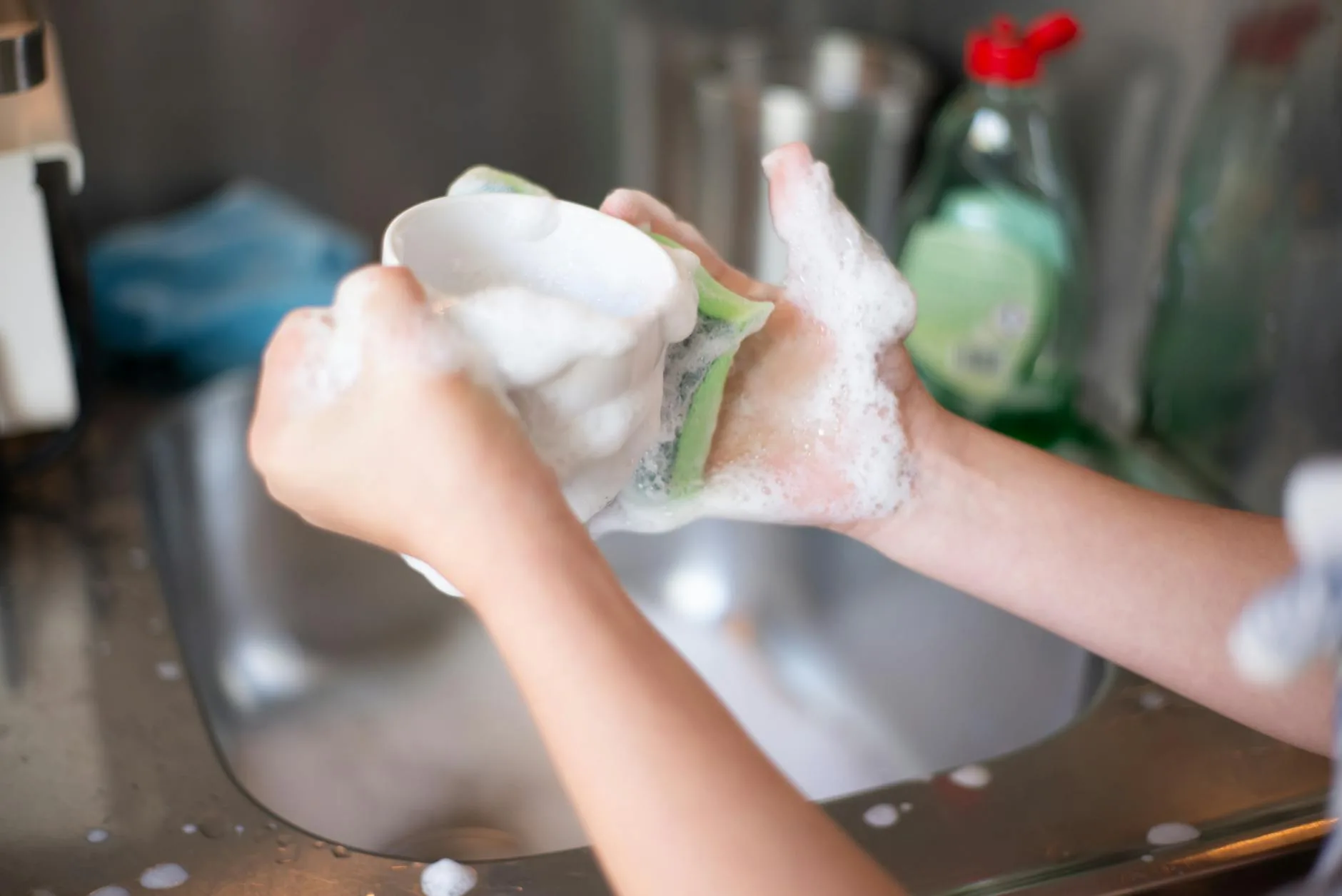
Fill your bathtub or basin with lukewarm water — enough to fully submerge the pack. Add a capful of mild soap or Nikwax Tech Wash. Not too much — you’re cleaning fabric, not degreasing an engine.
Submerge the backpack and gently agitate it with your hands. Squeeze water through each compartment. Work the soap into the fabric, paying attention to:
- Inside surfaces of main compartments
- The lid and its pockets
- Any mesh panels (these trap odour-causing bacteria)
- Hip belt pockets
Let it soak for 15-20 minutes if it’s particularly dirty or smelly. For a routine clean, 5-10 minutes is enough.
Then drain the soapy water, refill with clean lukewarm water, and rinse thoroughly. You may need to rinse 2-3 times to get all the soap out. Soap residue attracts dirt and can reduce water repellency, so don’t rush this step. For a related angle, see our How to Wash and Reproof a Waterproof Jacket guide.
Step 5: Drying Properly
This is where patience matters. Improper drying is almost as damaging as improper washing.
- Gently squeeze out excess water — don’t wring or twist the fabric
- Blot with a towel to absorb surface moisture
- Hang the pack upside down with all zips and compartments open. Hang it by its base, not by the shoulder straps (which stretches them when wet and heavy).
- Dry outdoors in a shaded, ventilated area if possible. Direct sunlight degrades nylon and polyester over time — UV breaks down the molecular structure of synthetic fabrics. A breezy day in the shade is ideal.
- Allow 24-48 hours for complete drying. The foam padding in shoulder straps and hip belts holds moisture much longer than you’d expect.
Never use a tumble dryer, radiator, or hairdryer to speed things up. Heat damages everything — coatings, fabrics, buckles, and the internal foam.
Only reinsert the frame sheet and reattach components when the pack is completely dry. Trapping moisture inside a sealed pack leads to mildew, which is much harder to deal with than regular dirt.
Cleaning the Hydration Bladder
If your rucksack has a hydration bladder, clean it separately — and more often than you clean the pack itself. Stagnant water in a bladder grows bacteria and mould alarmingly fast.
- After every use: drain completely, open the cap and hang upside down to dry. Leave the cap off.
- Weekly (if used regularly): rinse with warm water and a teaspoon of bicarbonate of soda. Shake well, then rinse thoroughly.
- Monthly or after long storage: fill with warm water and either 2 tablespoons of bicarbonate of soda or a bladder cleaning tablet (Camelbak and Platypus make these, about £5 for a pack). Let it soak for 30 minutes, then rinse 3-4 times with clean water. Use the tube brush (they usually come with the bladder) to scrub inside the drinking tube.
If your bladder already smells funky, try a solution of 1 part white vinegar to 4 parts warm water. Soak overnight, then rinse thoroughly. If that doesn’t work, the bladder needs replacing — bacteria embedded in silicone doesn’t come out. Our Best Base Layers 2026 UK: Merino Wool & Synthetic guide is useful alongside this.
Zip Maintenance
Zip failure is the most common reason backpacks get retired, and it’s almost always preventable with basic maintenance.
- After cleaning: run a zip lubricant along all zip tracks. Gear Aid Zipper Cleaner & Lubricant (about £6) works well, as does a regular beeswax lip balm rubbed along the teeth.
- After muddy trips: brush zip tracks with an old toothbrush to remove grit before zipping. Sand and grit embedded in zip teeth grind them down every time you open and close.
- If a zip is sticking: don’t force it. Apply lubricant, work it back and forth gently. If it’s stuck on fabric, use a pencil — the graphite acts as a dry lubricant.
- Replace broken zip pulls before they get worse. YKK replacement pulls are cheap (under £3 from Amazon UK) and easy to fit yourself.
Reproofing Your Backpack’s Water Resistance
Most hiking backpacks come with a DWR (Durable Water Repellent) coating that makes water bead off the surface. Over time, this coating wears away — typically after 12-18 months of regular use. You’ll notice water soaking into the fabric rather than beading on the surface.
Re-applying DWR is simple:
- Clean the pack first — DWR won’t bond properly to dirty fabric
- Use a spray-on DWR treatment like Nikwax Spray-On TX.Direct (about £10-12 from most outdoor retailers). Grangers also make good spray-on products.
- Spray evenly across all outer fabric surfaces, paying extra attention to seams and high-wear areas (bottom, shoulder contact points)
- Hang to dry for 24 hours
Some waterproof coatings (like PU-coated fabric) are internal and can’t be reproofed — they’ll eventually delaminate regardless. The DWR is only the outer bead layer. If water is seeping through the fabric even after reproofing, the internal coating may have failed and it’s time for a new pack — or at least a new rain cover.
How Often Should You Clean Your Backpack?
There’s no fixed rule, but here are sensible guidelines:
- After every trip: shake out debris, wipe down with a damp cloth, hang to air dry
- Every 2-3 months of regular use: spot clean shoulder straps, hip belt, and any dirty patches
- Once or twice a year: full wash as described above
- Before long storage: always clean thoroughly before putting it away for winter or summer. Stored dirt attracts mould.
If you’re someone who hikes in all weather across the Peaks, Lake District, or Snowdonia, your pack needs more frequent cleaning than someone who does the occasional day walk in Surrey. Mud, rain, and sweat are the three biggest enemies. For independent guidance, check Ordnance Survey outdoor guides.
Storage Tips Between Trips
How you store your backpack matters almost as much as how you clean it.
- Store it loosely — don’t compress it or stuff it in a tight space. This crushes foam padding and creases fabric, which weakens waterproof coatings at the fold points.
- Store it in a cool, dry place — the cupboard under the stairs is fine as long as it’s not damp. Attics can get too hot in summer. Garages can be damp.
- Leave all zips partially open — this prevents the zip teeth from corroding in a closed position and allows air to circulate.
- Hang it if possible — on a sturdy hook or coat hanger. This maintains the pack’s shape better than laying it flat.
- Keep it out of direct sunlight — UV degrades nylon and polyester. A dark cupboard is better than a sunny hallway.
- Stuff it loosely with newspaper if storing for more than a few months — this absorbs residual moisture and helps maintain shape.
If your backpack is cleaned and ready for the next walk, trekking poles may be the next comfort upgrade. Our guide to the best trekking poles compares carbon and aluminium options.
Frequently Asked Questions
Can I put my hiking backpack in the washing machine? No. The agitation damages internal frames, buckles, and straps. It can also tear fabric where zips catch. Always hand wash in a bathtub or basin with lukewarm water and mild soap.
How do I get the smell out of my rucksack? Most smells come from bacteria in sweat-soaked padding. Spot clean the shoulder straps and hip belt with mild soap, then soak the whole pack in lukewarm water with a splash of white vinegar for 30 minutes. Rinse thoroughly and dry completely before storing.
Can I use regular detergent to clean my backpack? Mild hand soap or baby shampoo is fine for occasional use. Avoid laundry detergent (too harsh for DWR coatings) and fabric softener (ruins water repellency). For best results, use a specialist gear wash like Nikwax Tech Wash.
How do I know if my backpack’s waterproof coating has worn off? Splash water on the outer fabric. If it beads up and rolls off, the DWR is still working. If it soaks in and darkens the fabric, the DWR has worn away. You can reapply it with a spray-on treatment like Nikwax TX.Direct.
How long should a hiking backpack last? With proper care — cleaning, reproofing, and correct storage — a quality hiking rucksack from brands like Osprey, Deuter, or Gregory should last 8-15 years of regular use. Many come with lifetime or extended warranties.