For UK day walks, choose a waterproof rucksack around the load you carry—not just a claim on its fabric. The Exped Typhoon 25 is our pick for light walking loads: its sealed main compartment, front pocket and removable waist strap balance weather protection with everyday access. Choose the OverBoard Classic 20L for a compact welded dry-bag design, or the Lomo Hi Viz 30L for bulkier commuting kit and reflective panels.
This shortlist covers day trips and wet commutes, not heavy expedition loads or packs intended for sustained immersion. We compared documented construction, closure instructions, capacity and carrying features; we have not worn these packs or tested their waterproofing.
Best Waterproof Rucksacks for UK Day Trips
| Rucksack and exact version | Choose it for | Protection and organisation | Important trade-off |
|---|---|---|---|
| Exped Typhoon 25 — black, 25 litres | Light-load day walking | Taped seams, integrated liner, roll-top; front zipped pocket | Manufacturer load limit about 5kg; not a heavy-load trekking pack |
| OverBoard Classic — yellow, 20 litres | Compact dry-bag carry | HF-welded PVC, roll-top; external bottle pocket | Smaller capacity; optional laptop organiser is not included |
| Lomo Hi Viz — yellow, 30 litres | Wet commuting with bulkier kit | RF-welded PVC, roll-down top; removable internal mesh pocket | 815g and 54cm closed height; no immersion rating established here |
In This Article
- Three Rucksacks Worth Comparing
- Waterproof, Water-Resistant or a Pack Liner?
- Choose Capacity and Fit Before Extras
- Close and Pack a Roll-Top Properly
- Care and the Final Buying Decision
- Frequently Asked Questions
Three Rucksacks Worth Comparing
Exped Typhoon 25: for light-load day walking

The Typhoon makes most sense when you want a walking daypack rather than a large tube for spare clothes. Its front zipped pocket provides quick access to small items, while the main compartment uses a waterproof liner, factory-taped seams and a roll-top. The linked black version is the updated design with that front pocket; older Typhoons need not have identical details.
Choose it over the OverBoard when your kit needs more than 20 litres and you value a separate access pocket. Choose it over the larger Lomo when day walking, rather than high-visibility commuting, is the job. The removable waist strap helps steady the pack, but it is not a padded trekking hip belt.
Exped specifies a load limit of about 5kg (11lb). Count water and food as well as clothing when checking that limit. Keep electronics in the sealed main compartment or their own protective pouch: we have not established the front pocket as independently waterproof. No laptop sleeve or heavy-load suspension is promised.
OverBoard Classic 20L: for a compact welded dry rucksack
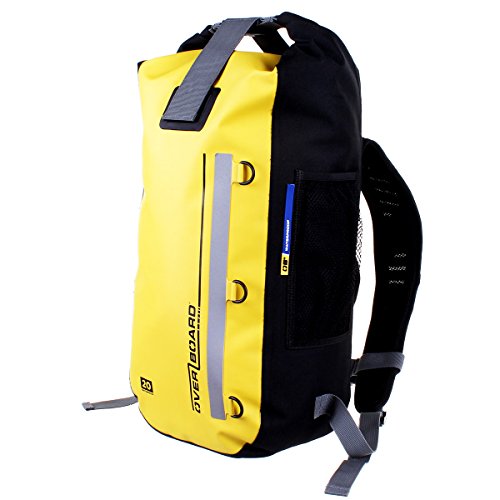
The yellow 20-litre Classic suits a smaller clothing-and-essentials load. Welded PVC construction and a roll-top keep the design simple; a large external mesh pocket gives you somewhere accessible for a bottle. Padded straps, a sternum strap and a padded back panel are included.
Its advantage over the Typhoon is the compact dry-bag layout, not superior walking comfort. At a documented 720g, it is also a substantial bag for its volume. Check that your packed kit leaves enough room to roll the neck properly; winter insulation can quickly use up a 20-litre compartment.
OverBoard labels the bag IP66 and separately describes quick-submersion protection with its top-buckle seal. That is not a sustained-immersion promise. Its alternative messenger-style fastening carries a lower stated protection level, so follow the manufacturer’s sealing instructions. A Backpack Tidy laptop organiser is an optional extra, not part of this single-bag purchase.
Lomo Hi Viz 30L: for wet commutes and bulkier clothing

The Lomo adds space for a change of clothes and other awkwardly shaped kit. Its fluorescent yellow PVC and retro-reflective panels give it a clear commuter focus. They do not replace lights or guarantee that a driver will see you.
RF-welded seams and a roll-down closure protect the main compartment from driving rain. The removable mesh pocket keeps smaller belongings together; chest and waist straps steady the load. Choose this over the 20-litre OverBoard when capacity and conspicuity matter more than a smaller pack. It is a roomy single chamber, not a multi-pocket office organiser.
Lomo gives a closed height of 54cm and a weight of 815g. That height is worth checking against your torso before committing, especially if you are shorter. We have not established a submersion rating for this model; its recommendation here is for rain protection, not underwater storage.
Waterproof, Water-Resistant or a Pack Liner?
Fabric protection is not whole-bag protection
A coated rucksack can shed rain while its stitched seams, ordinary zips or openings still admit water. A roll-top shape alone does not prove that the whole bag is waterproof either. Look for the manufacturer’s construction details and instructions for the complete pack, rather than translating a fabric water-column figure into an immersion claim.
Welded seams join material without stitch holes; taped seams seal a stitched seam. Both can be part of a waterproof design. Closure condition and correct use still matter. An ordinary covered zip and a specified waterproof zip are different things, so neither “roll-top always wins” nor “zipped packs leak” is a useful buying rule.
A liner may be the better purchase
If your existing hiking pack fits well, a waterproof liner or separate dry bags may solve the actual problem without replacing it. A rain cover shields much of the outside but does not make the harness side or every opening watertight. Keep critical spare insulation protected inside, particularly when rain could leave you far from shelter.
Our backpack waterproofing guide explains that layered approach. If you are choosing a first pack, start with the beginner’s backpack buying guide.
Choose Capacity and Fit Before Extras
Pack your real kit first
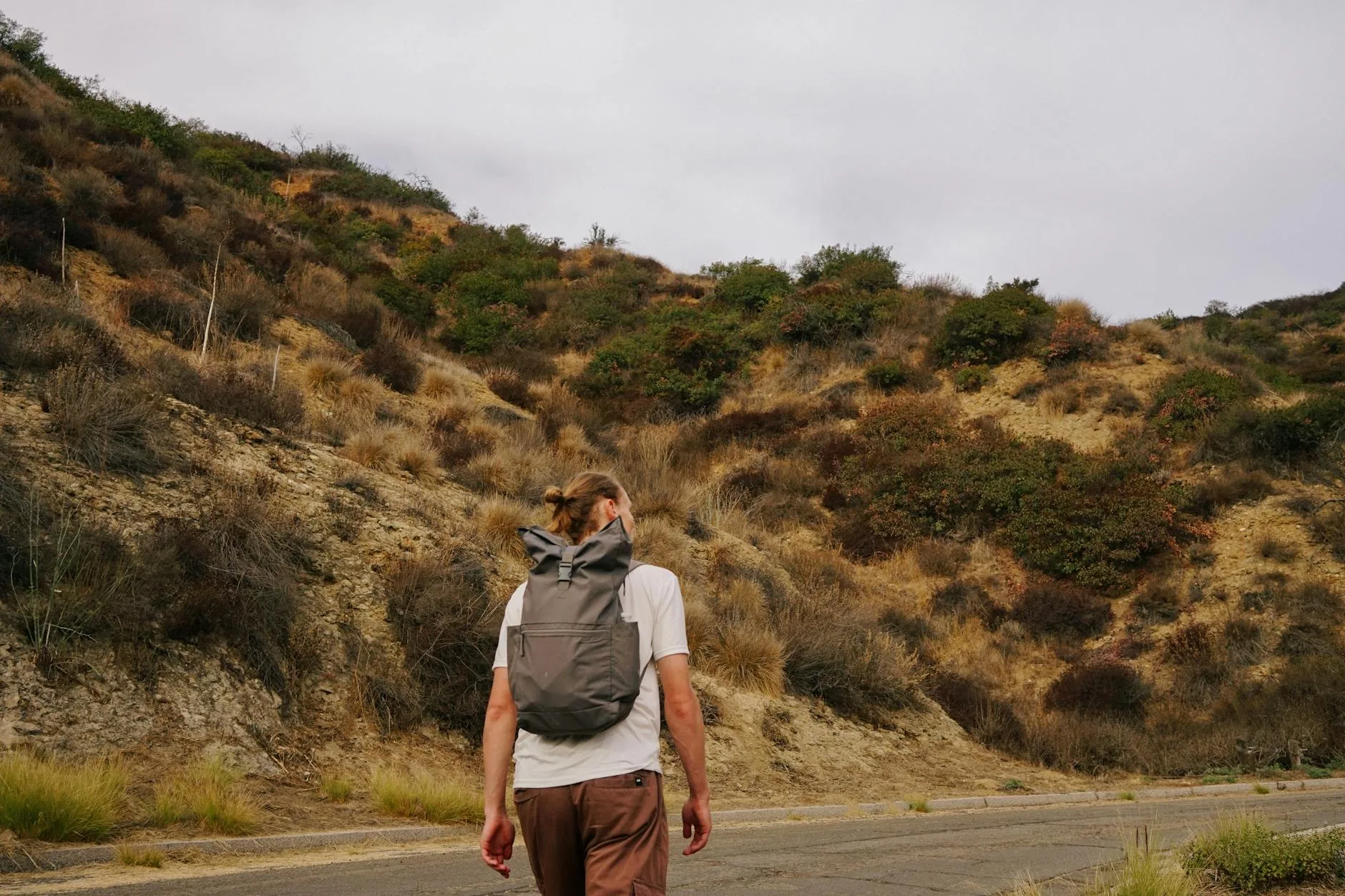
A 20–30-litre range is a useful starting point for day trips, not a guarantee that every day’s equipment will fit. Spare insulation, lunch, water and camera equipment change the answer. Roll-top bags need unfilled material at the opening, so do not buy a size that only works when packed to the brim.
- Compact loads: check the OverBoard 20L against your packed kit.
- Light walking loads: the Typhoon 25 adds room, but its approximately 5kg load limit still applies.
- Bulkier commute loads: the Lomo offers 30 litres, with a taller shape to check against your back.
Use our rucksack size guide if you also need overnight equipment. None of these picks is a substitute for a properly fitted heavy-load camping pack. For an overnight trip, check the wider kit needs in our UK wild camping guide.
Fit matters more than the label on the harness
Try the pack loaded, with the clothing you will normally wear. Check that the straps do not rub your neck, the base does not interfere with your stride and the sternum strap sits comfortably. A thin waist strap mainly limits movement; do not expect the weight transfer of a structured padded hip belt.
Our back-length and hip-belt fitting guide covers the checks. Readers who struggle with standard strap spacing can also use our women’s rucksack guide to explore fit—not as proof that those packs offer the same waterproof protection.
Close and Pack a Roll-Top Properly
- Keep the sealing area clear. Leave enough space above the contents, and remove grit or trapped straps from the opening.
- Follow the model’s rolling direction and fastening method. Exped specifies at least three rolls towards the shoulder straps; OverBoard specifies three tight rolls towards the front. Do not assume every roll-top closes identically.
- Separate wet equipment. A waterproof pack also keeps moisture inside. Isolate a wet jacket from spare insulation and documents.
- Put frequently needed items where they belong. Use accessible pockets for items that can tolerate their protection level; keep valuables inside the sealed compartment.
Our hiking rucksack packing guide covers weight distribution. Match the rest of your rain kit with the waterproof hiking jackets guide.
Care and the Final Buying Decision
Inspect the parts that keep water out
Rinse off grit, let the bag dry open and inspect seams, coatings and buckles before important trips. Use the maker’s cleaning instructions; do not assume a clothing reproofing spray repairs a failed seam or damaged dry-bag fabric. A gentle home leak check with non-valuable contents is more sensible than discovering a puncture around a phone.
There is no reliable universal replacement interval for waterproof rucksacks. Wear, storage and damage matter. Our backpack cleaning guide covers general care, with model-specific instructions taking priority.
The final choice
Choose the Typhoon 25 for a light-load walking daypack with useful access; the Classic 20L for a compact welded dry rucksack; or the Lomo 30L for a roomier, conspicuous commute bag. If your current pack already carries comfortably, try a liner before buying another rucksack. For sustained immersion or demanding water activities, seek a pack explicitly rated and instructed for that use rather than stretching these recommendations.
Frequently Asked Questions
What is the best waterproof rucksack for UK day walks? The Exped Typhoon 25 is our light-load walking pick, provided your complete load stays within the manufacturer’s approximately 5kg limit. Choose the smaller OverBoard Classic 20L for compact dry-bag carry or Lomo Hi Viz 30L for bulkier commuting kit.
Does a waterproof rucksack need a rain cover? The sealed main compartments of these picks are designed to provide their stated protection without a separate rain cover. Close them correctly and protect valuables separately where the consequences of leakage are serious.
Can I submerge a waterproof rucksack? Not automatically. Rain protection and immersion protection are different. OverBoard describes quick-submersion protection with the Classic’s specified top seal; this guide does not recommend any of these packs for sustained immersion.
What size waterproof rucksack should I buy? Compare your real packed kit with the usable volume, leaving room to close the roll-top. Around 20–30 litres can suit day trips, but bulky winter layers or overnight equipment may need more room.
Can I waterproof my existing hiking rucksack? A liner or separate dry bags can protect the contents while keeping a pack that already fits. A rain cover helps shield the exterior, but does not turn an ordinary pack into a sealed dry bag.