The Columbia Pouring Adventure III is the best waterproof hiking jacket for most buyers in this shortlist. It is a seam-sealed, adjustable shell that packs into its own pocket, yet costs far less than the premium Gore-Tex option. Choose the Regatta for occasional emergency use, the Marmot for lighter technical walking, the Berghaus for a more substantial premium shell, or the Helly Hansen for everyday versatility.
Quick answer: the best waterproof jackets for UK hiking
- Best overall: Columbia Pouring Adventure III — capable, adjustable and packable without a premium price.
- Best budget: Regatta Pack It III — a light emergency layer for showers and occasional walking.
- Best premium: Berghaus Maitland Gore-Tex — a more substantial adjustable shell with fleece compatibility.
- Best lightweight technical shell: Marmot Minimalist Pertex — stated 363g weight, pit zips and seam-taped construction.
- Best everyday option: Helly Hansen Seven J — a versatile shell that works beyond the trail.
In This Article
- How we chose
- Comparison at a glance
- Five waterproof jacket reviews
- Head-to-head recommendation
- Waterproof jacket buying guide
- Washing and reproofing
- Frequently asked questions
How we chose
We compared the details that affect whether a shell works for its intended role: seam sealing, hood and cuff adjustment, ventilation, packed size, lining, pockets, layering room and stated fabric technology. We also separated occasional emergency shells from more adjustable hiking jackets, because a very cheap packable jacket and a premium technical shell solve different problems.
This is a specification-led buying guide, not a claim that every jacket was worn through months of British weather. Product details were checked against the exact UK models. Waterproof, breathable and windproof descriptions come from their manufacturers; real comfort depends on fit, exertion, temperature, layering and care.
Comparison at a glance
| Jacket | Best for | Construction | Packability | Key point |
|---|---|---|---|---|
| Columbia Pouring Adventure III | Best overall | Seam-sealed shell | Packs into pocket | Adjustable hood, cuffs and hem |
| Regatta Pack It III | Best budget | Packable emergency shell | Stuff sack included | Simple unlined construction |
| Berghaus Maitland Gore-Tex | Best premium | Gore-Tex shell | Interactive zip | Fully adjustable fit |
| Marmot Minimalist Pertex | Best lightweight technical shell | Pertex Shield Revolve | 363g stated weight | Pit zips and seam tape |
| Helly Hansen Seven J | Best everyday option | Helly Tech Protection | Quick-dry lining | City-to-campsite versatility |
The table is for role comparison rather than a laboratory performance ranking. Fit and ventilation can change how a jacket feels as much as the fabric name, so use the reviews to identify the right type before choosing a size.
The five best waterproof jackets for hiking
1. Columbia Pouring Adventure III: best overall
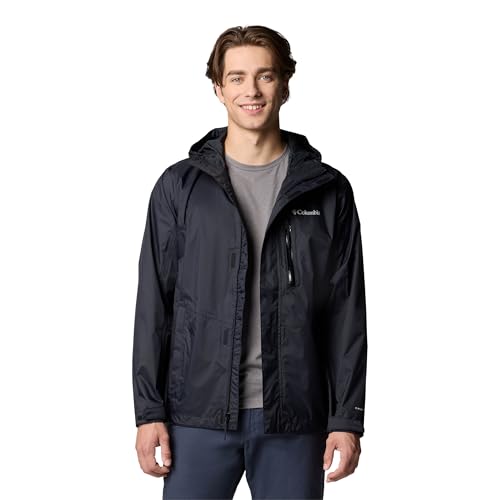
The Columbia is the most balanced choice here. Its Omni-Tech shell is described as waterproof and breathable, with fully sealed seams to close the stitching routes through which water can enter. The attached hood, cuffs and hem can all be adjusted, helping reduce flapping and driven rain without requiring a bulky cut.
It also packs into a hand pocket, which makes it easier to carry when the forecast is uncertain. Zipped hand pockets and a chest pocket are useful, although the absence of pit zips limits deliberate ventilation during steep climbs. It is the sensible middle ground between a basic emergency layer and a much more expensive technical shell.
- Buy it if: you want one good-value jacket for regular day walks and changeable forecasts.
- Skip it if: pit zips or a helmet-oriented technical hood are essential.
- Main compromise: broad capability and packability, but less ventilation control than the Marmot.
2. Regatta Pack It III: best budget

The Pack It III is the inexpensive option to leave in a daypack for showers, festivals, travel and occasional walks. It is an unlined shell with two lower pockets and an adjustable shockcord hood, and it packs into its supplied stuff sack. That simplicity keeps the cost and packed bulk down.
This is not the model to choose for repeated long, wet mountain days. The fit and adjustment are basic, and an unlined lightweight shell can feel clammy during harder exercise. Its value is preparedness: it is far better to have a compact rain layer available than to leave a heavier jacket at home.
- Buy it if: price and compact emergency coverage matter most.
- Skip it if: you expect sustained rain, high exertion or frequent hiking use.
- Main compromise: easy to carry and replace, but basic comfort and adjustment.
3. Berghaus Maitland Gore-Tex: best premium
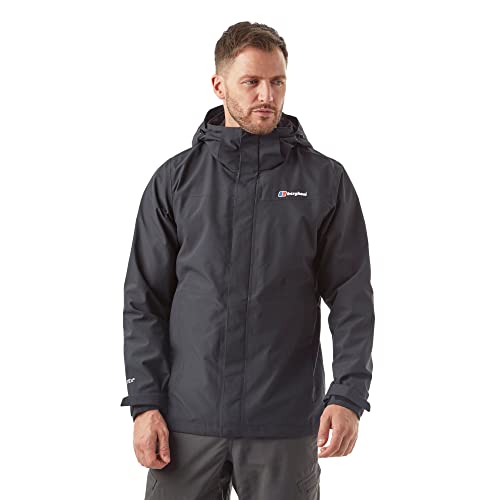
The Maitland is the more substantial premium choice. Its Gore-Tex construction and sealed seams are paired with adjustment from hood to hem, allowing a more controlled fit over changing layers. Two zipped hand pockets provide secure storage, while the Berghaus Interactive zip can accept compatible fleeces.
The premium makes most sense for walkers who value a fuller protective shell and already use compatible Berghaus layers. It is less compelling for someone who mainly needs a jacket for short local walks. Gore-Tex branding does not remove the need for ventilation, correct washing or a fit that leaves room for insulation without excess fabric.
- Buy it if: you want a substantial adjustable shell and value Berghaus layer compatibility.
- Skip it if: low weight, tiny packed size or modest cost is the priority.
- Main compromise: stronger premium proposition, but expensive and less minimal.
4. Marmot Minimalist Pertex: best lightweight technical shell

The Marmot is the strongest choice for faster walking and buyers who prioritise ventilation. It uses Pertex Shield Revolve in a seam-taped 2.5-layer construction, with a stated weight of 363g in size medium. Pit zips allow more direct heat release than simply opening the front zip, while adjustable cuffs and hem help manage the seal in poor weather.
Marmot describes the fabric as a mono-material recycled-polyester construction with a C0 durable water-repellent finish. Those details are attractive, but the practical reasons to buy it are simpler: lower weight, useful venting and a cleaner technical design. A 2.5-layer shell may feel less substantial against bare skin than a lined everyday jacket.
- Buy it if: you walk hard, run warm or want a lighter technical shell with pit zips.
- Skip it if: you prefer a lined jacket or need the cheapest occasional option.
- Main compromise: useful ventilation and low weight, but a more minimal interior feel.
5. Helly Hansen Seven J: best everyday option

The Seven J is the easiest jacket here to use for commuting, dog walking, travel and moderate countryside walks. Helly Hansen describes its Helly Tech Protection shell as waterproof, breathable and windproof, with sealed seams, an adjustable hood, storm flap and chin guard. A quick-dry lining makes it feel more like an everyday jacket than a stripped-back emergency shell.
That versatility comes with fewer specialist trail features than the Marmot and less packability than the Columbia or Regatta. It is the right choice when one jacket must look conventional and work in several settings. For repeated steep hikes, prioritise fit and ventilation over the appeal of a familiar everyday design.
- Buy it if: you want one conventional rain jacket for town, travel and moderate walks.
- Skip it if: tiny packed size or high-output ventilation is the main requirement.
- Main compromise: versatile and comfortable, but not the most technical or compact.
Head-to-head: which waterproof jacket should you buy?
Buy the Columbia Pouring Adventure III if you want the best all-round balance. It is more adjustable and hiking-focused than the Regatta, much cheaper than the Berghaus, and more packable than the Helly Hansen. The Marmot is the better choice for higher-output walking because pit zips give it a clear ventilation advantage.
Choose the Berghaus when you want a substantial premium shell and its compatible layering system is useful. Choose the Regatta only when the brief is a low-cost jacket that is easy to keep in a bag. The Helly Hansen makes most sense when everyday wear is at least as important as hiking.
For a single-jacket wardrobe, resist buying for the most extreme imagined day. Match the shell to the walks you actually do, the pack you carry and the layers already owned. Remote mountain use also demands route planning, navigation and suitable spare clothing; the British Mountaineering Council hill-walking kit guidance gives a useful wider checklist, and no jacket specification replaces those decisions.
How to choose a waterproof hiking jacket
Understand waterproof ratings without chasing one number
Hydrostatic-head figures describe fabric resistance to water pressure, but they do not describe the whole garment. Seam sealing, zip design, hood fit, cuffs and wear all influence whether rain gets through. Our waterproof jacket ratings guide explains the terminology. A sound hood and sealed seams can be more useful than a headline rating on a poorly fitting jacket.
Breathability and ventilation are different
A breathable membrane moves moisture vapour under suitable conditions; ventilation physically exchanges warm, damp air. Pit zips and a two-way front opening can therefore matter on climbs even when the fabric is highly specified. No waterproof shell prevents sweat during hard exercise. Slow down, adjust layers and open vents before moisture builds.
Conditions also change during a single walk. A shell that feels comfortable on an exposed ridge may become too warm in a sheltered climb. Put the jacket on before clothing underneath is soaked, then regulate temperature with cuffs, vents and the front zip. Carrying a dry spare layer is still sensible on remote routes; breathability is moisture management, not a substitute for planning.
Check fit with the layers you will use
Try the jacket over your normal base and mid layer. Reach forward and overhead to check sleeve length, hem rise and shoulder restriction. A shell that is too tight can compress insulation and limit movement; one that is too loose can flap and make the hood harder to control. The UK hiking layering guide helps plan what must fit underneath, while our merino versus synthetic comparison covers next-to-skin choices.
Prioritise hood, cuffs and usable pockets
A good hood should turn with your head and tighten without blocking peripheral vision. Cuffs need to close over or under gloves, and the hem should adjust without riding up. Check whether pack straps cover the hand pockets. If you hike with a larger load, pair the jacket with a correctly fitted pack and use our backpack waterproofing guide rather than expecting the jacket to protect everything.
Balance packed weight against durability
A lighter jacket is easier to carry and often feels less restrictive, but low weight alone does not make it the best choice. Frequent contact with rough pack straps, rock or vegetation favours a more robust face fabric and sensible reinforcement. An emergency shell can be deliberately minimal; a jacket used every weekend should be chosen for repeat wear, pocket access and repairability as well as the number on the scales.
Washing, drying and reproofing
Wash a waterproof jacket according to its care label, close fasteners and clear detergent residue from the machine first. Ordinary fabric conditioner can interfere with technical finishes. Dirt and body oils can reduce performance, so avoiding washing indefinitely is not good care. Use the process and product type specified by the manufacturer.
A durable water-repellent finish helps rain bead on the face fabric. When water starts soaking into the outer fabric after cleaning, the finish may need heat reactivation or reproofing. Follow the garment instructions because heat limits vary. Our step-by-step guide explains how to wash and reproof a waterproof jacket. Dry wet gear promptly after trips; the wet hiking gear guide covers practical drying at camp and home.
The bottom line
The Columbia Pouring Adventure III is the best choice for most buyers because it combines sealed seams, useful adjustment and genuine packability at a sensible price. Pick the Marmot for pit-zipped technical use, the Berghaus for a more substantial premium shell, the Regatta for low-cost emergency coverage, or the Helly Hansen when everyday versatility comes first.
Frequently Asked Questions
What is the best waterproof jacket for UK hiking?
The Columbia Pouring Adventure III is the best all-round option here. The Marmot Minimalist is better for walkers who prioritise low weight and pit-zipped ventilation.
How waterproof should a hiking jacket be?
Look beyond a single fabric rating. Sealed seams, storm protection, hood fit, cuffs and maintenance all affect real garment performance.
Are cheap packable jackets suitable for hiking?
They can be useful for occasional showers and emergencies, but simpler adjustment and ventilation make them less suitable for repeated long, wet or strenuous walks.
Is Gore-Tex always the best choice?
No. Gore-Tex is an established membrane family, but fit, garment design, ventilation, intended use and care matter. A well-designed non-Gore-Tex jacket may suit you better.
Should a waterproof jacket fit loosely?
It should leave room for the layers you plan to wear without restricting movement or creating excessive loose fabric. Test arm reach and hood movement with those layers.
How often should I reproof a waterproof jacket?
Reproof after appropriate cleaning when water no longer beads on the face fabric and the care instructions indicate reproofing is suitable. There is no universal fixed interval.