Washing clothes while camping is mostly a question of timing: wash the right things early, rinse properly, and give them enough time to dry before evening damp sets in. Try to wash everything at once and you will end up with a tent full of wet socks, which is nobody’s idea of outdoor competence.
In This Article
- Decide What Actually Needs Washing
- Campsite Laundry vs Hand Washing
- Hand-Wash Method That Works
- Drying Clothes Without Making Camp Damp
- Deal With Grey Water Properly
- Kit Worth Packing
- Fabric-Specific Tips
- Frequently Asked Questions
Decide What Actually Needs Washing
The first mistake is treating campsite laundry like home laundry. You do not need to wash every layer after one wear. You need clean underwear, dry socks, and base layers that do not smell like they have seen three wet Welsh hills and a smoky fire pit.
Outer layers usually need airing or wiping, not washing. Fleece and mid-layers can often go several days if they stay dry. Waterproof jackets, insulated jackets and sleeping bags are specialist items; washing them casually at camp is a good way to ruin loft, DWR finish or both.
Sort clothes into three piles
Do this before water comes out:
- Wash now: underwear, socks, sweaty base layers, T-shirts and lightweight leggings.
- Air only: fleece, softshell trousers, shirts, shorts and camp clothes that are not actually dirty.
- Leave alone: waterproof jackets, down jackets, sleeping bags, leather walking boots and anything with a membrane or insulation.
The clothing advice in Clothing & Layers Buying Guide for Beginners matters here. Synthetic base layers dry quickly and tolerate rougher camp care. Merino wool is excellent for odour control, but it wants gentler washing and less twisting.
Pack fewer cotton items
Cotton T-shirts and joggers feel fine at home, then become miserable at camp because they hold water and dry slowly. For a weekend, you can get away with it. For a week in the Lakes or Scotland, take quick-dry synthetics or merino blends instead.
If you are planning multi-day walking, the better strategy is to pack two or three quick-dry layers and rotate them. One worn, one drying, one clean-ish. That sounds grim until you compare it with carrying seven cotton T-shirts in a damp rucksack.
Campsite Laundry vs Hand Washing
Use a campsite laundry if you have children, muddy clothes, towels, or several days of washing to catch up on. Hand washing is best for small daily loads: socks, pants, base layers and one T-shirt. Trying to hand-wash a family load in a washing-up bowl is possible, but so is eating soup with a tent peg.
Many UK campsites have coin or app-operated machines. Prices vary, but a practical planning figure is £4-£6 for a wash and £3-£5 for a tumble dry. Some premium sites cost more; smaller farm sites may have no laundry at all. Take £1 coins just in case, even if the site says card or app payment.
When paid laundry wins
Pay for the machine when:
- You have bulky items: towels, children’s hoodies or muddy trousers.
- The weather is poor: drying outside is the real bottleneck, not washing.
- You are moving on tomorrow: damp laundry in the car or rucksack is asking for mildew.
- Someone has been ill: use a proper wash rather than a token rinse.
For a family camping holiday, I would rather spend £8-£10 on a wash and dry every few days than lose an hour wringing out socks in a washing-up bowl. For solo backpacking, that same £10 might be better spent on a hot meal and a dry bag wash back at camp.
When hand washing wins
Hand washing is better when you only have a few lightweight pieces. It uses less water, needs no queue, and stops small items building into a miserable laundry bag. The trick is to wash early in the day. A base layer washed at 9am can be dry by evening in decent weather; the same layer washed after dinner will still be clammy at breakfast.
If you already use the drying habits from How to Dry Wet Hiking Gear in Camp, camp laundry is the same battle with smaller items and more soap.
There is a third option on touring trips: save laundry for a town stop. UK launderettes are often around £6-£10 for a wash depending on drum size, with tumble drying commonly charged in short blocks. That is overkill for two pairs of socks, but useful if you are on a coast-to-coast route, bikepacking for a week, or camping between B&B nights.
Hand-Wash Method That Works
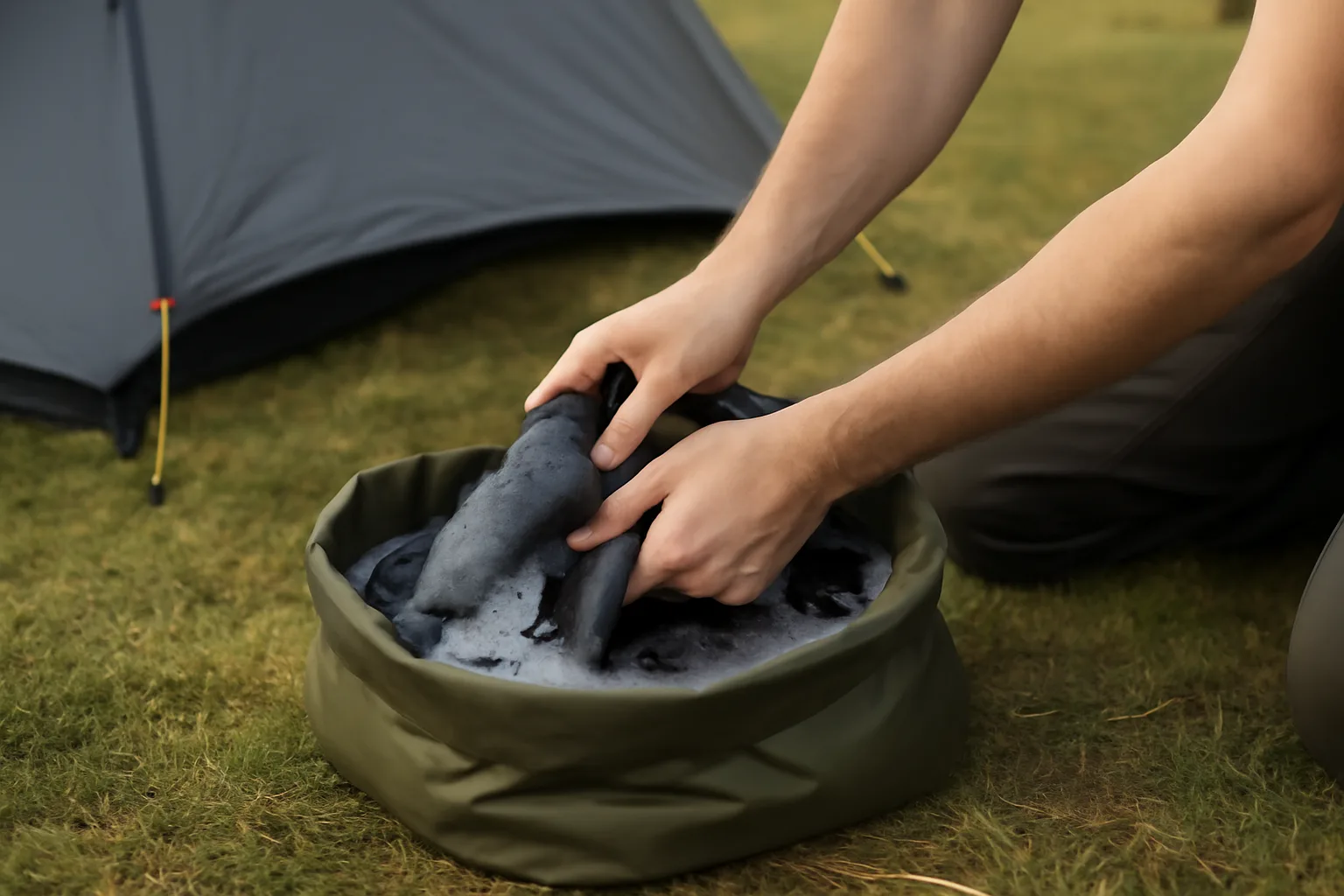
The best low-faff method is a dry bag or collapsible bowl. A sink works on serviced campsites, but do not hog the washing-up sinks with socks if there is a queue of people trying to clean pans. Use a laundry sink if the site has one.
You need warm water, a tiny amount of soap, agitation, a proper rinse, and gentle wringing. The rinse is the bit people rush. Soap left in fabric attracts dirt, irritates skin and makes base layers feel oddly stiff.
Step-by-step camp wash
Use this for socks, underwear, T-shirts and base layers:
- Shake off dirt first: mud and grit should be brushed off dry where possible.
- Fill a dry bag or bowl: use lukewarm water, not boiling water.
- Add very little soap: a pea-sized amount of concentrated wash is enough for a few items.
- Add clothes loosely: do not pack the bag tight; fabric needs room to move.
- Agitate for two minutes: knead, roll and squeeze rather than scrubbing hard.
- Soak for five minutes: longer for sweaty socks, shorter for merino.
- Rinse twice: fresh water each time until it stops feeling slippery.
- Press, do not torture: squeeze water out without twisting seams to death.
- Roll in a towel: press damp clothes inside a microfibre towel to pull out more water.
That towel roll is the small move that makes the biggest difference. A cheap microfibre towel from Decathlon or Go Outdoors is usually £5-£12 and earns its space if you are doing laundry on a longer trip.
Do not over-soap
Camp laundry needs less detergent than home washing. Products like Sea to Summit Wilderness Wash are concentrated; a 50 ml bottle is about £4 from UK outdoor shops such as Valley and Peak, and it should last several trips if you are not treating it like shower gel.
If you use normal laundry liquid, decant a small amount into a leakproof bottle. Do not bring a full household bottle. It is heavy, messy, and the lid will choose the worst possible moment to fail.
Drying Clothes Without Making Camp Damp
Washing is easy. Drying is the actual job. The UK problem is that “drying weather” often means a suspicious 90-minute gap between showers. Plan around airflow rather than just warmth.
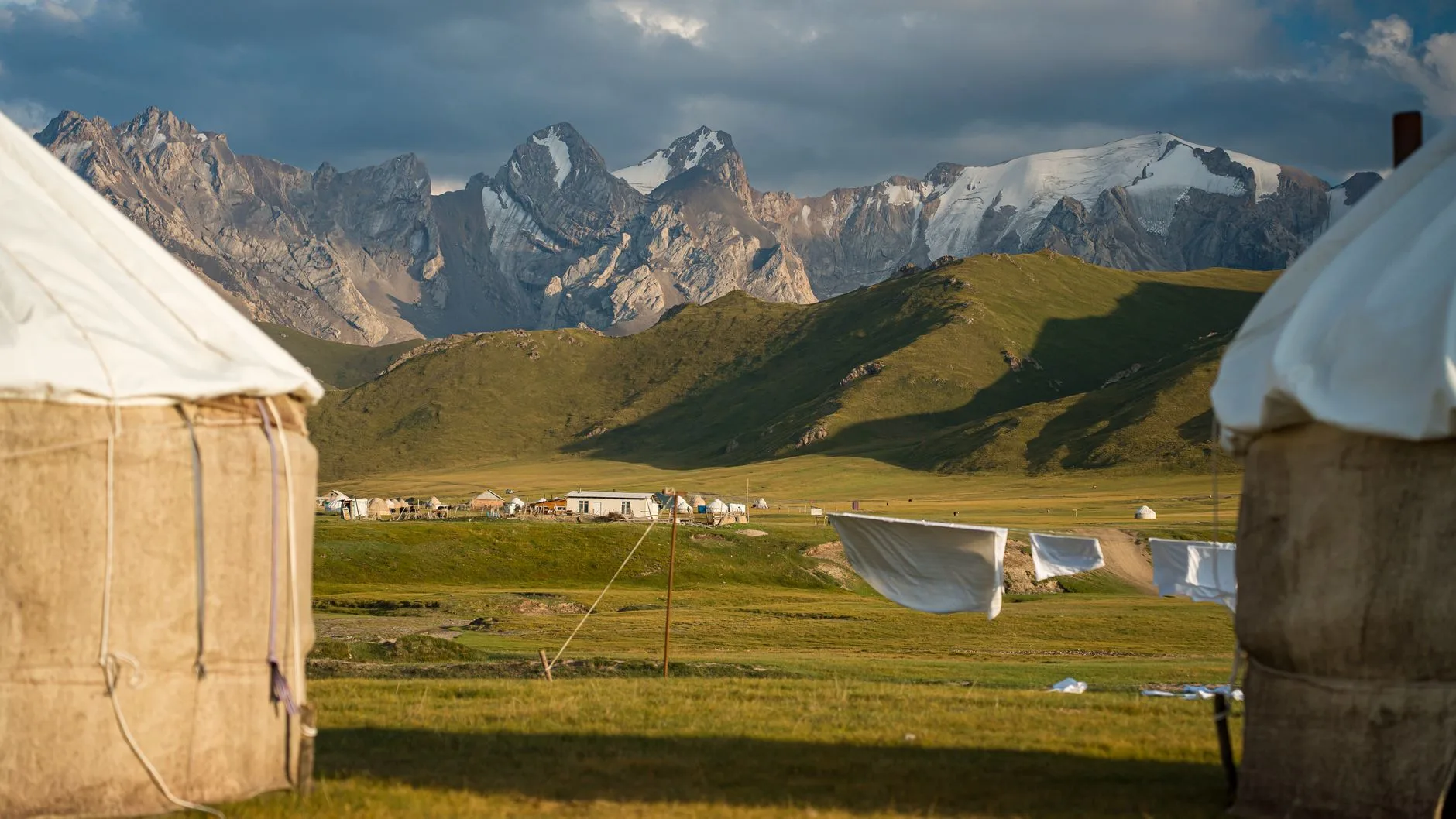
Hang clothes outside if you can, but avoid blocking paths, fences or shared campsite areas. A small travel washing line costs about £4-£8 from Amazon UK, Decathlon or Go Outdoors. Safety pins or mini carabiners stop socks escaping in wind. Pegless twisted lines are neat, but proper pegs grip better when the forecast gets rude.
Dry in layers, not clumps
Spread items out. A base layer folded over a line dries slowly; sleeves and hems stay damp. Socks dry faster if pinned by the toe with the cuff open. Underwear dries faster if it has airflow through the waistband rather than being doubled over.
If you have a porch, hang damp clothing there only when ventilation is good. Do not fill the sleeping area with wet laundry. Condensation will climb, sleeping bags will feel damp, and everyone will blame the tent.
On a family pitch, make a simple drying zone rather than scattering clothes everywhere. One line for wet items, one bag for still-dirty laundry, and one dry bag for clean clothes keeps the chaos down. It also stops someone using your clean base layer as an emergency towel, which apparently is a normal thing to do if you are eight.
Use body heat carefully
Putting on a slightly damp synthetic base layer for a walk can dry it fast if the weather is mild and you are moving. Do not do this with cold, soaked clothes in winter or with cotton. It is a bad warmth trade.
For evening drying, hang clothes high in the porch, open vents, and keep wet items away from down sleeping bags. If you need sleeping bag care rather than clothes washing, use How to Wash a Sleeping Bag instead; that is a different job.
Deal With Grey Water Properly
Laundry water is grey water. It can contain detergent, sweat, oils, sunscreen, insect repellent and microfibres. Do not tip it into a stream, lake, hedge, storm drain or random corner of the pitch. On a campsite, use the site’s grey water, laundry or disposal point.
National Park Service Leave No Trace guidance says washing should happen away from streams or lakes, using small amounts of biodegradable soap and scattering strained water: NPS Leave No Trace principles. Freshwater Habitats Trust also warns that grey water can carry pollutants such as nitrates and phosphates and should be taken to campsite disposal points where provided: Freshwater Habitats camping freshwater advice.
Biodegradable does not mean harmless
Biodegradable soap is better than harsh detergent, but it still should not go into natural water. It needs soil and time to break down. A small amount, used well away from water, is the aim.
For wild camping, the best answer is often not washing at all. Rinse sweat from a base layer in a small amount of water, skip soap unless you really need it, and carry dirty laundry out if the place is sensitive. Your convenience is not more important than the stream.
If you are on a formal campsite, ask where grey water goes before you wash. Some sites want it in a utility drain, some in a motorhome service point, and some have a marked laundry sink. Guessing is poor form, and pouring soapy water into a hedge beside the pitch is the sort of thing that gets campsite rules made stricter for everyone.
Kit Worth Packing
You do not need a gadget drawer to wash clothes while camping. For most trips, a dry bag, tiny soap bottle, line and towel are enough. Buy kit that serves more than one purpose.
Best value setup
For most campers, I would pack:
- 10L dry bag: about £14.99 for a Decathlon IPX6 10L waterproof bag; works as laundry bag and wash bag.
- Concentrated outdoor wash: about £4 for Sea to Summit Wilderness Wash 50 ml.
- Microfibre towel: about £5-£12 from Decathlon, Go Outdoors or Amazon UK.
- Travel washing line: about £4-£8; add a few spare pegs or safety pins.
- Zip bags or packing cube: about £3-£10 for separating damp/dirty items.
That setup is cheap, light and useful beyond laundry. A dry bag also protects spare clothes in heavy rain, which matters more than fancy laundry features.
When a Scrubba is worth it
The Scrubba Wash Bag is the premium option. It is usually around £45-£60 in the UK depending on stock and retailer, while Scrubba’s own shop lists models around $59.95-$69.95. The internal washboard helps with agitation, and it packs smaller than a bowl.
I would buy one for van travel, long backpacking trips, bikepacking or repeated family camping. For two weekends a year, a Decathlon dry bag does enough. Spend the difference on better socks.
What not to pack
Avoid mini electric camping washing machines unless you are in a caravan or motorhome with space and power. Amazon UK often has compact units around £60-£100, but they are bulky, need water handling, and make little sense for tent camping. A campsite machine is easier when you have that much laundry.
Fabric-Specific Tips
Different fabrics behave differently at camp. Treat everything the same and something will stretch, stink or take forever to dry.
Socks and underwear
Wash these most often. They sit next to skin, collect sweat and cause the most discomfort when dirty. Two pairs of good walking socks are better than five pairs of poor cotton socks. Rotate, rinse, dry.
If blisters are your issue, laundry helps but sock choice matters too. Clean socks reduce grit and salt build-up, but badly fitting socks still rub. Keep one dry sleep pair that never goes into boots.
Synthetic base layers
Synthetics are easy: wash in lukewarm water, rinse well, towel-roll and hang in airflow. They can smell faster than merino, so wash little and often. The Best Base Layers 2026 UK: Merino Wool & Synthetic guide is useful if you are deciding what to buy before a longer trip.
Merino wool
Merino needs gentler handling. Use cool or lukewarm water, minimal soap, no harsh twisting, and dry flat-ish if you can. It often needs airing more than washing. The comparison in Merino Wool vs Synthetic Base Layers: Which Is Better? is worth reading before you decide how many merino items to pack.
Waterproofs and technical jackets
Do not casually wash waterproof jackets at camp. Dirt can be wiped off, but proper cleaning and reproofing needs the right product and a controlled drying process. If your jacket is failing, follow How to Wash and Reproof a Waterproof Jacket at home instead.
Backpacks are similar. A muddy shoulder strap can be wiped down, but if the whole pack needs care, use How to Clean Your Hiking Backpack rather than dunking it in a campsite sink.
Frequently Asked Questions
Can you wash clothes in a campsite washing-up sink? Only if the campsite allows it and nobody is waiting to wash cookware. Use a laundry sink, grey water point, bowl or dry bag where possible.
What soap should I use for washing clothes while camping? Use a tiny amount of biodegradable outdoor wash or decanted laundry liquid. Rinse well and dispose of the water properly; biodegradable does not mean safe for streams.
How do you dry clothes quickly at camp? Wring gently, roll clothes in a microfibre towel, then hang them with airflow and spacing. Start early in the day rather than after dinner.
Is a Scrubba wash bag worth buying? It is worth it for long trips, van travel and frequent camping. For occasional weekend camping, a 10L dry bag is much cheaper and good enough.
Can I wash merino wool while camping? Yes, but use cool water, very little soap and gentle squeezing. Merino often only needs airing unless it is properly dirty.
Where should I pour laundry water when wild camping? Avoid soap if possible. If you must wash, keep well away from water sources and camp, scatter water widely, and follow local rules or Leave No Trace guidance.