Cooking in wind at camp is less about heroic flame control and more about choosing a low, sheltered, stable setup before you light the stove. A £15 wind shield can save dinner, but used badly it can also trap heat around a gas canister. The aim is simple: keep the flame on the pan, keep the canister cool, and know when the weather has won.
In This Article
- Cooking in Wind at Camp: Stove Safety Rules That Matter
- Why Wind Makes Camp Cooking Riskier
- Choosing the Right Stove Shield
- Stability: The Part People Notice Too Late
- A Safe Windy-Camp Cooking Setup
- Cooking Technique When the Flame Keeps Wandering
- When to Stop Cooking and Change Plan
- Frequently Asked Questions
Cooking in Wind at Camp: Stove Safety Rules That Matter
The safest windy-camp cooking setup starts lower than most people expect. A low remote-canister stove on firm ground is calmer than a tall screw-on stove perched on grass, and a wide pan is less twitchy than a narrow mug balanced above a roaring flame. If I had to cook in a gusty UK campsite, I would rather use a modest Vango-style remote canister stove at about £26-£48 than a tiny upright burner under a full 2-litre saucepan.
The quick decision
If the wind is light and steady, use natural shelter first: the leeward side of a wall, hedge, bank, car boot or cooking shelter with open sides. If the wind is gusty, do not try to beat it by turning the stove up. Turn the flame down, use a lid, shorten the cooking job, and make the whole setup lower.
For most campers, the best kit is not a specialist expedition stove. It is:
- A low stove: remote canister or broad tabletop style, usually £25-£60 from Go Outdoors, Decathlon, Amazon UK or Halfords.
- A partial wind shield: a folding aluminium screen at about £8-£18, positioned so it blocks wind but does not wrap the canister.
- A lidded pot: even a basic 1.5-litre aluminium pot with a lid, around £15-£30, cuts boil time and fuel waste.
- Canister feet: £5-£10 plastic tripod feet make upright gas canisters less wobbly on grass.
Integrated systems like the Jetboil Flash, often around £103-£160 in the UK, and the MSR WindBurner, usually about £148-£210, are better in wind than a bare burner and open pan. I would buy one for backpacking, fast brews and foul-weather boil-in-bag meals. I would not buy one as the only stove for family campsite cooking, because frying bacon, simmering pasta sauce or feeding four people is still easier on a wider, lower stove.
The hard safety line
Never cook inside a tent, inner sleeping area or closed awning. The London Fire Brigade warns against using camping stoves indoors because of fire and carbon monoxide risk, and that warning applies even when the weather outside is annoying. Open-sided shelter is different from enclosed shelter. If you cannot keep the stove outside with proper ventilation, you do not have a cooking spot.
Why Wind Makes Camp Cooking Riskier
Wind does three things at once. It pushes the flame away from the pan, strips heat from the pot, and makes small movements more sudden. That is why a stove can look fine for five minutes, then a single gust turns a gentle simmer into a flare, a toppled mug, or a pan sliding across a table.
Heat goes sideways
A gas flame should lick the base of the pan. In wind, it leans out and heats one side, which wastes gas and creates hot handles. You end up doing the wrong thing: turning the stove higher to make up for lost heat. That burns through a 230g gas canister faster, especially when it is cold. A typical 230g screw-on canister costs about £5-£8 in the UK, so wasted fuel is not ruinous, but running out before breakfast is still a bleak little moment.
This is where linked internal kit choices matter. If you are still choosing your main stove, read our Best Camping Stoves 2026 UK: Gas, Alcohol & Multi-Fuel guide first. For windy cooking, broad supports and low height matter more than a big advertised wattage.
Flame failure is not the only problem
People worry about the flame blowing out, but the scarier issue is partial flame movement. The stove stays lit, yet the heat pattern moves off-centre. Pan handles get hot. Plastic wind shields, table edges and food packaging creep too close. A tea towel that was nowhere near the burner two minutes ago suddenly flaps across it.
After a few wet weekends, my rule is to clear a bigger cooking zone than feels needed. Keep wrappers, stove bags, packet meals, kitchen roll and waterproof trousers out of reach before lighting. Wind has a gift for finding loose objects just as your pasta boils over.
Wind changes what you should cook
This is not the time for a fussy risotto. Windy-camp food should be quick, covered and tolerant of uneven heat:
- Good choices: filled pasta, couscous, noodles, soup, pre-cooked rice, one-pot chilli, porridge and boil-in-bag meals.
- Riskier choices: wide frying pans, pancakes, slow simmer sauces and anything needing constant stirring.
- Best family compromise: boil water safely, then finish food in an insulated pot cosy or covered pan off the highest heat.
Our One-Pot Camping Meals piece is a better food-planning companion than a recipe that assumes calm summer weather.
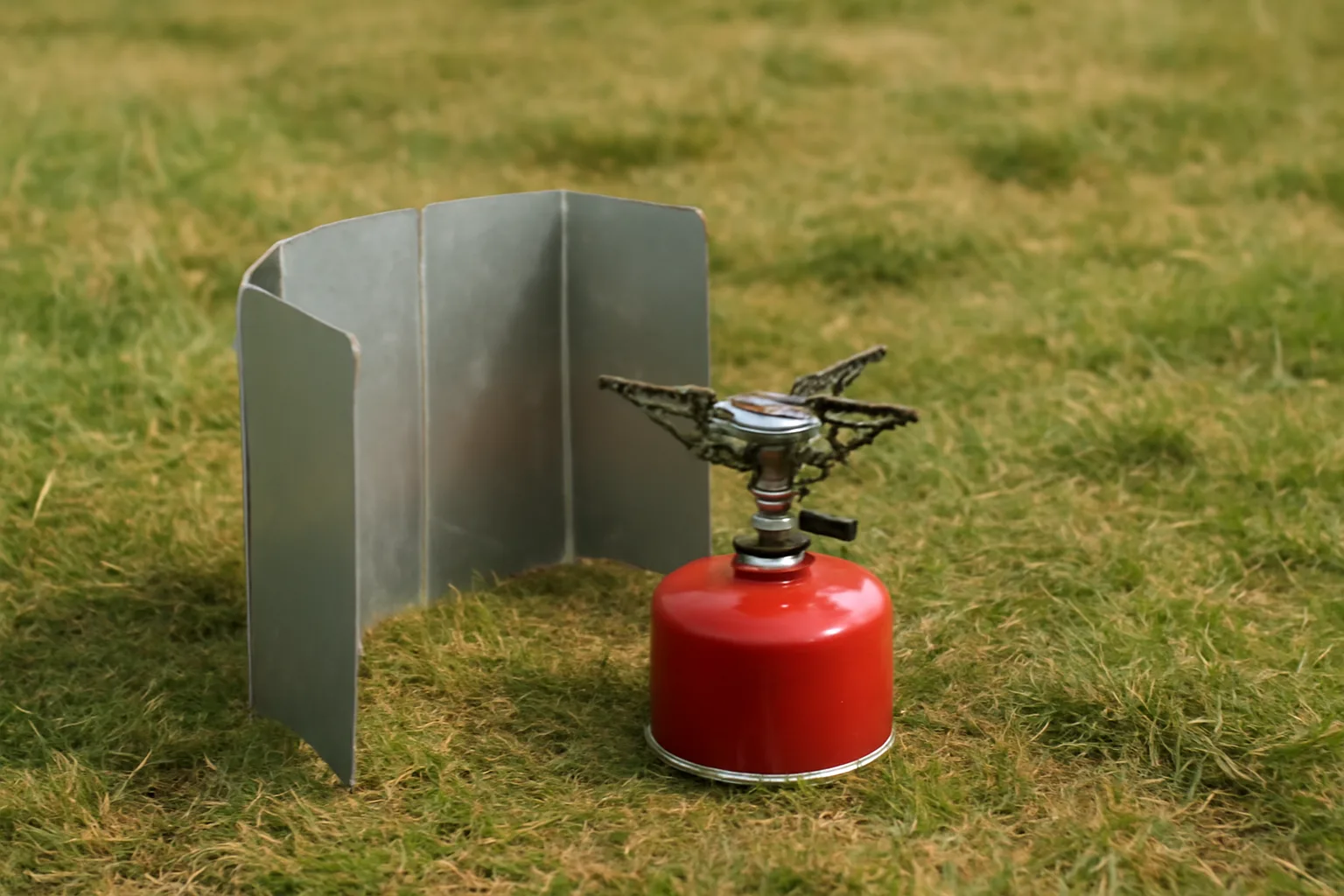
Choosing the Right Stove Shield
A stove shield should reduce wind without turning the stove into a little oven. That distinction matters most with upright canister stoves, where the gas canister sits directly under the burner. Wrap a tall foil shield tightly around that whole setup and reflected heat can warm the canister. That is not a clever fuel-saving trick. It is poor stove safety.
Folding aluminium shields
The common folding aluminium windshield is cheap and useful. Expect to pay £8-£15 for generic versions on Amazon UK and about £15-£18 for branded Vango or Outwell-style shields from Go Outdoors, camping shops or caravan accessory retailers. They pack flat, weigh little, and work well with low tabletop stoves, alcohol stoves and remote-canister setups where the fuel bottle or canister can sit outside the shield.
Use them as a wall, not a cage. Leave a clear gap at the bottom and side. Keep one side open for airflow. Touch the canister with the back of your finger now and again if it is near the shield; it should feel cool or barely warm, never hot.
Clip-on shields for upright canister stoves
For a small screw-on burner, a clip-on shield such as the Optimus-style canister stove windshield, usually around £12-£20, is safer than wrapping a big foil screen around the whole stove. It shields the burner and lower pan area without enclosing the canister. It is not magic, and it will not make a summit stove behave like a kitchen hob, but it is the right shape for the job.
If you already own a tiny £20-£35 upright burner, this is the one accessory I would consider before replacing the stove. Pair it with canister feet and a smaller pot. Do not ask it to hold a family-sized frying pan.
Integrated stove systems
Integrated systems manage wind by pairing burner and pot. The Jetboil Flash is quick for water, coffee and dehydrated meals. The MSR WindBurner is dearer but better protected in poor weather. The trade-off is cooking flexibility. These systems are brilliant at boiling, weaker at proper campsite cooking.
For a couple doing hiking weekends, I would take the integrated system. For a family pitch with bacon rolls, pasta and a kettle, I would take a stable two-burner or low remote-canister stove and a sensible shield. Different job, different tool.
Stability: The Part People Notice Too Late
Wind does not have to blow the stove over to cause trouble. It only has to make you grab a pan awkwardly, lift a lid too quickly, or nudge a table leg. Stability is the dull bit of camp cooking until it suddenly becomes the whole story.
Stove height matters
The taller the flame and pan sit above the ground, the worse the leverage. A screw-on burner plus canister plus narrow pot is fine for a solo brew in mild weather. In wind, it is a tower. Add a litre of water and a gusty pitch, and you have built something that wants to fall over.
A low remote-canister stove spreads the weight better. A briefcase-style butane stove also has a wide base, though it needs careful use and good ventilation. If you use one, do not leave the aerosol canister in the stove when it is packed away, and avoid oversized pans that reflect heat down over the cartridge housing.
Tables are not always safer
A flat camp table feels tidy, but many lightweight folding tables wobble more than firm ground. Before lighting, press down on each corner, then twist the pan supports gently. If the table rocks, cook on the ground or on a sturdier camp kitchen stand. A £35-£80 camp kitchen table with a metal top and braced legs is a better windy-camp choice than a flimsy picnic table.
For cookware choice, our Camping Cookware Materials: Titanium vs Aluminium vs Stainless Steel guide covers the weight and heat trade-offs. In wind, I prefer aluminium for most campsite meals because it spreads heat more kindly than thin titanium.
Match pan size to the supports
Big pans catch wind. Small supports do not forgive it. If the pan base overhangs the pot supports by more than a little, use a different pan or stove. A low, wide 1.5-litre pot with a lid is safer than a tall narrow kettle if the stove supports are marginal.
This is also why cheap camping kettles can be annoying in wind. Some whistle, some wobble, some have hot folding handles. If kettle choice is the problem, our Best Camping Kettles 2026 UK guide is more useful than forcing a poor kettle onto the wrong stove.
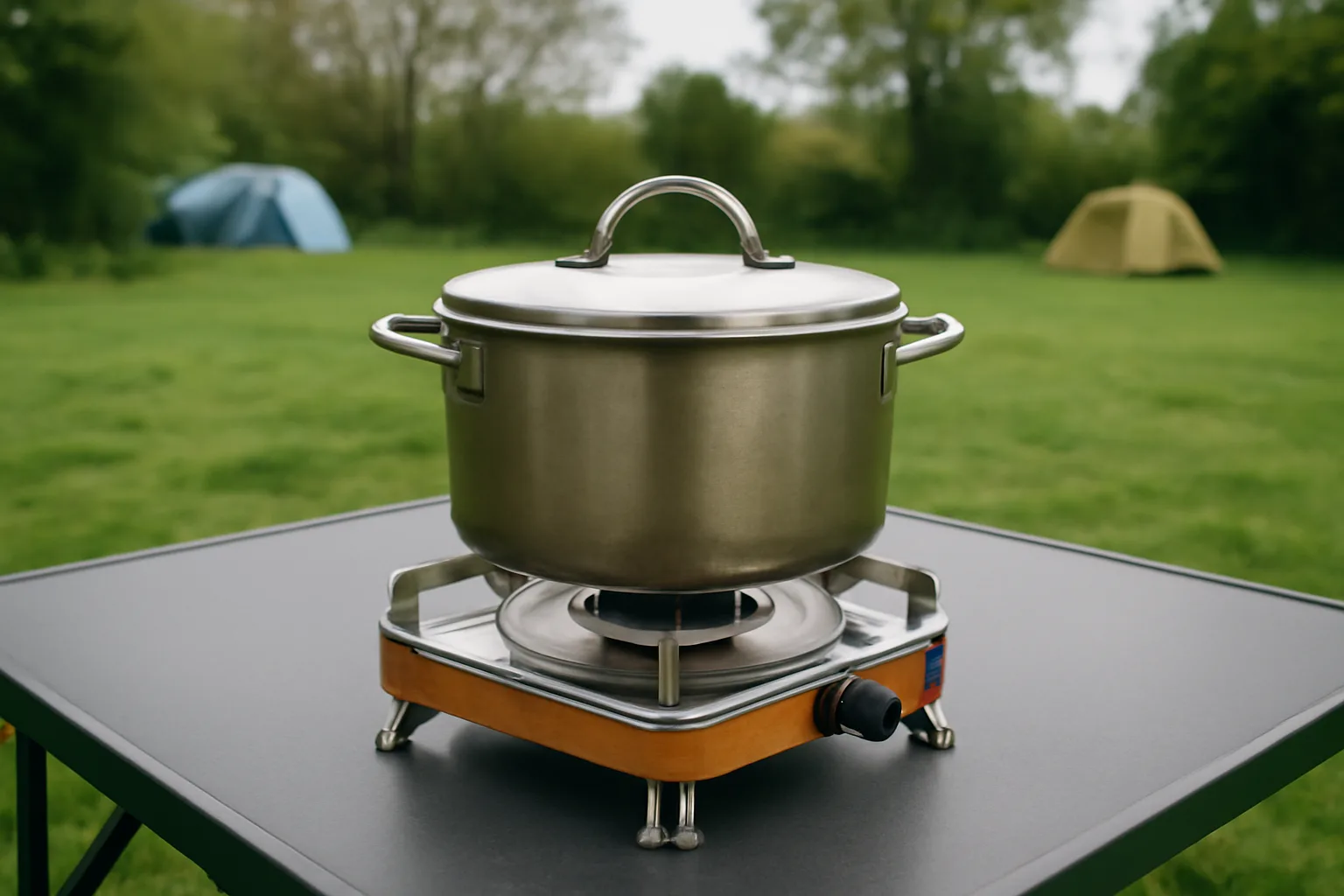
A Safe Windy-Camp Cooking Setup
Start by finding shelter before unpacking the stove. You want wind reduced, not trapped fumes. The safe answer is usually outside, low and partly screened, with the open side of the shield facing away from loose gear.
Step-by-step setup
- Pick the spot: choose firm ground or a stable table, away from tent fabric, dry grass, guy lines and walkways.
- Check ventilation: cook outside or under an open-sided shelter only, never in the tent inner or a closed porch.
- Set the stove low: use canister feet, a remote canister stove, or a broad tabletop stove if wind is more than a light breeze.
- Place the shield upwind: block the gusts, but leave airflow and keep any gas canister outside the enclosed heat zone.
- Clear the area: move packaging, sleeves, tea towels, waterproofs and children away before lighting.
- Light low, then adjust: start with a controlled flame rather than a full blast, and use a lid as soon as the pan is on.
- Stay with it: do not leave a windy stove to fetch water, find plates or zip the tent.
That list sounds fussy until you have watched a pan slide on a wet table. The whole routine takes less than a minute once it becomes habit.
Keep the canister cool
The canister check is simple. If you can touch it comfortably, you are probably fine. If it feels hot, turn the stove off and move the shield. Do not cool a hot canister by splashing water near a lit stove. Switch off, wait, and reset the cooking area.
The Camping and Caravanning Club’s camping safety guidance is clear that fuel-burning appliances should not be used to heat tents or awnings. Treat that as a wider mindset: the stove is for cooking, in ventilation, under watch. It is not a heater, dryer or morale machine.
Cooking Technique When the Flame Keeps Wandering
Once the setup is safe, the cooking technique gets easier. The main trick is to stop chasing the wind with more flame. More gas often gives more drama, not faster food.
Use lids and smaller jobs
A lid is the cheapest wind tool you own. A basic pan lid costs nothing if it came with the cookset, and a universal camping lid is about £8-£15. It keeps heat in the pan and lets you run a lower flame. If you are boiling water for pasta, boil less water and stir more often. If you are making coffee, boil only what you need.
For coffee outdoors, our Camping Coffee: Best Ways to Brew Outdoors guide is worth pairing with a wind-safe kettle setup. A French press is lovely in calm weather; in wind, instant coffee after a safe boil may be the better call. No shame in that.
Cook in stages
Windy cooking rewards staged meals. Brown sausages or halloumi if conditions allow, then move to a covered pot. Heat sauce separately. Use couscous or noodles that finish off the flame. Keep plates and cutlery ready so the stove is lit for less time.
I like meals where the risky bit is short:
- Breakfast: porridge sachets, instant coffee, pre-sliced fruit and a quick kettle boil.
- Lunch: soup, packet noodles, wraps, couscous or reheated leftovers.
- Dinner: pasta with jar sauce, chilli reheated in a lidded pan, or boil-in-bag rice with pre-cooked toppings.
Plan fuel like the weather will be worse
Wind and cold both increase fuel use. For a weekend with two people, I would usually carry one working 230g canister and one spare if the stove is gas-only. That adds about £5-£8 to the food bag and saves you from rationing tea on Sunday morning. For a family trip, two 230g canisters or one larger canister plus a spare is more sensible, depending on stove type.
If you are cleaning up afterwards, do not waste a pan of hot water trying to scrub burnt food in the wind. Wipe first, soak later, and use the method in How to Clean Camping Cookware in the Field so you are not relighting the stove just to rescue a pan.
When to Stop Cooking and Change Plan
The best windy-camp cooks are not the ones who can keep a flame going in grim weather. They are the ones who stop before the setup gets silly. Dinner can become sandwiches. Coffee can wait. A campsite shop pasty is sometimes the most adult safety decision available.
Stop if any of these happen
- The shield has to wrap the stove fully: if that is the only way to keep the flame alive, the wind is too much for that setup.
- The canister is warming: turn off, cool down, and reset with more ventilation or a different stove position.
- The pan moves when gusts hit: lower the setup or change meal plan.
- You are tempted to cook in the tent: stop. That is the moment to eat cold food.
- You cannot stay beside it: windy stoves need attention from lighting to cool-down.
Better backup plans
Pack one no-cook meal per trip. Wraps, cheese, houmous, oat bars, nuts, bananas, smoked sausage, couscous pots and instant noodles all count, depending on what you can safely heat. If the forecast is rough, take a flask filled before leaving home or buy hot water at the campsite cafe. That is not defeat. It is what experienced campers do after learning the hard way.
The final answer: cook low, shield partially, ventilate properly, and keep meals simple. A £15 wind shield and a £5 set of canister feet can help, but judgement matters more than kit. If the stove, shield and pan only work when you break safety rules, it is not a cooking problem any more. It is a stop-cooking problem.
Frequently Asked Questions
Can you use a wind shield with a gas camping stove? Yes, but do not fully enclose an upright gas canister. Use a partial shield, leave ventilation, keep the canister outside the hottest area where possible, and stop if the canister feels hot.
What is the safest stove for cooking in wind at camp? A low remote-canister stove or stable tabletop stove is usually safer than a tall screw-on burner. Integrated systems like Jetboil and MSR WindBurner are strong for boiling water, but less flexible for family meals.
How much does a camping stove wind shield cost in the UK? Generic folding aluminium shields are usually about £8-£15 on Amazon UK, while branded Vango or Outwell-style shields are often £15-£18 from Go Outdoors or camping retailers.
Should I cook inside the tent porch if it is windy? No. Do not cook in a closed tent porch, tent inner or enclosed awning. Fire and carbon monoxide risk matter more than saving dinner.
Does wind use more gas when camping? Yes. Wind pushes heat away from the pan and makes you run the stove for longer. A lid, lower flame, sheltered setup and simpler food all reduce fuel waste.
When is it too windy to cook at camp? If the pan moves, the flame will not stay under the pot without fully wrapping the stove, or you are tempted to move indoors, it is too windy for that setup. Switch to cold food or wait.