This rucksack size guide starts with what must go inside, not how many nights appear on your itinerary. For most UK day walkers, 30 litres is the safest all-round choice: 20L suits light summer outings, 50L makes sense when you carry compact overnight kit, and 65L is for bulky sleeping gear, shared equipment or longer food carries. A bigger pack is not automatically more comfortable, and litres tell you nothing about whether the harness fits your back.
In This Article
- The short answer
- What capacity means
- 20L rucksacks
- 30L rucksacks
- 50L rucksacks
- 65L rucksacks
- Weather, travel and pack design
- Measure your kit
- Frequently asked questions
Rucksack Size Guide: The Short Answer
The useful dividing line is not “day pack” versus “big pack”. It is the bulk of your waterproofs, insulation, sleep system, food and shared equipment. Our recommendation starts with a realistic UK load rather than a perfectly minimal summer packing list.
| Capacity | Best suited to | Typical contents | Main limitation |
|---|---|---|---|
| 20L | Short walks, commuting and light summer days | Waterproof shell, water, lunch, small first-aid kit and essentials | Little room for bulky winter layers |
| 30L | Full-day UK walks and versatile everyday use | Extra layer, waterproofs, food, water, safety kit and accessories | Usually too small for a conventional sleep system |
| 50L | Overnights and compact multi-day loads | Small tent share, sleeping bag, mat, stove, clothing and food | Requires disciplined packing with bulky kit |
| 65L | Longer trips, winter bulk and shared equipment | Larger sleep system, more food, group gear and spare clothing | Heavier and easy to overfill |
Our default choices
For one pack that will handle ordinary walks across the year, choose 30L. It leaves enough reserve for a fleece and waterproof trousers without feeling like an expedition bag on a warm afternoon. Choose 50L if camping is a genuine part of the plan and your sleeping bag and mat pack reasonably small. Move to 65L because your actual equipment needs the space, not because the number sounds safer.
The current Osprey UK hiking range guidance places roughly 10–25L around short day hikes, 20–35L around fuller days, 35–50L around overnight use and 50L-plus around multi-day loads. Those are sensible bands, but they are guidance rather than promises: a bulky synthetic sleeping bag can consume more space than an entire compact summer sleep system.
If you are still deciding between pack formats and access styles, our backpacks buying guide for beginners explains the broader features before you narrow down the litres.
What Rucksack Capacity in Litres Actually Means
A 30L label means the pack offers approximately 30 litres of internal volume under the maker’s measuring method. Think of it as space, not weight. Thirty litres of a dense load can be far too heavy, while 50 litres of a lofty sleeping bag and warm clothing may be manageable.
Published capacity is not always usable in the same way
Two packs with the same nominal volume can swallow different-shaped loads. A tall, narrow hiking pack behaves differently from a boxier travel pack. Curved frames, hydration sleeves, internal dividers and tapered bases all affect what fits easily. Stretch front pockets may be included in one manufacturer’s figure and treated differently by another.
This is why we compare capacities as bands rather than pretending every 30L model is interchangeable. In practice, easy access and sensible pocket placement can make a slightly smaller bag more useful than a larger one full of awkward corners.
Litres do not tell you fit or load support
Capacity does not reveal torso length, shoulder-harness shape, hip-belt structure or frame stiffness. A 65L sack with the wrong back length will remain uncomfortable however neatly it is packed. Likewise, a frameless 30L commuter bag and a supportive 30L walking pack may have similar space but very different carrying ability.
Our sizing method therefore has two separate checks:
- Volume check: does your real kit fit without forcing zips or hanging essential items outside?
- Fit check: can the harness transfer the load comfortably, with the hip belt and shoulder straps in the correct positions?
Use our rucksack fitting guide for the second part. Do not solve a poor fit by buying more litres.
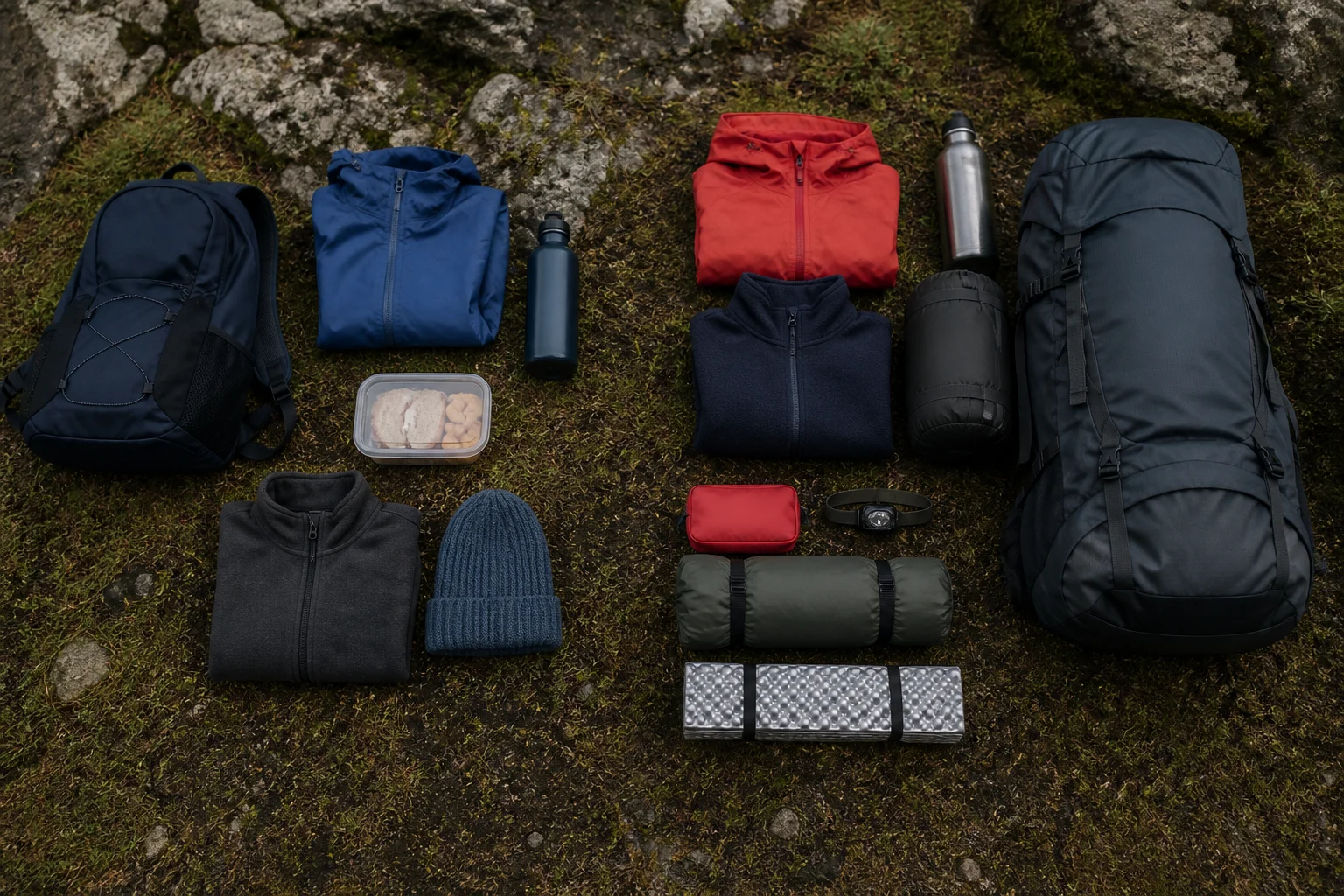
20L Rucksacks: Best for Light Day Use
A 20L rucksack is compact, tidy and pleasant when the packing list is genuinely short. It works well for commuting, family attractions, a quick hill walk in settled weather or a summer route where you are never far from shelter.
What normally fits
A sensible 20L day load might include:
- Weather layer: a packable waterproof jacket, with waterproof trousers only if they compress small.
- Food and drink: lunch, snacks and one or two bottles depending on the route.
- Safety basics: compact first-aid kit, head torch, map or power bank and emergency layer.
- Personal items: keys, wallet, sun cream and gloves or hat.
That list can fill 20L faster than expected in autumn. A thick fleece, children’s spare clothing or a large flask removes most of the spare room. Our approach is to leave a little free capacity rather than packing the bag like a puzzle; it makes it easier to add a layer during the walk and reach safety kit promptly.
When 20L is too small
Choose more space if you regularly carry winter insulation, group food, camera equipment or supplies for children. Strapping a jacket loosely to the outside is not a good long-term capacity plan. External storage is useful for wet items, but critical kit should be secure and protected.
For readers who know their use is limited to day walking, our guide to the best day packs for UK walks looks at actual pack choices rather than just volume.
30L Rucksacks: The Most Versatile Day-Walk Size
For British conditions, 30L is the sweet spot. It is small enough to carry neatly on a train or through town, but has enough reserve for a full waterproof set, a warm layer, food, water and the small safety items that make a proper hill day less precarious.
Why the extra ten litres matter
The jump from 20L to 30L is proportionally large: it adds half as much space again. That reserve is especially useful in changeable weather. You can put a fleece inside once you warm up instead of fastening it outside, and there is room for winter gloves, a hat, gaiters or a compact insulated jacket.
Thirty litres also works well for commuting when you carry a laptop, lunch and gym clothing, although a dedicated laptop sleeve and sensible internal organisation matter more than hiking features in that setting. For travel, it may fit some airline cabin limits, but never assume that “30L” means cabin approved; the external dimensions and the airline’s current allowance decide that.
Where 30L stops working
It is possible to build an ultralight overnight load around 30L, but that is not a sensible default recommendation. It demands compact, carefully chosen equipment and very little margin for cold or wet conditions. Most occasional campers are better served by 50L than by buying expensive miniature kit just to make a smaller pack work.
If you already own a 30L bag, practise with the exact load using our guide to packing a rucksack for hiking. A good packing order often recovers usable space, but it cannot create volume that is not there.
50L Rucksacks: Overnight and Lightweight Multi-Day Trips
A 50L pack is the practical starting point for an overnight hiking camp when your tent, sleeping bag and mat are reasonably compact. It can also handle a short multi-day trip with careful food planning and opportunities to refill water.
A realistic 50L load
The bulky pieces set the agenda: sleep system, shelter and warm clothing. Cooking equipment, food and water then fill the gaps. We would expect a 50L setup to involve some discipline, but not absurd compromises such as leaving essential waterproofs behind.
- Good match: compact three-season sleeping bag, small mat, lightweight shelter share and limited spare clothing.
- Tight match: bulky synthetic bag, full two-person tent, several days of food and no resupply.
- Poor match: winter sleep system, group cooking equipment and specialist gear all carried by one person.
Osprey’s current backpacking pack guidance describes 36–50L as suitable for lighter, disciplined multi-day packing and 50–65L as the broader sweet spot for more equipment. That wording matters. Trip duration alone cannot choose the bag; equipment bulk and resupply determine whether 50L remains comfortable.
Pack weight still matters
A larger framed pack adds weight before you put anything inside. Check the empty-pack weight and the maker’s intended load range, then consider whether the harness is supportive enough for your gear. Carrying dense food and water in an under-supported pack can feel worse than using a slightly heavier rucksack with an effective frame and hip belt.
For longer itineraries, use our detailed multi-day rucksack packing guide after choosing the capacity.
65L Rucksacks: Bulky Kit, Shared Gear and Longer Trips
A 65L rucksack earns its place when the load is bulky rather than merely untidy. It suits colder trips, longer food carries, larger sleeping bags, expedition-style travel and situations where one person carries a greater share of group equipment.
Good reasons to choose 65L
- Cold-weather bulk: warmer insulation and sleep systems occupy much more volume.
- Shared equipment: you carry the tent body, group stove or family kit rather than only your personal share.
- Limited resupply: several days of food must fit from the start.
- Specialist equipment: photography, climbing or other necessary gear adds genuine volume.
The danger is treating spare room as an invitation. A large sack is easy to fill with duplicate clothing, oversized toiletries and “just in case” objects. Capacity creep raises the load, which makes the walking less enjoyable and can expose weaknesses in fit.
When 65L is excessive
For ordinary day walks, commuting and most cabin travel, 65L is cumbersome. It takes more room on public transport, encourages overpacking and will normally exceed cabin-bag dimensions when full. Compression straps can stabilise a partially loaded bag, but they do not make a tall expedition sack behave like a day pack.
If most outings are days with only one occasional camping trip, owning or borrowing two appropriate packs is usually better than using 65L for everything.
How Weather, Travel and Pack Design Change the Answer
Capacity charts are useful only after you apply them to your conditions. UK winter clothing can shift a day load from 20L to 30L, while compact summer equipment can make 50L sufficient for several nights.
Weather and equipment bulk
Do not remove safety margin merely to hit a fashionable low volume. Waterproofs, insulation, food and an emergency layer need secure space. A pack liner can protect the main contents, while an accessible outer pocket keeps wet waterproofs away from dry clothing. The wet jacket still occupies volume even if it is outside the main compartment.
External attachment points and compression
Side pockets, front stretch panels and lash points improve flexibility. They are best for wet gear, bottles, poles or a securely fastened foam mat—not for a collection of loose items that snag on branches. Compression straps reduce movement and help a partly filled pack carry better, but neither feature compensates for choosing the wrong core capacity.
Cabin travel
Airlines regulate external dimensions and sometimes weight, not the advertised litre figure. Back panels, wheels, rigid frames and overfilled pockets all count. Measure the packed bag at its widest points and check the airline’s current rules for every journey. A compliant 30L travel pack may be acceptable where a long, narrow 30L hiking sack is not.
Water and food
One litre of water weighs roughly one kilogram and occupies space, but water availability can change through the day. Food volume also varies enormously. Routes with reliable resupply permit a smaller load than remote trips where everything leaves home with you. These decisions affect both capacity and the support the harness must provide.
Measure Your Kit Before You Buy
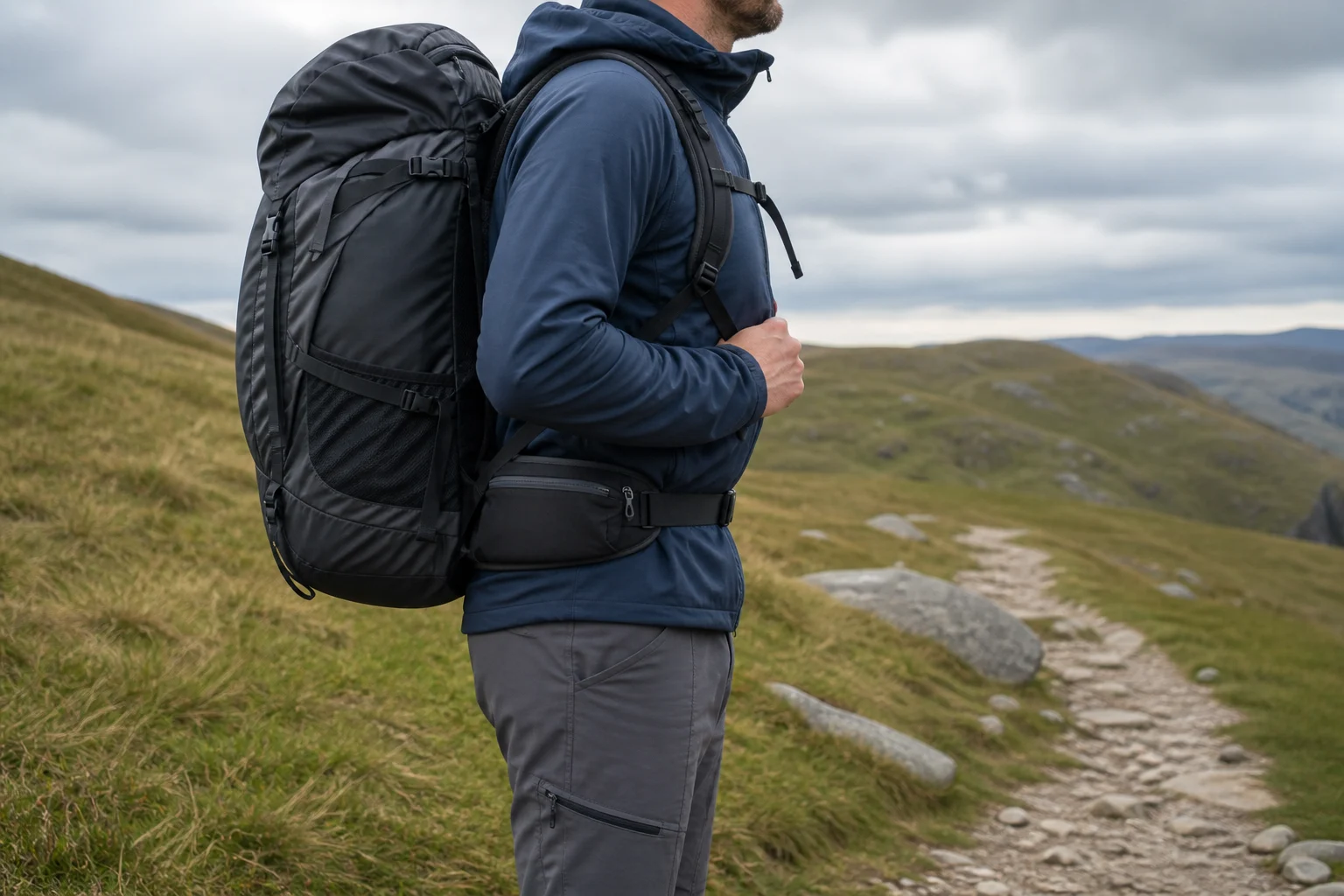
The most reliable rucksack size guide is the equipment you already plan to carry. Lay it out, remove duplicates, then measure its combined volume before committing to a pack.
A practical home test
- Build the real packing list. Include waterproofs, insulation, food, water containers, first aid and the actual sleep system for camping trips.
- Separate external items. Decide what can safely live in stretch pockets or on proper attachment points, without dangling.
- Pack into known containers. Use boxes or bags with measurable dimensions; multiplying length × width × height in centimetres and dividing by 1,000 gives an approximate litre volume.
- Add sensible working room. Allow space to put layers away during the day without rebuilding the whole load.
- Try the pack with weight. Adjust the back length, hip belt, shoulder straps and load lifters, then walk around for long enough to expose pressure points.
Soft kit never occupies a perfect cuboid, so the calculation is approximate. Its value is comparative: if your essential equipment already fills about 45 litres before working room, a 50L bag will be tight and a 30L bag is wishful thinking.
Final recommendation
Choose 20L for genuinely light days, 30L as the best all-round UK day-walking capacity, 50L for compact overnight or disciplined multi-day loads, and 65L for bulky, shared or longer unsupported trips. Then treat fit as a separate buying decision. The right capacity prevents frustration; the right harness makes the load wearable.
Frequently Asked Questions
Is a 20L rucksack big enough for a day hike?
Yes, for a light summer day with compact waterproofs, food, water and basic safety items. Choose 30L if you carry bulky warm layers, family equipment or winter kit.
Is 30L too big for everyday use?
Usually not. A 30L pack can work well for commuting and full-day walks, especially if it has compression straps. Check its physical dimensions and organisation rather than judging the litre figure alone.
Can I use a 50L rucksack for a week?
Possibly, with compact equipment, limited spare clothing and opportunities to resupply. It is not a universal promise: cold-weather kit, food and a bulky sleeping bag may push the load towards 65L.
Is a 65L rucksack allowed as cabin luggage?
Normally a full 65L hiking pack is too large for cabin limits, but airlines use dimensions and weight rather than capacity labels. Check the current allowance and measure the packed bag.
Does a larger rucksack carry more weight safely?
Not necessarily. Safe, comfortable carrying depends on the frame, harness, hip belt, maker’s intended load and correct fit. Litres describe volume, not load capacity.
Should I buy a larger pack for flexibility?
Only if your real kit needs it. Compression can stabilise spare space, but an oversized pack is heavier and encourages overpacking. For very different activities, two appropriately sized packs often work better.