It’s 6pm on a November afternoon, the trail back to camp has disappeared into darkness twenty minutes earlier than you expected, and you’re trying to navigate tree roots while holding your phone torch in one hand and a trekking pole in the other. That’s the moment you swear you’ll never cheap out on a head torch again. Ask me how I know.
A good head torch is the most underrated piece of kit in your rucksack. The Duke of Edinburgh kit list includes one as essential gear for expeditions. It weighs almost nothing, costs less than a meal out, and the difference between a reliable one and a rubbish one is the difference between a comfortable night hike and a borderline dangerous one. Here’s what’s worth buying in 2026, tested on UK trails and campsites.
Best Overall: Petzl Actik Core
The Petzl Actik Core is the head torch I’d recommend to most hikers and campers in the UK. At about £55-65 from Go Outdoors or Cotswold Outdoor, it hits the sweet spot of brightness, weight, battery life, and build quality that makes it the one to beat.
You get 600 lumens on maximum — more than enough for fast night hiking on technical terrain — with a reactive lighting mode that automatically adjusts brightness based on ambient light. Point your head down at a map and it dims; look up at the trail ahead and it brightens. This sounds gimmicky but it genuinely extends battery life by 30-40% compared to running on a fixed setting.
The “Core” in the name refers to the rechargeable battery, which charges via USB and lasts about 8 hours on a moderate setting (160 lumens). You can also swap in three AAA batteries as backup, which is the real selling point for multi-day hikes — carry a spare set of AAAs and you’re covered for a week. The headband is comfortable, stays put during scrambles, and the whole unit weighs 75g. You forget it’s there.
Red light mode is included and it’s a proper red LED, not a tinted filter. Essential for checking maps in your tent without destroying your night vision or waking your tent-mate.
Where to buy: Go Outdoors (about £58), Cotswold Outdoor (about £62), Amazon UK (about £55).
Best Budget: BioLite HeadLamp 200
If £55 is more than you want to spend on a light you’ll strap to your forehead, the BioLite HeadLamp 200 at about £25-30 offers remarkable value. It’s become something of a cult favourite among UK hikers for good reason.
The standout feature is the design. At just 50g and with a slim, low-profile shape, it sits flush against your forehead rather than bouncing around like a brick on an elastic band. The moisture-wicking headband is really comfortable for extended wear — notable when cheaper head torches leave a sweaty indent across your forehead.
200 lumens on maximum won’t light up distant hillsides, but it’s plenty for camp tasks, established trails, and reading in the tent. The rechargeable battery lasts about 3.5 hours on high and up to 40 hours on the dimmest setting. Charging is via a micro-USB cable — not USB-C, which is this torch’s age showing slightly.
There’s a red and white strobe mode for emergencies, and the front-mounted switch is easy to operate with gloves on. For casual camping and summer hiking, it’s hard to justify spending more.
Where to buy: Amazon UK (about £28), Cotswold Outdoor (about £30).
Best for Trail Running: Petzl Swift RL
Trail runners need something that stays put at pace, throws a wide, even beam, and reacts to terrain changes without manual fiddling. The Petzl Swift RL does all of that, and it’s the most popular head torch at UK fell running events for a reason. For a related angle, see our One-Pot Camping Meals: Simple Recipes for the Trail guide.
1,100 lumens on maximum is borderline excessive — it turns night into day. But the reactive lighting technology is what justifies the £90-100 price tag. The sensor adjusts beam intensity and pattern in real time, so you get full power on dark forest trails and an automatic dim when you’re on a lit path or looking at your watch. Battery life on reactive mode is about 5 hours, which covers most evening training runs and shorter races.
At 100g it’s heavier than the BioLite but the weight distribution across the wide headband is excellent. No bounce, even at full pace over rough terrain. The beam pattern is wide enough to illuminate your peripheral vision, which matters when you’re picking foot placements on rocky ground.
The rechargeable 2,350 mAh battery charges in about 3 hours via USB. No AAA backup option, though, so not ideal for multi-day events unless you carry a power bank.
Where to buy: Cotswold Outdoor (about £95), Sigma Sports (about £90), Amazon UK (about £88).
Best for Wild Camping: Ledlenser H7R Core
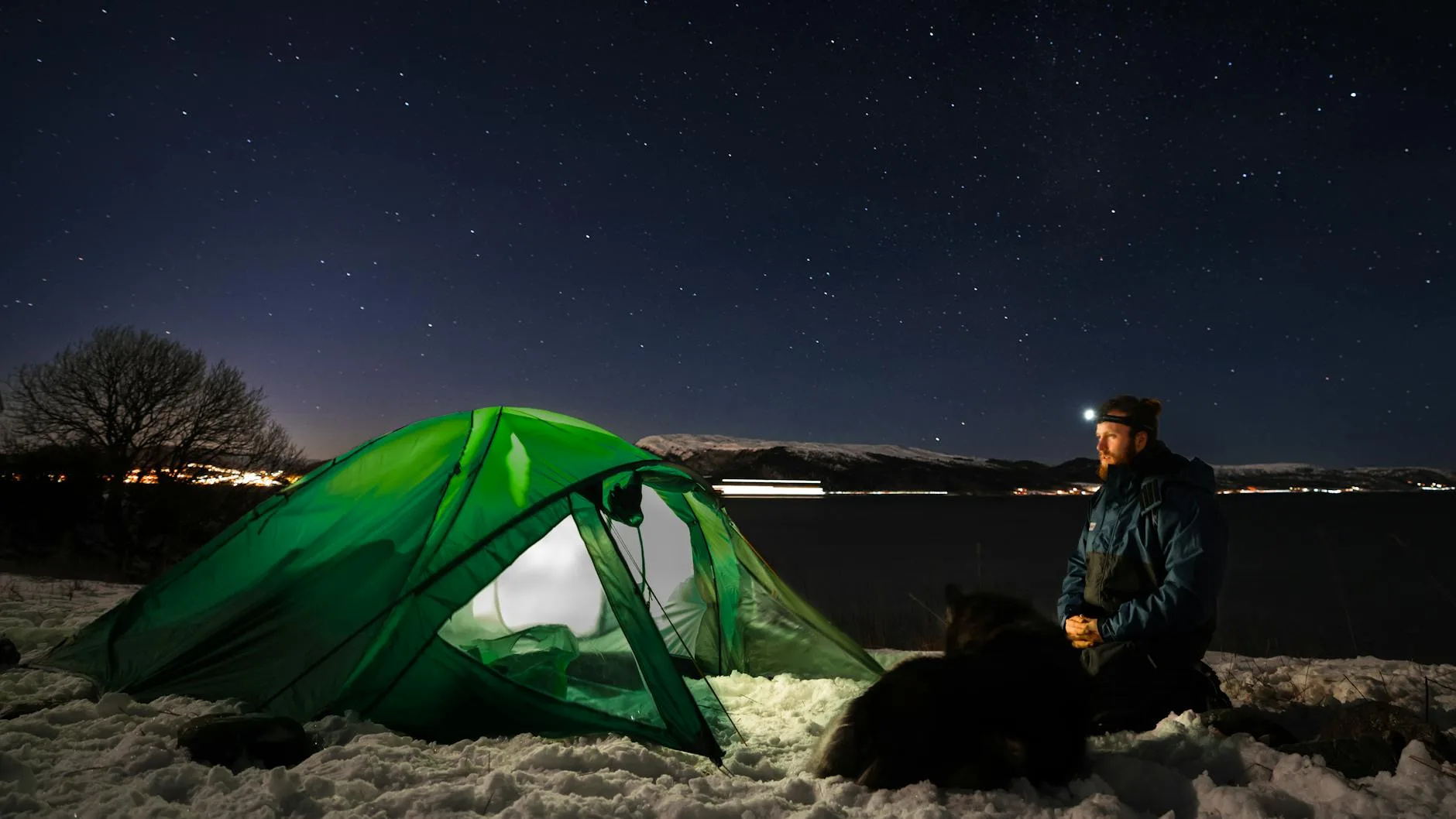
Wild camping in the UK demands a head torch that’s reliable in proper darkness, can handle rain, and has enough battery life to get you through long winter evenings. The Ledlenser H7R Core delivers on all three.
The signature feature is Ledlenser’s Advanced Focus System — a magnetic slider on the side that lets you seamlessly shift between a wide flood beam (ideal for camp tasks) and a focused spot beam (ideal for navigating a trail). Other brands make you cycle through modes with a button; Ledlenser gives you analogue control, and it’s brilliant once you get used to it.
1,000 lumens maximum with a 300-metre beam distance means you can light up a distant cairn in the dark — useful when navigating pathless terrain in the Highlands. IP67 waterproof rating means rain, sleet, and the inevitable drop in a stream won’t kill it. The rechargeable battery lasts about 10 hours on medium (300 lumens), and at about £65-80, it’s competitive with the Petzl Actik Core.
Weight is 198g — the heaviest here — but the extra battery capacity justifies the gram penalty on overnight trips. The headband includes a top strap for secure fit during scrambling.
Where to buy: Amazon UK (about £70), Halfords (about £75), Go Outdoors (about £72).
Best Ultralight: Nitecore NU25 UL
Gram counters and fast-and-light hikers, this one’s for you. The Nitecore NU25 UL weighs just 28g — lighter than two AA batteries — and delivers a surprising amount of light from a package the size of a matchbox. Our Best Waterproof Jackets 2026 UK: Hiking & Camping guide is useful alongside this.
400 lumens maximum is plenty for most hiking scenarios, and the dual white/red LED setup covers all bases. The headband is a simple silicone cord rather than a fabric strap, which saves weight but isn’t the most comfortable for long periods. Most ultralight hikers run it clipped to a cap brim or threaded through a Buff instead.
Battery life is the trade-off for such minimal weight: about 2.5 hours on high, 10 hours on low. USB-C charging and a lightweight cable mean you can top up from a small power bank. At about £30-35 from specialist outdoor retailers, it’s truly impressive for the weight.
Not the right choice if you need long burn times or a powerful throw beam, but for three-season hiking where every gram counts and you want something that packs smaller than a bar of chocolate, the NU25 UL is hard to argue with.
Where to buy: Amazon UK (about £32), Ultralight Outdoor Gear (about £35).
How to Choose the Best Head Torch for Hiking UK
Picking the right head torch comes down to five things. Get these right and you won’t go wrong.
Lumens: How Much Light Do You Actually Need?
- 100-200 lumens — fine for camp tasks, tent reading, and gentle trail walking. Enough for established paths in summer.
- 300-500 lumens — the sweet spot for most UK hiking. Handles dark trails, poor weather, and navigation in winter. This is what I’d recommend for the average hill walker.
- 600-1,000+ lumens — needed for trail running, scrambling in the dark, and pathless navigation. Powerful, but drains batteries faster.
Most people overestimate how much light they need. A 300-lumen torch on a focused beam is more than enough for walking a Pennine Way section in December. Your eyes adjust to the dark within 20 minutes, and a softer beam preserves night vision better than blasting 1,000 lumens into the hillside.
Battery Type: Rechargeable vs AAA
This is a genuine choice, not just a preference:
- Rechargeable only — lighter, cheaper to run, better for regular use. But dead means dead — you need a power bank for backup on multi-day trips.
- AAA compatible — heavier, but a fresh set of batteries gives instant full power. Available from any corner shop or campsite shop. The safety net of swappable batteries is worth the extra weight on longer trips.
- Hybrid (like the Petzl Actik Core) — rechargeable with AAA backup. Best of both worlds, and the main reason I recommend it as the all-rounder.
Weight
For day hikes, anything under 150g is fine — you won’t notice it. For multi-day backpacking, every gram adds up, and dropping from 200g to 75g across several kit choices makes a real difference to pack weight.
Water Resistance
UK hiking means rain. It just does. Look for:
- IPX4 — splash resistant. Handles light rain.
- IPX6 — withstands heavy rain and spray. Good for most UK conditions.
- IP67 — submersible to 1 metre. Overkill for hiking but means you actually don’t have to worry about weather.
All five torches in this guide are at least IPX4 rated. The Ledlenser is the most weather-resistant.
Beam Pattern
- Spot beam — long throw, focused light. Good for trail navigation and seeing distant features.
- Flood beam — wide, even illumination. Better for camp tasks, tent use, and close-range work.
- Adjustable/combined — the Ledlenser’s slide focus or Petzl’s reactive mode give you both. Worth paying for.
What to Avoid
A few red flags when shopping for head torches:
- Unbranded Amazon torches claiming 10,000 lumens for £8 — they’re lying about the output. A genuine 10,000-lumen light would cost £200+ and need active cooling. These cheap imports typically deliver 200-400 actual lumens and fail within months.
- Head torches with a separate battery pack — unless you’re doing proper winter mountaineering, the cable running to a hip-mounted battery is annoying and catches on things. Keep the battery on the headband.
- Anything without a red light mode — you’ll miss it the first time you’re sharing a tent with someone who’s trying to sleep.
Head Torch Comparison at a Glance
- Petzl Actik Core — 600 lumens, 75g, 8hr battery, rechargeable + AAA, £55-65. Best all-rounder.
- BioLite HeadLamp 200 — 200 lumens, 50g, 3.5hr on high, rechargeable, £25-30. Best budget.
- Petzl Swift RL — 1,100 lumens, 100g, 5hr reactive, rechargeable, £88-100. Best for trail running.
- Ledlenser H7R Core — 1,000 lumens, 198g, 10hr medium, rechargeable, £65-80. Best for wild camping.
- Nitecore NU25 UL — 400 lumens, 28g, 2.5hr on high, rechargeable, £30-35. Best ultralight.
Lighting is only one part of making camp comfortable after dark. Our guide to choosing camping chairs covers the weight, comfort and packed-size trade-offs.
Frequently Asked Questions
How many lumens do I need for hiking in the UK?
For most UK hiking, 300-500 lumens is the sweet spot. This handles dark winter trails, poor weather, and off-path navigation comfortably. You don’t need 1,000 lumens unless you’re trail running or scrambling at pace. Your eyes adapt to lower light levels within 20 minutes, and a moderate beam on a focused setting provides better trail visibility than a blinding flood.
Is a rechargeable head torch better than AAA?
For regular use, rechargeable is cheaper and more convenient — you charge before each trip and the battery holds. For multi-day trips without power access, AAA compatibility is a genuine advantage because you can carry spare batteries. The Petzl Actik Core offers both, which is why it’s the top recommendation for versatile use.
Are expensive head torches worth it over cheap ones?
The difference between a £10 unbranded torch and a £30 BioLite is enormous — reliability, waterproofing, comfort, and actual light output. The difference between a £55 Petzl and a £95 Petzl is more marginal — you’re paying for extra lumens and features that matter mainly for specific activities like trail running. For general hiking and camping, £30-65 gets you an excellent torch that’ll last years.
Can I use a head torch for cycling?
In a pinch, yes, but it’s not ideal. Head torches don’t project a focused enough beam for road cycling speeds, and they can dazzle oncoming traffic. For off-road cycling on trails, a head torch works better. Several models here (the Petzl Actik Core and Ledlenser H7R) can mount to a helmet for this purpose. For road cycling, use a dedicated bike light instead.
How do I stop my head torch bouncing when running?
Choose a torch with a wide, elasticated headband and an over-the-head strap (the Petzl Swift RL has both). Keep the unit light — under 100g — and position it centred on your forehead, not tilted up. Tightening the band snugly without restricting blood flow is key. The BioLite’s low-profile design also minimises bounce thanks to its flat shape against the forehead.
The Bottom Line
The best head torch for hiking in the UK is the Petzl Actik Core — it covers every scenario from summer evening walks to winter mountain navigation, the hybrid battery system means you’re never caught out, and at £55-65 it’s outstanding value for a piece of kit you’ll use for years. If money’s tight, the BioLite HeadLamp 200 does an impressive job for half the price. And if you’re running trails or navigating pathless terrain in the dark, the Petzl Swift RL or Ledlenser H7R Core are worth the step up.
Don’t overthink it. Buy a decent head torch, throw it in your rucksack, and forget about it until the moment you need it. That moment will come sooner than you think.