Tent footprints are useful when the ground threatens the tent floor or when keeping the underside clean saves work at pack-up. On soft, clear grass with a sound floor, carrying one is a choice rather than a necessity. The crucial detail is fit: a sheet that sticks out beyond the tent floor can collect rain underneath it, making a wet pitch worse.
In This Article
- What a Tent Footprint Does
- When a Footprint Is Worth Carrying
- When You Can Leave It at Home
- Choose the Right Size and Coverage
- Pitch a Footprint Without Collecting Rainwater
- What a Footprint Cannot Fix
- Clean, Dry and Store the Footprint
- Frequently Asked Questions
What a Tent Footprint Does
The layer beneath the built-in floor
A footprint is a separate sheet placed between the ground and a tent’s own floor. Its main job is to take wear that would otherwise reach the tent. Stones, grit, roots and rough patches can abrade the base as people move inside. A footprint can also keep mud off the underside, which makes packing up a wet UK campsite pitch a little less unpleasant. It is distinct from the sewn-in floor, or integrated groundsheet, that forms part of the shelter.
Vango describes its groundsheet protectors as protection for the integrated groundsheet and a way to keep the tent base clean. That is a fair summary of the benefit. A worn floor still needs repair, and a well-drained pitch still matters. Think of the layer as a sacrificial cover. If it gets scuffed or muddy, the tent itself takes less of the punishment.
Matching sheets and general-purpose alternatives
A model-specific footprint is shaped for its tent, often with attachment points that align with the corners. It may be quick to place correctly, but confirm the exact model and year before buying: a familiar product name can cover revised dimensions. A general sheet or cut tarp can work if it is tough enough for the surface and stays beneath the floor perimeter. It needs careful fitting, particularly around tapered ends. The sheet should cover the areas that bear sleeping and walking pressure without protruding into the path of rainwater.
Some family-tent footprints cover a porch as well as sleeping compartments. Read the maker’s layout drawing to see which parts are intended to sit below a built-in floor and which may be exposed. The design may include peg points and deliberate drainage details. Check the manufacturer’s instructions before applying a small-tent rectangle rule to an irregular family tent. The relevant test is where falling or flowing rain will go once the whole shelter is pitched.
When a Footprint Is Worth Carrying
Rough ground and repeated use
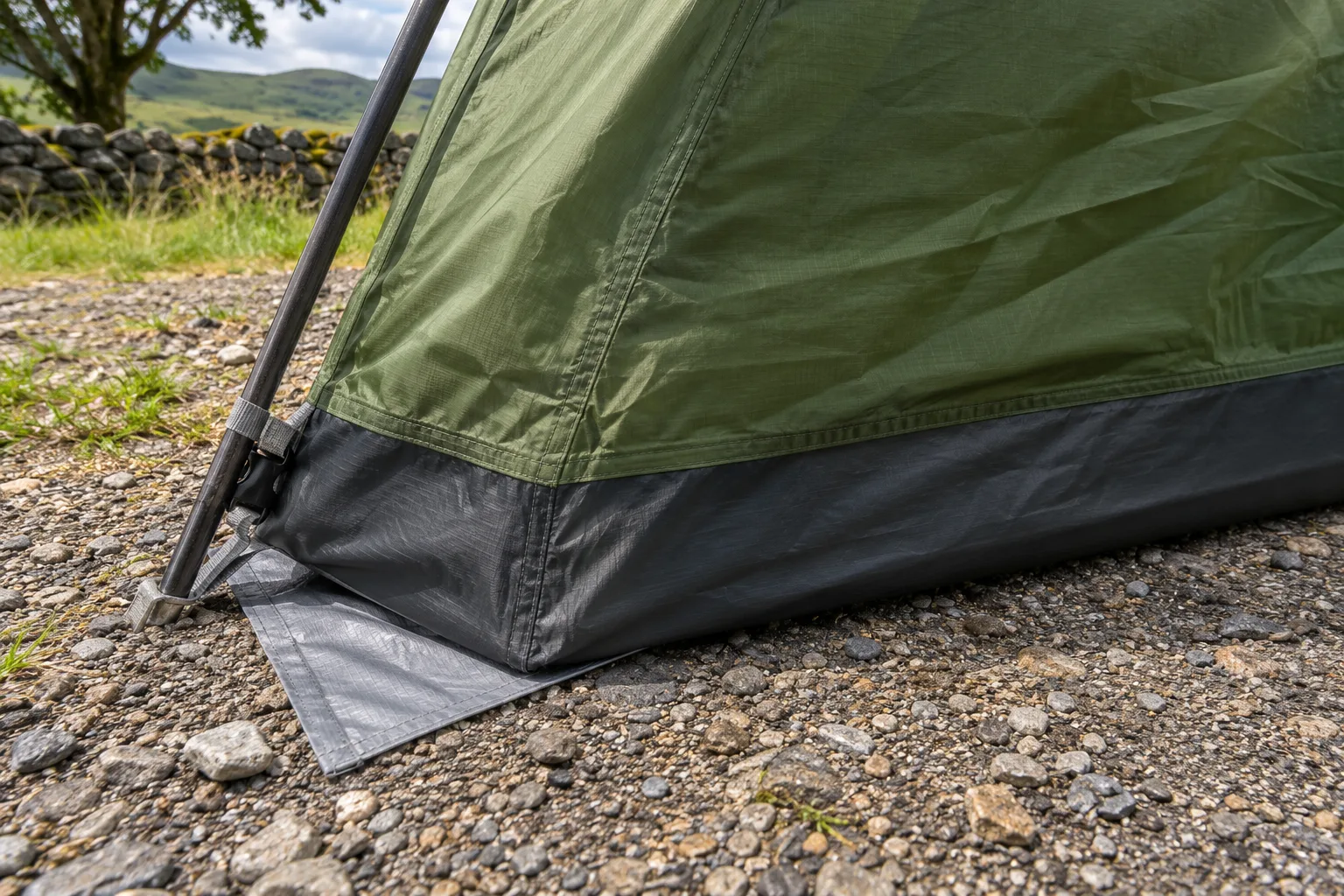
Choose a footprint when the pitch has abrasive gravel, firm stubble, small stones or roots that remain after a sensible site check. Pressure from a knee, bag or sleeping mat can drive grit against the floor repeatedly overnight. A thin lightweight floor is particularly worth protecting if you expect frequent pitches. The Vango model-specific protector guidance identifies stones and thorns as hazards and describes its protector as shaped to the tent. That is manufacturer evidence for the protective role, not proof that every pitch requires one.
A footprint is most valuable when several conditions coincide:
- Rough surface: grit and pebbles press repeatedly against the floor.
- Regular nights: cumulative abrasion matters more over many trips.
- Thin floor: lightweight fabric has less sacrificial material.
Frequent campers also gain from easier cleaning. A separate, relatively simple sheet can be shaken out and dried while the tent floor remains cleaner. On a long trip with several campsites, this can make daily packing less messy. A family tent that spends nights on varied UK pitches may benefit even when a single soft-grass weekend would not justify the extra piece. If the supplied floor is already robust, the gain is mainly reduced wear and cleaner pack-up, rather than a dramatic change in comfort.
Value depends on what you carry
For car camping, an extra sheet may be an easy addition if it fits the tent and you have drying space afterward. For backpacking, check the weight and packed size against the expected terrain. A footprint that saves a little floor wear but takes precious room and weight on every walk may be a poor exchange for occasional gentle grass. Some walkers choose a compact cut-to-fit sheet for rough routes and leave it at home on easier trips. The right answer can change with the route even when the tent stays the same.
If you are choosing a new tent, compare its floor fabric and intended use first. Our beginner’s tent selection guide covers shelter choices; the footprint is an accessory decision after you know the floor you are protecting. Buying an accessory cannot correct a tent that is unsuitable for the conditions. It may, however, preserve an otherwise appropriate floor across many nights of use.
When You Can Leave It at Home
Soft, clear ground and occasional trips
On a soft grass pitch cleared of sharp debris, a sound built-in tent floor may be perfectly adequate. If the tent sees only a few weekends each year and weight or storage space matters, leaving the footprint behind is reasonable. Inspect the ground before pitching and move away from persistent stones, roots or thorny vegetation. A footprint is extra protection, not a substitute for checking what lies below the sleeping area.
The REI advice on deciding whether to use a footprint makes the same distinction: abrasive ground and frequent use favour one, while infrequent trips on soft grass may not. That is a conditional decision. Even a thick floor can be damaged by a sharp object under concentrated weight; even a footprint can be punctured. Avoid treating fabric layers as permission to pitch on avoidable hazards.
When simplicity is the priority
A separate sheet adds a packing and drying task. On a one-night walk, the extra step may outweigh its likely benefit. A tent floor already designed for the ground conditions can simplify the kit list. Check whether your shelter’s maker recommends a protector for warranty or a specific fast-pitch configuration before leaving it behind. Some tents use a footprint with flysheet and poles for a particular lightweight setup; that is a distinct use from protecting the normal inner floor.
If you camp on a mix of surfaces, make the choice trip by trip. Keep a properly sized sheet available for rougher pitches and omit it when the ground and floor justify travelling lighter. Our ultralight tent guide discusses the broader weight trade-off; this decision hinges on the actual surface below your chosen shelter. There is no virtue in carrying equipment that solves a problem you are unlikely to face.
Choose the Right Size and Coverage
Fit the floor rather than the flysheet outline
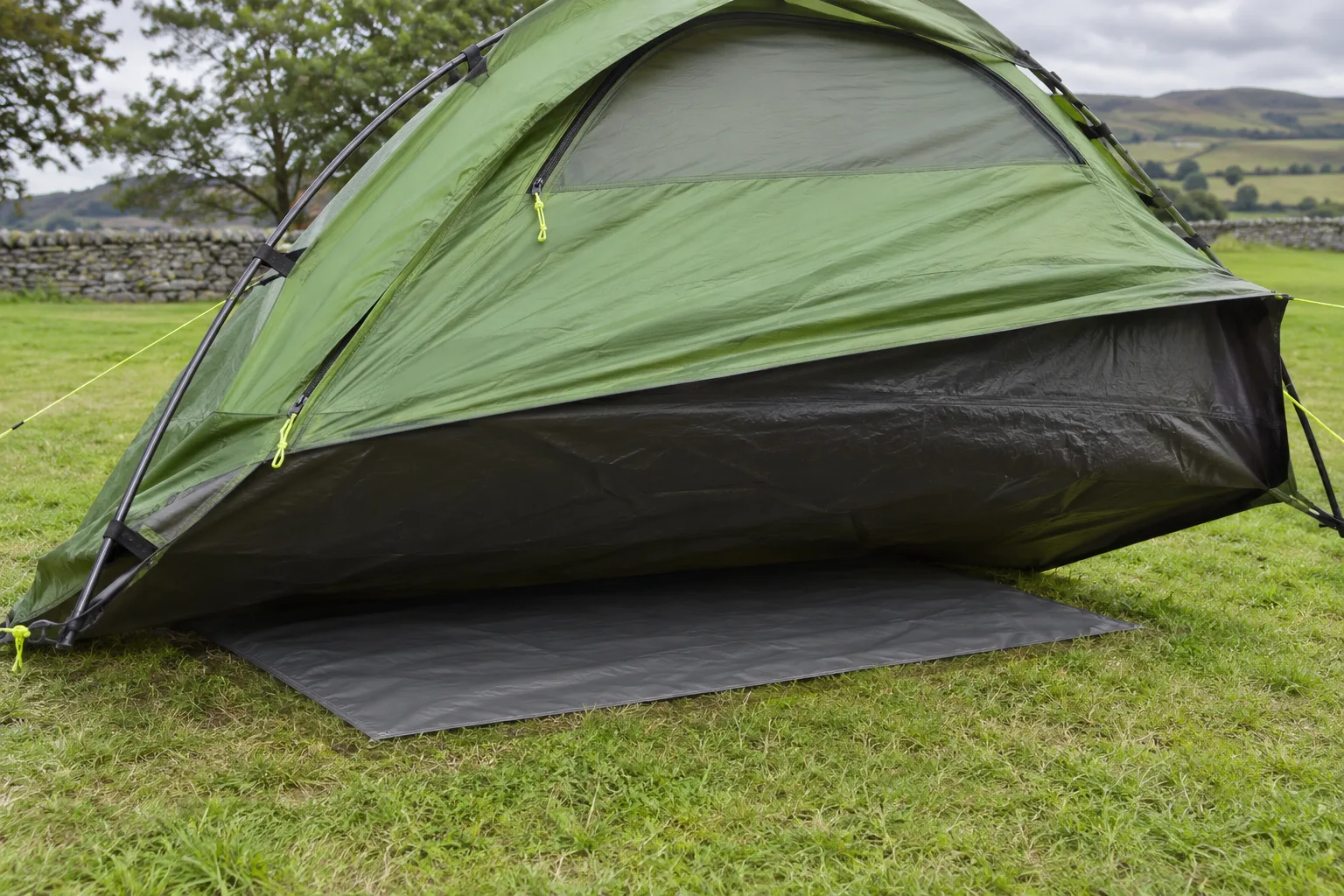
The separate sheet should protect the tent floor while remaining under cover. The flysheet may project beyond the floor to form a vestibule, so copying the flysheet’s outer dimensions can produce an oversized sheet. Follow the maker’s model-specific layout when available. For a homemade or universal protector, compare the true floor length and width, including any taper. Lay it out at home and confirm that the tent floor covers its edges once pitched.
Outwell’s footprint buying guidance warns that a footprint larger than the tent can collect water in rain and recommends a smaller alternative when the exact model is unavailable. REI’s tent setup advice likewise says to fold a full tarp beneath the floor so no part extends beyond the perimeter. The rule is about water path rather than a magic centimetre measurement: make the edges safely recessed all around on the pitched tent.
Protect the busy areas first
A matching footprint is easiest, but an alternative that covers most of a rectangular sleeping floor can still reduce wear. Give priority to places under mats, knees and repeated footsteps. A small exposed strip of floor at one end may be a better compromise than a sheet that projects beyond the other end. If the floor has a complex shape, draw it or trace it at home before cutting anything. Leave room for pegs and attachment points, and check that a folded edge stays put rather than unfurling during the night.
For a family tent with a separate porch groundsheet, read the specific instructions. The exposed porch area may be intended to shed or admit water differently from a sealed sleeping floor. A cheap generic tarpaulin that extends beneath a large open porch can route water in an unintended direction. The product’s pitch diagram is more useful than a broad claim that a larger footprint always offers better protection. Ask for the exact dimensions at the retailer if the listing is vague.
Pitch a Footprint Without Collecting Rainwater
Set the layer on the chosen ground
Before adding the sheet, check the pitch itself:
- Drainage: avoid a hollow where water collects.
- Sharp debris: move loose stones and twigs without damaging the ground.
- Coverage: keep the sheet inside the enclosed floor edge.
First choose a level, reasonably drained spot and remove loose sharp debris without damaging the ground. Unfold the footprint where the tent floor will sit, with any maker-marked side facing as instructed. Place the tent over it and check the corners before pegging down. Smooth the protector so it stays flat beneath sleepers, and all its exposed edges should sit inside the tent floor boundary unless the maker’s system explicitly specifies otherwise.
Do a perimeter walk before the final tensioning. A single corner peeping out from under the tent can act as a catchment surface. Fold a large generic sheet inward; an upward fold can form a trough. If the wind moves it as you pitch, use the intended attachment points or hold it in place until the tent is secured. Never stretch a sheet to meet an attachment point if that pulls the fabric outside the floor edge. The point is a quiet protective layer that sheds rain around the floor.
Keep pitch drainage in the decision
Rainwater follows the slope and collects in hollows. A correctly fitted footprint can help protect the floor from wet ground, but it cannot turn a low, waterlogged pitch into a dry one. Our camping spot guide explains how terrain, wind and water affect the choice of ground. Our bad-weather pitching guide covers site choice and secure pitching. Keep that task separate from deciding whether to pack a footprint. A footprint manages contact beneath the floor; terrain and tent construction determine much more of the weather outcome.
After a heavy shower, inspect the perimeter from outside. If water is sitting on an exposed part of the sheet, fix the overhang once conditions make it safe to do so. Do not pull the whole tent apart in dangerous wind or lightning merely to perfect an accessory. For the next pitch, remember which corner or fold caused the problem and adjust the layout while the ground is still dry.
What a Footprint Cannot Fix
Leaks, condensation and worn seams
A leaking tent needs diagnosis and repair. A footprint cannot seal a damaged flysheet, a failing seam, an exposed zip or a puncture already present in the floor. It may slow direct contact with wet soil at a damaged point, but relying on that as a waterproof repair invites a miserable night. Inspect the tent before travel and test repairs according to the maker’s instructions. The Camping and Caravanning Club’s tent-buying guidance notes that water can enter through seams, doors and gaps even when the fabric itself is waterproof.
Condensation is another separate issue. Moisture from breathing, wet clothing and damp air can collect on cool tent surfaces. The sheet beneath the floor leaves ventilation unchanged. Use the tent’s vents as directed and keep wet gear managed. If water appears inside, identify whether it is condensation, a drip from above, ingress at the door or a floor problem before buying a footprint as the answer. Our tent storage guide addresses drying and care between trips.
Heat and comfort claims
An added layer may change the feel of ground contact slightly, but it is not a substitute for a suitable sleeping mat. Insulation and cushioning come primarily from the sleep system and ground choice. Avoid buying a protector on the promise that it will warm an inadequate mattress. Equally, a smooth sheet cannot remove a large root or rock beneath it. Move the tent to better ground, or clear removable debris before pitching. The footprint protects fabric; ground choice still determines comfort.
The practical verdict is conditional. If the floor is sound and the pitch gentle, it is an optional layer. If the surface is abrasive or the tent sees frequent use, a well-fitted protector is worthwhile. If the tent leaks, address the leak. That separation keeps an inexpensive accessory from being sold as a cure for a different problem.
Clean, Dry and Store the Footprint
Pack dirty sides together
At pack-up, lift the tent first if its design allows, then shake loose grit from the footprint away from other campers. Fold the muddy underside inward so it does not rub against the tent flysheet or inner in the bag. A separate lightweight sack can be useful when the ground is wet. Check that no peg or sharp stone is trapped inside the fold. The protector’s value partly comes from keeping grime off the expensive tent, so avoid transferring that grime back onto it during packing.
If you must leave in rain, pack the wet footprint separately from dry bedding. At home, open and dry both the tent and protector fully before longer storage. Check for small holes, frayed corners and trapped grit. A damaged footprint may still offer some abrasion protection, but a rough folded edge or embedded stone can become a hazard in its own right. Follow the maker’s cleaning instructions; vigorous scrubbing or unsuitable detergent can harm coated fabrics.
A simple decision for the next trip
Before each trip, ask three questions: what ground is likely, how sound is the tent floor, and what does the extra sheet cost in weight and drying effort? Pack it when the answers point to repeated abrasion or a messy multi-night pitch. Leave it home when a soft, checked site and a capable floor make the gain marginal. If you take a generic sheet, recheck its fit whenever you change tents. The same tarp that worked under one floor may overhang another.
A footprint is most successful when you barely notice it: properly placed, covered by the floor, and easy to clean afterward. The mistake that matters is leaving a waterproof edge sticking out in the rain. Get the fit right first; then decide whether the extra layer earns a place in your kit.
Frequently Asked Questions
Do I need a footprint for every tent? No. It is most useful on abrasive ground or with frequent use. A sound floor on soft, clear grass can be used without one if the maker’s instructions allow it.
Should a footprint be bigger than the tent? A sheet under the enclosed floor should stay inside the floor perimeter so it cannot catch rainwater. Follow the maker’s diagram for a model-specific protector, especially on tents with porches.
Can I use a tarpaulin instead of a model-specific footprint? Yes, if the material is suitable and it is cut or folded to fit beneath the floor without exposed edges. Check that folds remain secure when pitched.
Will a footprint stop a leaking tent? It cannot repair a leaking flysheet, seam, zip or damaged floor. Diagnose the water source and repair the tent; the footprint’s main role is protection from abrasion and dirt.
Does a footprint prevent condensation? No. Condensation is managed by ventilation and moisture control inside the tent. An under-floor sheet does not replace those steps.
How do I pack a wet footprint? Shake off grit, fold the dirty side inward and keep it separate from dry bedding. Open it and the tent to dry fully at home before storing them.