The LEKI Khumbu Lite is the best trekking pole pair for most UK walkers: it combines durable aluminium shafts, reliable lever adjustment, comfortable extended grips and a sensible 246g-per-pole weight. Choose the Trail pair for a low-cost first set, the compact TREKOLOGY TREK-Z for travel, or Foxelli carbon poles when reducing swing weight matters most.
In This Article
- Best Trekking Poles UK: Our Direct Answer
- The Best Trekking Poles at a Glance
- Our Six Trekking Pole Recommendations
- How to Choose Trekking Poles
- Carbon vs Aluminium: The Key Choice
- Locking Mechanisms Explained
- How to Size Trekking Poles
- Grips and Straps
- Pole Tips and Baskets
- How to Use Trekking Poles Properly
- Caring for Your Trekking Poles
- Which Trekking Poles Should You Buy?
- Frequently Asked Questions
Best Trekking Poles UK: Our Direct Answer
Buy the LEKI Khumbu Lite if you walk regularly on British hills and want one durable pair rather than the lightest or cheapest specification. Its external locks are easy to check, the 100–135cm range suits many adults, and the extended grip is useful when the gradient changes for only a few minutes.
Trekking poles can improve balance and share some load with the upper body, but they are not a guarantee against injury. The British Mountaineering Council’s technique guide recommends learning correct length and movement, and removing hands from straps where a pole could prevent you reaching for a handhold.
The Best Trekking Poles at a Glance
| Product | Best for | Key specification | Main compromise |
|---|---|---|---|
| LEKI Khumbu Lite | Best overall | Aluminium, 100–135cm, 246g per pole | Long 67cm packed size |
| Trail Telescopic Walking Poles | Best budget pair | Aluminium, 65–135cm, twist lock | Basic handles and twist locks |
| TREKOLOGY TREK-Z | Best folding value | Aluminium Z-pole, folds to 38cm | Check this exact size range |
| Foxelli Carbon Fibre Walking Poles | Best lightweight carbon pair | Carbon fibre, flip locks, 216g per pole | Carbon dislikes sharp side impacts |
| Black Diamond Trail Cork | Best cork-grip upgrade | Aluminium, cork grips, FlickLock | Premium price |
| TheFitLife Antishock Trekking Poles | Best antishock budget option | Aluminium, 65–130cm, spring antishock | Spring feel is not for everyone |
These positions cover six different buying needs rather than six near-identical poles. Compare the exact adjustment range with your height, then decide whether packed length, grip material, shaft material or cushioning is the feature you will notice on your own routes.
Our Six Trekking Pole Recommendations
1. LEKI Khumbu Lite — Best overall

The LEKI Khumbu Lite is the strongest all-round choice for regular UK hill walking. Its aluminium shafts favour durability over the last few grams, while the Speed Lock Plus levers allow continuous adjustment from 100 to 135cm. At 246g per pole, it remains light enough for long days without feeling insubstantial on rough descents.
The Aergon grip, adjustable strap and extended grip zone are the useful details. The lower grip lets you shorten your effective reach on a brief climb or traverse without stopping to move a lock. FlexTip carbide tips and trekking baskets cover ordinary British paths, mud and softer ground.
Its 67cm collapsed length is the main limitation: this is a telescopic walking pole, not a tiny travel pole. Choose it for dependable adjustment and handling; choose the TREKOLOGY TREK-Z when packing length matters more.
- Buy it if: you want a dependable aluminium pair for regular hill days.
- Skip it if: the poles must fit inside a small daypack or cabin-size bag.
- Main compromise: the 67cm packed length is much longer than a folding Z-pole.
2. Trail Telescopic Walking Poles — Best budget pair

The Trail pair is the low-cost starting point for walkers who are unsure whether poles will become permanent kit. The three-section aluminium shafts adjust from 65 to 135cm, and the package includes rubber tips, boot tips plus mud and snow baskets. That is a useful set for day walks without buying accessories immediately.
An internal antishock system softens some feedback through the handles, while the wrist straps help maintain a relaxed grip. The broad adjustment range also makes the pair easier to share between adults than a fixed-length model.
The compromise is the twist-lock mechanism and basic polypropylene handle. Lever locks are quicker to inspect and adjust with cold or muddy hands, while cork and foam are kinder over a full day. Buy this pair to try poles at low cost, not because it matches the finish of LEKI or Black Diamond.
- Buy it if: you want an inexpensive first pair with a full tip-and-basket kit.
- Skip it if: you expect weekly mountain use or frequently adjust length on the move.
- Main compromise: basic grips and twist locks rather than premium contact points.
3. TREKOLOGY TREK-Z — Best folding value

The TREK-Z is the practical answer when a conventional telescopic pole is awkward to carry. Its three folding sections collapse to about 38cm, so the pair can sit inside many rucksacks and holdalls rather than projecting above the top. Aluminium construction makes it less delicate than a budget carbon folder.
This exact version adjusts from 100 to 120cm and weighs about 294g per pole. That range suits shorter and medium-height users; taller walkers need the separate 115–135cm version, so check the variant before buying. The foam grips and short adjustment range are designed around compactness rather than endless fine tuning.
It is heavier than a premium carbon Z-pole, but far easier to justify for occasional travel. Pick it for trains, flights with checked luggage and routes where poles spend part of the day packed away.
- Buy it if: short packed length matters more than minimum weight.
- Skip it if: your height falls outside this exact 100–120cm version.
- Main compromise: compact folding sections still weigh more than premium carbon models.
4. Foxelli Carbon Fibre Walking Poles — Best lightweight carbon pair

Foxelli is the weight-led option in this shortlist. The maker states 7.6oz per pole, roughly 216g, which saves about 60g per hand against several aluminium alternatives. Over a long-distance walk that repeated swing weight can matter more than a similar saving buried inside a rucksack.
Natural cork grips, foam extensions and padded straps give it a stronger contact-point specification than many inexpensive carbon poles. Flip locks are easier to inspect than twist locks, and the included rubber tips, mud baskets, snow baskets and carry case make the set ready for mixed surfaces.
Carbon needs more care around boulders and gaps because a sharp sideways load can damage a shaft. This is the pair for hikers who value low weight and mostly remain on trails, not for levering across rough scrambling ground.
- Buy it if: you cover long distances and notice swing weight.
- Skip it if: your poles are routinely trapped between rocks or used on scrambles.
- Main compromise: carbon saves weight but is less forgiving of sharp side impacts.
5. Black Diamond Trail Cork — Best cork-grip upgrade

The Black Diamond Trail Cork is the comfort-led premium choice. Natural cork grips gradually conform to the hand, while extended foam sleeves provide a lower hold on short climbs and traverses. For walkers who dislike sweaty rubber handles, that interface can matter more than a small shaft-weight difference.
Three aluminium sections use external FlickLock adjusters, and interchangeable carbide Tech Tips provide grip on rock and firm ground. Trekking baskets are included, with other compatible tips available separately for different surfaces.
You pay for grips, adjustment and proven replaceable parts rather than a revolutionary walking experience. The LEKI is the more balanced overall recommendation; choose Black Diamond when cork comfort is the deciding feature.
- Buy it if: you walk for full days and strongly prefer cork handles.
- Skip it if: a basic foam grip has never caused discomfort.
- Main compromise: premium cost without the packed-size benefit of a Z-pole.
6. TheFitLife Antishock Trekking Poles — Best antishock budget option
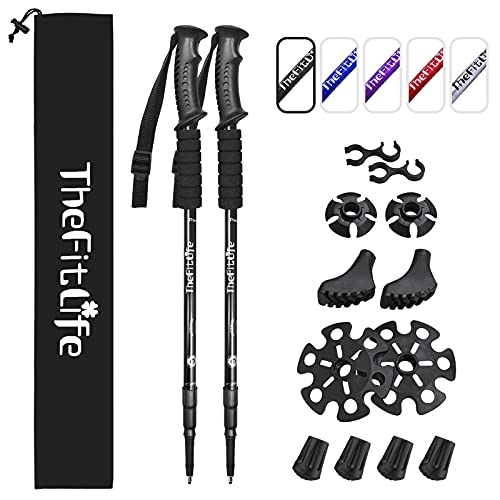
TheFitLife combines a built-in spring antishock system with adjustable aluminium shafts. Each pole is stated at about 282g and adjusts from 65 to 130cm, giving most adults enough range for level ground plus modest uphill and downhill changes.
The accessory set covers rubber caps, walking caps, mud baskets and snow baskets. The simple rubber grips will not feel as refined as cork or shaped foam, but the price position makes sense for recreational walkers who specifically prefer a softer, springier plant.
Antishock is not automatically better. Some walkers like the cushioning on hard tracks; others prefer the direct feedback and predictable plant of a rigid pole. Choose it only if that softer feel appeals, rather than assuming a spring guarantees better joint protection.
- Buy it if: you prefer a cushioned pole plant on firm tracks.
- Skip it if: you want crisp feedback or a lever-lock mechanism.
- Main compromise: rubber grips and twist locks are basic for long mountain days.
How to Choose Trekking Poles
Start with fit. An adjustable pair should let your elbow sit close to 90 degrees on level ground, with enough range to shorten slightly uphill and lengthen slightly downhill. Fixed or narrow-range folding poles demand more careful sizing; do not assume every variant of the same model covers the same heights.
Next, decide how the poles will travel. Telescopic models are quick to lengthen and robust, but often remain 60–70cm when collapsed. Folding Z-poles pack much shorter and suit public transport or luggage. Check whether the pair will sit inside your walking backpack or attach securely outside it.
Choose lever locks for easy visual checks and gloved adjustment. Twist locks keep the shaft exterior tidy and can work well, but dirt and poor tightening make them less convenient. Grip shape matters too: cork suits warm hands and long days, foam is versatile in wet British weather, and hard rubber is better reserved for shorter walks.
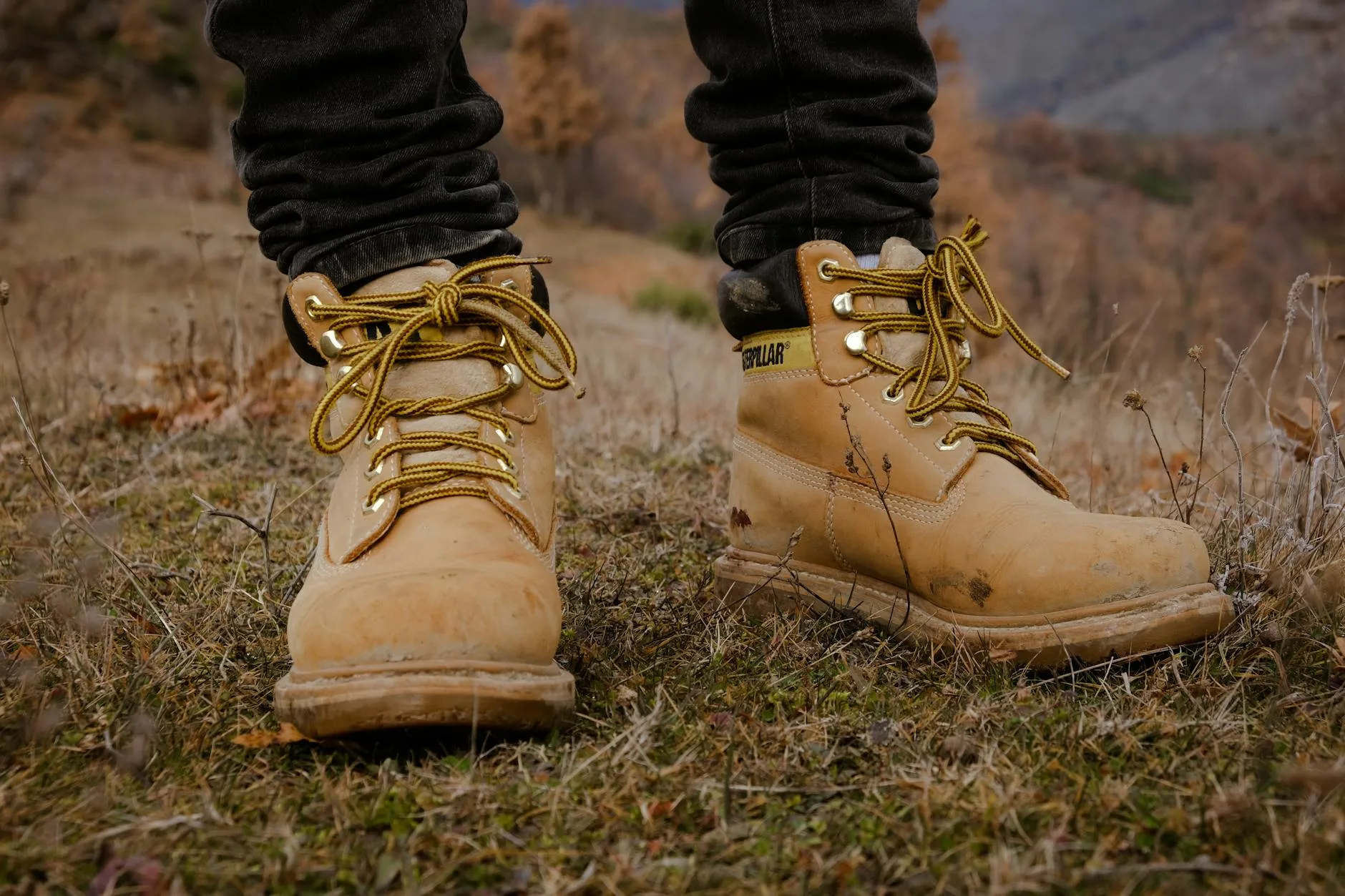
Finally, match tips and baskets to the route. Carbide tips grip firm ground and rock; rubber covers reduce noise on tarmac; mud baskets limit sinking in soft ground. Poles complement rather than replace suitable walking boots, solid map-and-compass navigation and a realistic route plan.
Carbon vs Aluminium: The Key Choice
This is the first decision you’ll make and the one that most affects price.
Carbon Fibre
- Weight: 150-250g per pole (lightest option)
- Relative cost: usually the more expensive shaft material
- Vibration dampening: absorbs trail shock better than aluminium
- Durability: strong in compression but can crack or shatter on sharp impacts. A carbon pole that gets caught between rocks can snap, while an aluminium pole would bend
Carbon makes sense for fast hikers, ultralight backpackers, and anyone covering long distances where every gram matters. If you’re doing multi-day treks with a heavy pack, the weight saving across two poles (200-400g lighter than aluminium) adds up.
Aluminium (7075 or 6061 Alloy)
- Weight: 250-350g per pole
- Relative cost: usually better value for a first or general-purpose pair
- Vibration dampening: less than carbon — you feel more trail feedback through the grip
- Durability: bends rather than breaks. A bent aluminium pole can sometimes be straightened in the field; a broken carbon pole is finished
Aluminium makes sense for most UK walkers. It’s tough, affordable, and perfectly adequate for day walks, weekend camping trips, and Munro bagging. The weight penalty over carbon is real but manageable.
The Honest Comparison
For day walks on UK hills, a well-built aluminium pair is often a better first purchase than a very cheap carbon pair. Carbon saves weight, but build quality, sound locks and suitable sizing matter more than shaft material alone. Pay for carbon when the lower swing weight serves a real long-distance or fast-moving use case.
Locking Mechanisms Explained
Twist Lock (Internal)
You twist the sections to tighten an internal expander that grips inside the pole. Simple, lightweight, no external parts. The downside: they can slip when wet or muddy, and they’re harder to operate with gloves. Budget poles typically use twist locks.
Lever Lock (External Clamp)
An external lever clamps around the pole section. Flip it open, slide to the desired length, then close it. Lever locks are quick to adjust and easy to operate with gloves, though any lock can slip if its tension is poorly set or grit gets into the mechanism. Most mid-range and premium poles use this design.
Folding (Z-Pole)
Poles connected by an internal cord fold like tent poles: pull the sections apart and they click into place. They generally deploy quickly and pack down smaller than telescopic poles, often to around 35-40cm. They are popular with trail runners, but many folding poles offer little or no length adjustment, so check the exact size range before buying.
How to Size Trekking Poles
The Elbow Rule
Stand upright with your arms relaxed, then place the pole tip on the ground beside your foot. Adjust the grip until your elbow is roughly around a right angle. Treat this as a practical starting point rather than a universal rule: comfort, body proportions, terrain and walking style may call for a slightly different setting.
Adjustable Poles
If your poles are adjustable, the 90-degree arm position is your starting point. Shorten them by 5-10cm for sustained uphill (to keep the tip engaging the ground ahead of you) and lengthen by 5-10cm for sustained downhill (to reach the ground below you without bending forward).
Fixed-Length Poles
Measure from the floor to your hand with your elbow held near a right angle, then compare that measurement with the manufacturer’s size chart. Fixed-length ranges and increments vary by brand. If you fall between sizes, consider your proportions and intended terrain rather than assuming the shorter option will suit everyone.
Grips and Straps
Grip Materials
- Cork — moulds to hand shape over time, wicks moisture, warm in cold weather. Best for long walks in varied conditions. Deteriorates faster than foam if regularly soaked.
- Foam (EVA) — lightweight, comfortable, absorbs vibration. Dries quickly after rain. Most versatile choice for UK conditions.
- Rubber — cheapest option, insulates well in cold but causes blisters in warm weather due to poor moisture management. Avoid for long walks.
Using Straps Correctly
Most walkers either ignore the straps entirely or loop them wrong. The correct technique: push your hand up through the strap from below, then grip the handle so the strap passes between your thumb and fingers, across the back of your hand. This way, the strap supports your wrist on each push — your grip can be relaxed because the strap does the work.
Wrong strap use means your hands grip tightly all day, leading to fatigue and blisters. Right strap use means a relaxed grip with the strap transferring force. It makes a bigger difference than you’d expect. You may also want to read Ultralight Backpacking: How to Cut Your Pack Weight.
Pole Tips and Baskets
Tips
- Carbide/tungsten tips — standard on most poles. Hard-wearing, grips rock and hard ground. Replaceable on many better poles; inspect them when grip declines or the profile becomes rounded.
- Rubber tip covers — slip over the carbide tip for use on paved surfaces, tarmac, and indoor floors. They reduce noise and help protect hard surfaces, so consider carrying a pair when your route includes long paved sections.
Baskets
The small disc near the tip that prevents the pole sinking too deep. Standard baskets (about 4cm diameter) suit most UK conditions. Snow baskets (8-10cm) are available for winter walking but rarely needed in the UK outside Scottish Highland winter.
Remove baskets when walking on rocky terrain — they catch between rocks and can break or trap the pole.
How to Use Trekking Poles Properly
On Flat Ground
Plant the pole opposite to the leading foot — right foot forward, left pole plants. This mimics natural arm swing and feels intuitive within minutes. Keep the tip planting slightly behind your foot, not ahead of it — planting too far forward acts as a brake.
Going Uphill
Shorten the poles by 5-10cm. Plant firmly and push down to assist your legs. Lean slightly into the poles on steep sections. Some walkers prefer planting both poles simultaneously on steep ascents for maximum push.
Going Downhill
Lengthen the poles by 5-10cm. Plant ahead of each step to absorb impact before your foot lands. This is where poles earn their keep — the reduction in knee stress on long descents is the primary reason most people buy poles. On steep descents, plant both poles ahead of you and step between them.
Traversing
Keep the uphill pole shorter than the downhill pole (or grip the uphill pole lower using the extended grip section). This keeps both pole tips roughly level on angled ground.
Caring for Your Trekking Poles
After Every Walk
Collapse the poles and separate all sections. Wipe down the shafts with a damp cloth to remove mud and grit — debris in the locking mechanism causes premature wear. Dry all sections before reassembling. Store poles loosely extended (not locked) to release tension on springs and cords.
Periodic Maintenance
- Lever locks — check the tension screw every few months. If the lock feels loose, tighten the small screw inside the clamp with a coin or flathead screwdriver.
- Twist locks — disassemble the expander plug annually, clean, and apply a thin layer of silicone lubricant
- Tips — check for wear. When the carbide tip is worn flat, replace it. Walking on a worn tip is like walking in worn-out shoes — it defeats the purpose.
- Straps — wash if they smell. Hand wash with mild soap, air dry.
As with looking after a waterproof jacket, routine cleaning helps prevent grit, moisture and loose fittings from causing avoidable wear. Let every section dry fully before storage, and follow the manufacturer’s instructions for lubrication or replacement parts.
Which Trekking Poles Should You Buy?
Choose the LEKI Khumbu Lite for the best balance of dependable aluminium construction, low weight, easy adjustment and grip versatility. It is the pair most regular UK hill walkers can buy without paying for carbon or accepting a travel-first folding design.
Buy the Trail pair to try poles cheaply, TREKOLOGY TREK-Z for short packed length, Foxelli for carbon weight savings, Black Diamond for cork-grip comfort, or TheFitLife when you specifically prefer a spring-damped plant. Whichever pair you choose, practise on easy ground before relying on it during a steep descent.
Frequently Asked Questions
Are trekking poles worth it for UK walks? Yes, particularly for hilly walks with long descents, uneven ground or a loaded pack. Used with sound technique, trekking poles can share some load with the upper body and provide extra points of contact, but they do not guarantee against pain or injury.
Should I use one pole or two? Two poles generally provide more balanced support and distribute effort across both sides. One pole can still help with balance or leave one hand free, so choose the setup that suits the terrain and your needs.
Carbon or aluminium for beginners? Aluminium is usually the better first choice because it is affordable and more forgiving of rough handling. Move to carbon later if lower swing weight becomes important.
How long do trekking poles last? There is no dependable fixed lifespan because use, terrain, storage and build quality vary. Inspect the shafts, locks, tips, straps and folding cord regularly, and repair or replace components when they become worn, damaged or unreliable.
Can I take trekking poles on a plane? Airline and airport-security rules vary, so confirm with your airline before travelling. Checked luggage is generally the safer option; folding poles that collapse to around 35-40cm are often easier to pack than longer telescopic designs.