The best portable water filter for most UK hikers is the Sawyer Squeeze: it is light, adaptable and designed to be restored by backflushing. The important catch is that no filter makes every water source safe. Most hiking microfilters remove bacteria and protozoa, but not viruses, dissolved chemicals or salt.
Testing disclosure: Camp Gear UK has not physically tested these products. Recommendations are based on current manufacturer specifications, published laboratory claims, credible independent comparisons, UK availability and suitability for distinct hiking and camping needs.
In This Article
- Quick answer
- How we researched these water filters
- Portable water filter comparison
- The six best portable water filters
- What filters remove and what they miss
- How to choose a portable water filter
- Care, freezing and safe use
- Frequently Asked Questions
Quick Answer
Buy the Sawyer Squeeze for general backpacking and wild camping. Choose the Katadyn BeFree AC when drinking speed and taste matter more than cartridge longevity, the Platypus QuickDraw when you want a modern squeeze alternative, or the GravityWorks 4L for several people at camp. Water-to-Go is the travel-oriented purifier bottle; LifeStraw Personal is a compact emergency backup, not the best primary system.
Carry treated water rather than assuming the next stream will be usable. If the source may contain sewage, animal waste, agricultural chemicals, an algal bloom or other pollution, choose another source. The CDC’s backcountry water-treatment guidance recommends boiling as the most reliable way to kill germs; where boiling is not practical, filtering followed by disinfection provides a broader barrier.
How We Researched These Water Filters
We checked exact current models rather than transferring specifications from older versions. Verified specifications come from the manufacturer pages and manuals linked in this guide. Removal percentages, capacities and flow rates are manufacturer claims unless explicitly described as independently measured.
Selection criteria
- Treatment capability: which microorganisms and other contaminants the maker says the product addresses.
- Format: whether the filter works for drinking at source, filling bottles or treating several litres at camp.
- Maintenance: backflushing, swishing, cartridge replacement and the ability to check filter integrity.
- Weight and flow: published figures, treated as best-case specifications rather than promises in silty water.
- UK purchase route: current availability from an identifiable UK-facing retailer.
- Evidence strength: preference for specific performance standards and accessible test documentation over broad marketing language.
Independent field comparisons consistently put the Sawyer Squeeze, Katadyn BeFree and Platypus QuickDraw in the same lightweight class, while highlighting different bag, cleaning and flow trade-offs. That evidence informs the buyer fit; it does not let us claim our own use.
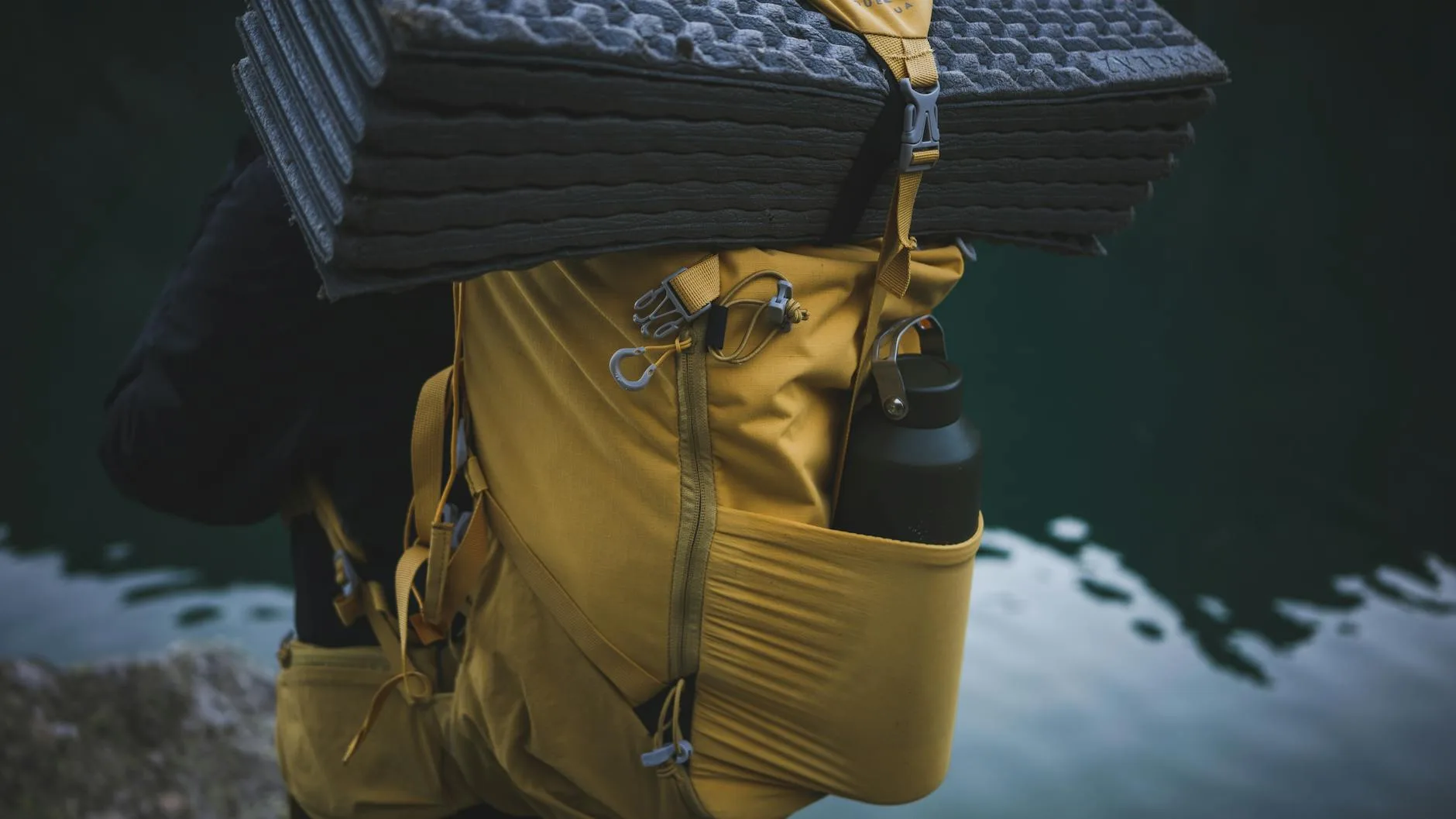
Portable Water Filter Comparison
| Product | Best for | Published weight | Published flow/life | Viruses? |
|---|---|---|---|---|
| Sawyer Squeeze | Best overall | 85g filter | Up to 100,000 US gal | No |
| Katadyn BeFree AC 1L | Fast flow and improved taste | 76–85g by colour | 2L/min; 1,000L membrane, 200L carbon | No |
| Platypus QuickDraw 1L | Sawyer alternative | 95g system | 3L/min | No |
| Platypus GravityWorks 4L | Groups and base camps | 326g | 1.75L/min; 1,500L | No |
| Water-to-Go 750ml | Travel purifier bottle | Approx. 138g | 200L cartridge | Maker claims yes |
| LifeStraw Personal | Emergency backup | 46g | 2.1L/min; 4,000L | No |
Published flow rates are measured under controlled conditions and usually fall as sediment loads the membrane. Lifespan figures also depend on water quality, cleaning and storage. None of the products here desalinate seawater.
The Six Best Portable Water Filters
1. Sawyer Squeeze — Best Overall
The full-size Sawyer Squeeze is the strongest all-round recommendation. The Sawyer specification lists a 0.1-micron absolute hollow-fibre membrane and says it removes bacteria, protozoa and microplastics. It threads onto common 28mm bottles, works with pouches and can feed a gravity setup. Its main advantage over the quicker bottle filters is serviceability: regular backflushing can restore flow, and the manufacturer rates the element for up to 100,000 US gallons.
Buyer: backpackers who want one adaptable filter for solo or shared trips. Principal advantage: strong lifespan claim and broad container compatibility. Important limitation: no virus, chemical or salt removal. Avoid if: you want the neatest drink-directly bottle or dislike maintaining a pouch system. Typical UK price: about £50–£100 depending on the pouch or CNOC bundle.
2. Katadyn BeFree AC 1L — Best Fast-Flow Bottle
The BeFree AC specification combines Katadyn’s 0.1-micron hollow-fibre membrane with a replaceable activated-carbon stage. Katadyn lists an output up to 2L per minute, membrane capacity up to 1,000L and carbon capacity up to 200L. The carbon stage is the reason to choose this version: the manufacturer says it improves taste and reduces odour, turbidity and chlorine. It is not a blanket chemical purifier.
Buyer: solo hikers who want to fill and drink quickly. Principal advantage: fast soft-flask format plus a documented carbon stage. Important limitation: the flask uses a 42mm thread and the membrane life is far below Sawyer’s published claim. Avoid if: you need virus protection or expect heavily silty sources. Typical UK price: £45–£60.
3. Platypus QuickDraw 1L — Best Sawyer Alternative
The QuickDraw 1L system is the closest direct alternative to the Sawyer. The Platypus specification gives a system weight of 95g and flow up to 3L per minute. Its wide-mouth reservoir has a carry handle, while the filter can attach to compatible 28mm bottles and Platypus containers. It can be shaken clean or backflushed, and its integrity-check procedure is useful after drops or suspect storage.
Buyer: lightweight hikers prioritising a tidy reservoir and quick initial flow. Principal advantage: versatile connections and two field-cleaning methods. Important limitation: it removes bacteria and protozoa, not viruses or chemicals. Avoid if: the longest published cartridge life matters more than ergonomics. Typical UK price: £50–£65.
4. Platypus GravityWorks 4L — Best for Groups
The GravityWorks 4L replaces the previous generic gravity recommendation because its exact system is documented. It includes separate 4L dirty and clean reservoirs and filters without pumping. The current GravityWorks specification gives 1.75L per minute, a 1,500L cartridge life and a complete weight of 326g. The earlier version of this article overstated its flow; 1.75L per minute is the corrected manufacturer figure.
Buyer: couples, families and groups treating cooking and drinking water at camp. Principal advantage: four litres can run while other camp jobs continue. Important limitation: bulk, hose management and a need for a hanging point. Avoid if: you mainly filter one bottle while moving. Typical UK price: £115–£140.
5. Water-to-Go 750ml — Best Travel Purifier Bottle
Water-to-Go positions its 750ml bottle as a purifier rather than a simple microfilter. Its filter evidence page publishes laboratory reports and claims reduction of viruses, bacteria, protozoa, selected chemicals and heavy metals through a three-stage cartridge. We treat those as manufacturer-backed laboratory claims, not as our own verification. The cartridge is rated for 200L and the bottle does not remove salt.
Buyer: travellers wanting one fill-and-drink bottle for non-salt water. Principal advantage: broader published contaminant claims than a standard hollow-fibre hiking filter. Important limitation: drinking resistance and recurring cartridges. Avoid if: you need to treat several litres quickly or cannot verify replacement-cartridge availability. Typical UK price: £30–£40.
6. LifeStraw Personal — Best Emergency Backup
The LifeStraw comparison data gives the original Personal a weight of 46g, a 0.2-micron membrane, flow of about 2.1L per minute and capacity up to 4,000L. Its removal claims cover bacteria, parasites and microplastics. It does not remove viruses or dissolved chemicals, and its drink-at-source design makes it awkward for carrying treated water.
Buyer: someone assembling a lightweight emergency kit. Principal advantage: cheap, simple and compact. Important limitation: it does not conveniently fill another bottle. Avoid if: this will be your only treatment method on a multi-day route. Typical UK price: £20–£30.
What Filters Remove and What They Miss
Microfilters
The Sawyer, both Platypus systems, Katadyn BeFree AC and LifeStraw Personal are microfilters. Their published pore sizes are small enough for bacteria and protozoa, including Giardia and Cryptosporidium, but not most viruses. UKHSA’s Cryptosporidium guidance notes that the parasite can contaminate lakes, streams and rivers through infected people and animals. Clear water can still carry it.
Viruses, chemicals and salt
Viruses are smaller than the pores in ordinary hiking microfilters. In a remote upland catchment the practical risk may differ from water near human sanitation, but the product capability does not change. Filter then disinfect, or boil, when virus protection is needed.
Activated carbon can reduce certain tastes, odours and chemicals, but capacity and target substances vary. It cannot turn visibly polluted water into a dependable source. The Drinking Water Inspectorate describes safe treatment as a multiple-barrier process, commonly combining filtration with disinfection. Reverse osmosis is the relevant process for salt removal; none of these handheld products is a desalination system.
How to Choose a Portable Water Filter
Choose by job, not headline lifespan
- Solo backpacking: Sawyer Squeeze, QuickDraw or BeFree AC.
- Group camp: GravityWorks 4L.
- International travel: Water-to-Go, while following local travel-health advice.
- Emergency reserve: LifeStraw Personal alongside a way to carry water.
Published cartridge life is not a guarantee. Silt can slow any membrane long before its theoretical limit, while freezing can cause invisible damage. Flow, container compatibility and cleaning are usually more useful buying criteria than a very large litre figure.
Buying guide versus treatment guide
This page compares products. For source selection, boiling, chemical disinfection and step-by-step treatment, use our separate guide to filtering water while hiking in the UK. That distinction avoids repeating safety instructions here and keeps the two pages focused on different searches.
Water treatment also sits within a wider kit plan. See the rucksack packing guide, ultralight backpacking guide, camping stove guide and UK wild-camping guide when planning capacity, backup treatment and fuel.
Care, Freezing and Safe Use
Protect the membrane
- Prevent freezing: once wet, keep a hollow-fibre filter close to your body in freezing conditions and do not rely on it after suspected freeze damage.
- Keep clean and dirty parts separate: avoid letting untreated water touch bottle threads, mouthpieces or clean hoses.
- Follow the exact cleaning method: backflush Sawyer and Platypus products as instructed; swish the BeFree membrane rather than forcing an incompatible procedure.
- Dry and store correctly: follow the manual to reduce microbial growth and protect seals.
- Use another source: reject water affected by chemical spills, mine drainage, sewage, dead animals or algal blooms.
No product choice removes the need for judgement. Plan refill points with your route, carry enough capacity for dry sections and keep a backup treatment method where the consequences of failure are serious.
Frequently Asked Questions
What is the best portable water filter for UK hiking? The Sawyer Squeeze is the best all-round choice because it is light, backflushable and compatible with common bottles and pouches. It does not remove viruses, chemicals or salt.
Is a water filter enough for UK wild water? Not in every situation. Ordinary microfilters target bacteria and protozoa but not viruses or dissolved pollution. If the source is uncertain, boiling or filtering followed by suitable disinfection provides broader protection.
Does the Katadyn BeFree improve taste? The standard BeFree has no carbon stage. The BeFree AC does: Katadyn says its replaceable activated carbon improves taste and reduces odour and chlorine for up to 200L, depending on water quality.
Can these filters remove seawater salt? No. Hollow-fibre and carbon hiking filters do not desalinate seawater. Desalination requires an appropriate reverse-osmosis system or another purpose-built process.
Why is the LifeStraw only an emergency pick? It is light and simple, but drinking directly from the source is restrictive and it does not conveniently fill a clean bottle for the next part of a route.
Was the MSR TrailShot removed? Yes. It is an older design with weak current UK availability and little differentiation from lighter, current squeeze filters. That does not mean it cannot work; it means it no longer earns a place in this shortlist.