You’ve just booked your first proper camping trip — maybe a weekend in the Lake District or a few nights along the Pembrokeshire Coast Path. The BMC rucksack guide covers the basics of sizing and fit. You start packing, grab that old Jansport from sixth form, and quickly realise that cramming a sleeping bag, stove, and three days of food into a 25-litre bag isn’t going to work. Now you’re browsing backpacks UK retailers stock, and the options are overwhelming. 40 litres? 65 litres? What’s a hip belt? Why does that one cost £300?
This guide cuts through the jargon. By the end, you’ll know exactly what size, features, and brand to look for — and more importantly, which backpacks are worth your money and which are overpriced marketing.
What Size Backpack Do You Actually Need?
Size is the single most important decision, and most beginners get it wrong. They either buy something massive they’ll never fill (then wonder why their back hurts) or grab something too small and end up strapping gear to the outside like a pack mule.
Here’s how to think about it:
- 20-30 litres — day hikes, cycling commutes, gym bags. Enough for a waterproof jacket, lunch, water, and a first aid kit. Not enough for overnight trips unless you’re an ultralight obsessive.
- 30-45 litres — weekend trips and hut-to-hut walking. If you’re staying in bothies or hostels and don’t need a tent, this range is your sweet spot. Also brilliant for travel.
- 45-65 litres — the standard wild camping range. Room for a tent, sleeping bag, mat, stove, food, and spare clothing. Most people doing their first multi-day trek in the UK will end up here. If you’re planning to wild camp in the UK, this is the size range to start with.
- 65-85 litres — extended expeditions, winter camping, or carrying kit for two. Unless you’re doing week-long treks in Scotland in December, you probably don’t need this.
A common mistake: buying a 65-litre pack “just in case” when a 50-litre would do the job. Bigger packs encourage you to bring more stuff, which means more weight on your back. Start smaller than you think. You can always strap a few things on the outside.
How to Choose a Backpack That Fits Your Body
This is where most online-only purchases go wrong. A backpack needs to fit your torso length, not your height. Two people who are both 5’10” can have completely different torso measurements.
Measuring Your Torso
Stand up straight and get someone to measure from the bony bump at the base of your neck (C7 vertebra — tilt your head forward, it’s the one that sticks out) down to the top of your hip bones. That number, in centimetres, is your torso length.
- Under 43 cm — small/short back length
- 43-48 cm — medium/regular
- Over 48 cm — large/tall
Most major brands — Osprey, Gregory, Deuter — offer multiple back lengths. Some, like the Osprey Atmos, come in small/medium/large. Others have adjustable back panels that cover a wider range. If you’re between sizes, try both. Seriously — go to a Cotswold Outdoor or Go Outdoors, load the pack with weight (they usually have sandbags for this), and walk around the shop for ten minutes.
The Hip Belt Test
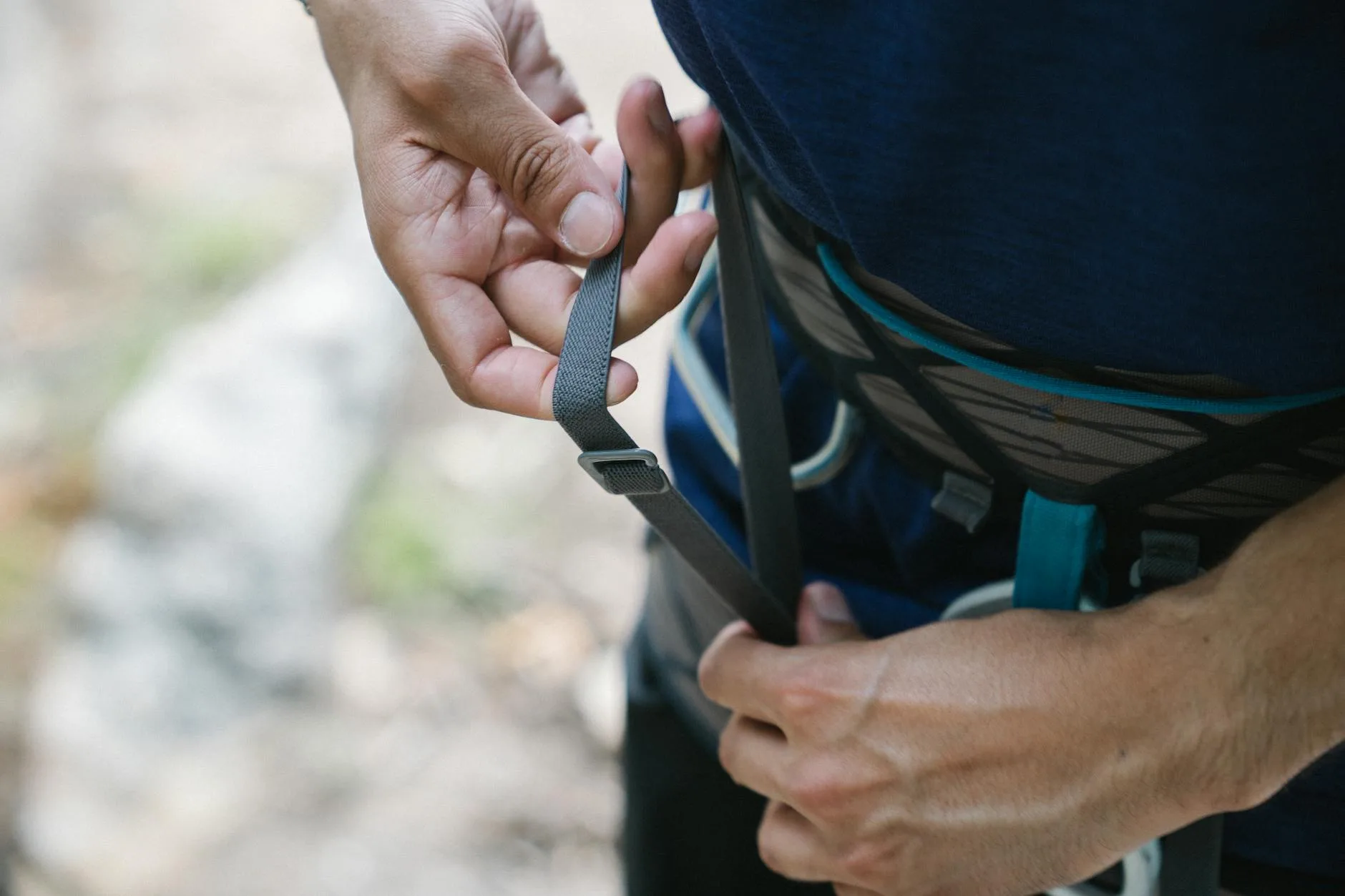
About 70-80% of the pack’s weight should sit on your hips, not your shoulders. When you try on a loaded pack, the hip belt should wrap around the top of your hip bones (your iliac crest, if you want to impress the shop assistant). If the belt sits on your stomach or below your hips, the pack doesn’t fit.
Your shoulders should carry the remaining weight — the straps should curve over your shoulders without gaps and without digging in. If you feel pressure points after ten minutes in the shop, imagine what eight hours on the hills will feel like.
Key Features That Actually Matter
Backpack manufacturers love adding features. Some are essential. Others are gimmicks designed to justify a higher price tag. Here’s what to actually care about:
Back System and Ventilation
Your back will sweat. That’s unavoidable. But some packs handle it better than others.
- Mesh-suspended back panels (like Osprey’s Anti-Gravity or Deuter’s Aircontact system) create a gap between the pack and your back, letting air circulate. These are noticeably cooler in summer.
- Foam-padded back panels sit flush against your back. They’re simpler, lighter, and transfer weight better — but you’ll have a soaking wet back by lunchtime on a warm day.
For UK hiking, where you’re rarely dealing with extreme heat, either works. But if you run warm, the mesh-suspended systems are worth the slight weight penalty.
Rain Cover
British weather being what it is, you need waterproofing. Most mid-range and premium packs include a built-in rain cover tucked into a pocket at the base. If yours doesn’t come with one, budget an extra £10-15 for a separate one — Osprey and Sea to Summit both make good ones.
But here’s the thing experienced hikers learn: a rain cover doesn’t make your pack waterproof. Water gets in through the top, through zips, through condensation. The real solution is dry bags inside the pack. A 13-litre Sea to Summit dry bag (about £12-15 from Amazon UK) keeps your sleeping bag bone dry even in horizontal Welsh rain. For a related angle, see our Best Travel Backpacks 2026 UK: Carry-On Approved guide.
Pockets and Access Points
- Top-loading vs panel access — most hiking packs load from the top with a drawstring and lid. Some also have a zip that opens the front panel like a suitcase. Panel access is incredibly handy for grabbing something from the bottom without unpacking everything.
- Hip belt pockets — these are prime real estate. Phone, snacks, compass, lip balm. If the hip belt pockets are too small for your phone, that’s a problem you’ll notice every single day.
- Side pockets — stretchy mesh ones that hold water bottles are essential. You shouldn’t have to take your pack off every time you want a drink.
- Sleeping bag compartment — a zip at the bottom that gives you separate access to your sleeping bag. Nice to have, not essential.
Hydration Compatibility
Most modern packs have a sleeve inside for a hydration bladder (like a Platypus or Osprey Hydraulics) and a port for the drinking tube. If you’re doing long day hikes or trail running, these are great. For multi-day camping where you’re stopping regularly, water bottles in the side pockets work fine and are easier to refill.
Best Backpacks UK Beginners Should Consider
Right, let’s talk specific packs. I’ve focused on what’s readily available from UK retailers, with tested back systems and solid reputations. No point recommending something you can’t try on before buying.
Best Overall: Osprey Atmos AG 50
The pack I’d recommend to almost anyone starting out. The Anti-Gravity mesh suspension is genuinely comfortable — it distributes weight brilliantly and keeps your back cooler than most competitors. The hip belt fits snugly, the pockets are well-placed, and it comes with a rain cover.
At about £180-220 from Cotswold Outdoor or Go Outdoors, it’s not cheap, but it’s the kind of pack you’ll still be using five years from now. Available in three back lengths with further adjustment within each size. If you can only try on one pack, make it this one.
Best Budget: Vango Contour 50
Vango doesn’t get the respect it deserves in hiking circles, probably because it’s not as trendy as Osprey. But the Contour 50 is a really solid pack for about £80-100, usually available at Go Outdoors and Amazon UK. Our Clothing & Layers Buying Guide for Beginners guide is useful alongside this.
The back system isn’t as sophisticated as the Atmos — it uses a foam-padded panel rather than mesh suspension — but it’s comfortable enough for weekend trips. Decent pocket layout, includes a rain cover, and the build quality is surprisingly good for the price. If you’re not sure whether wild camping is for you and don’t want to drop £200 on the experiment, start here.
Best for Day Hikes: Osprey Talon 22
If you’re sticking to day walks — the Cotswolds Way on weekends, afternoon rambles in the Peaks — you don’t need a 50-litre monster. The Talon 22 is a superb day pack at about £100-120.
It’s light (under 700g), has excellent hip belt pockets, stretchy side pockets that actually hold bottles securely, and the back panel is comfortable without being overly padded. We’ve compared this against the Gregory Nano and Deuter Speed Lite in our Osprey vs Gregory vs Deuter day packs comparison — spoiler: the Osprey wins for most people.
Best for Extended Trips: Gregory Baltoro 65
When you need serious capacity — week-long treks, winter camping, carrying kit for two on a romantic disaster of a wild camping trip — the Baltoro is the one to beat. About £230-270 from Cotswold Outdoor.
The FreeFloat hip belt moulds to your body shape, and the back panel adjustability is the best in this price range. It’s heavy (around 2.2 kg empty), but when you’re carrying 18-20 kg, that robust frame earns its weight in comfort. Available in multiple torso sizes. We cover a similar decision in Sleeping Pads Explained: Foam, Air & Self-Inflating.
Best Women’s Fit: Osprey Aura AG 50
Women’s packs aren’t just men’s packs in different colours — or at least they shouldn’t be. The Aura AG 50 has a shorter torso range, narrower shoulder straps, and a hip belt shaped for wider hips. Same Anti-Gravity mesh system as the Atmos. About £180-220.
If you’ve tried men’s or unisex packs and they never quite sat right on your hips, this will feel like a revelation. Gregory also make the Deva series, which is excellent, but the Osprey edges it on ventilation.
How to Pack Your Backpack Properly
Buying the right pack is half the battle. Packing it badly will make even a £300 pack feel uncomfortable.
Weight Distribution
The heaviest items — tent, water, food, stove — should sit in the middle of the pack, close to your back. This keeps the centre of gravity over your hips rather than pulling you backwards.
- Bottom: sleeping bag, spare clothes (light, compressible items)
- Middle, against your back: water bladder, tent body, food bags, stove
- Top: waterproofs, first aid kit, snacks — things you need to grab quickly
- Hip belt pockets: phone, compass, energy bars
- Side pockets: water bottles, tent poles
- Lid pocket: map, sunscreen, wallet
Common Packing Mistakes
Strapping too much to the outside. If your sleeping mat, mug, and sandals are all dangling off the outside of your pack, it’ll swing and snag on everything. The goal is a compact, balanced load. If it doesn’t fit inside, you’re carrying too much.
Ignoring compression straps. Those side straps aren’t decoration. Cinch them down to pull the load tight against your back. A loose, wobbly pack is exhausting to carry.
Putting heavy stuff at the bottom. Counterintuitive, but a heavy base makes the pack sway. Heavy items go in the middle, at back-height.
What to Spend: Budget Breakdown
Backpack prices in the UK range from about £40 for a basic Decathlon own-brand to £350+ for a premium ultralight. Here’s roughly where value sits:
- £40-70 — basic packs from Decathlon (Forclaz range), Mountain Warehouse. Fine for occasional use or trying out hiking. The back systems are basic and comfort drops off after a few hours of heavy carrying.
- £70-120 — Vango, Berghaus, some Gregory and Deuter models. This is the sweet spot for beginners. Decent back systems, reasonable durability, and you won’t feel short-changed on features.
- £120-220 — Osprey Atmos/Aura, Gregory Baltoro/Deva, Deuter Aircontact. Truly excellent packs with advanced suspension, great hip belts, and build quality that lasts years. Worth saving up for if you plan to hike regularly.
- £220+ — ultralight options (Osprey Exos, Granite Gear), cottage brands, or top-end expedition packs. Diminishing returns for most beginners — save this for when you know exactly what you want.
My honest advice: if you can stretch to £120-150, do. The comfort difference between a £60 pack and a £150 pack over a long day is enormous. Your back will thank you.
Where to Buy Backpacks in the UK
Online is convenient, but I’d strongly recommend trying packs on in person before buying. Your options:
- Cotswold Outdoor — best range of premium hiking packs (Osprey, Gregory, Deuter). Staff are usually knowledgeable and will help with fitting. They price-match too.
- Go Outdoors — slightly more budget-friendly range, good for Vango and Berghaus. The discount card (£5) gets you significant savings.
- Decathlon — their own-brand Forclaz packs are fantastic value. The Forclaz Trek 100 50L at about £55 is the best entry-level pack on the market. Limited choice of other brands though.
- Amazon UK — great prices, but you can’t try before you buy. Good for reordering a pack you’ve already tested in-store. Make sure you’re buying from a UK-authorised seller for warranty.
- Ultralight Outdoor Gear (ultralight outdoor gear.co.uk) — the go-to UK retailer for cottage brands and ultralight gear if you get really into this.
Looking After Your Pack
A decent backpack should last 5-10 years with basic care. Here’s what that looks like:
- After every trip: empty it completely, shake out debris, and leave it open to air dry. Don’t store it compressed in a cupboard.
- Cleaning: wipe down with a damp cloth. For deeper cleans, use lukewarm water and a gentle soap — never a washing machine. The agitation can damage the back panel foam and coatings.
- Zips: if they start sticking, run a zip lubricant along them (a candle wax stub works fine).
- Repairs: most quality brands offer repair services. Osprey’s All Mighty Guarantee covers manufacturing defects for the life of the product — actually one of the best warranties in outdoor gear.
Frequently Asked Questions
What size backpack do I need for a weekend camping trip in the UK? For a weekend camping trip where you're carrying a tent, sleeping bag, and cooking gear, a 45-55 litre backpack is ideal. If you're staying in hostels or bothies and don't need to carry shelter, you can get away with 30-40 litres.
How much should I spend on my first hiking backpack? Budget £70-150 for a first hiking backpack. Packs under £70 often have basic back systems that become uncomfortable on longer walks. The sweet spot for beginners is around £100-150, where you get proper suspension systems and durable construction from brands like Osprey, Gregory, and Vango.
Can I use a regular backpack for hiking? For short day walks under 2-3 hours with light loads, a regular backpack is fine. For anything longer or heavier, you need a proper hiking pack with a hip belt, back panel support, and chest strap. Regular backpacks put all the weight on your shoulders, which causes pain and fatigue quickly.
What's the difference between men's and women's hiking backpacks? Women's hiking backpacks have shorter torso lengths, narrower shoulder straps that are set closer together, and hip belts shaped for wider hips. The differences are structural, not cosmetic. If a unisex pack fits you well, there's no reason you can't use it, but many women find women-specific packs noticeably more comfortable.
Are expensive backpacks worth it? Up to about £150-200, yes — you're paying for really better comfort, suspension systems, and durability. Above £200, you're typically paying for lighter materials or specialist features that matter more to experienced hikers. A £150 Osprey Atmos will serve most people better than a £300 ultralight pack.